United Nations Interim Force in Lebanon – Mandate, History & Operations
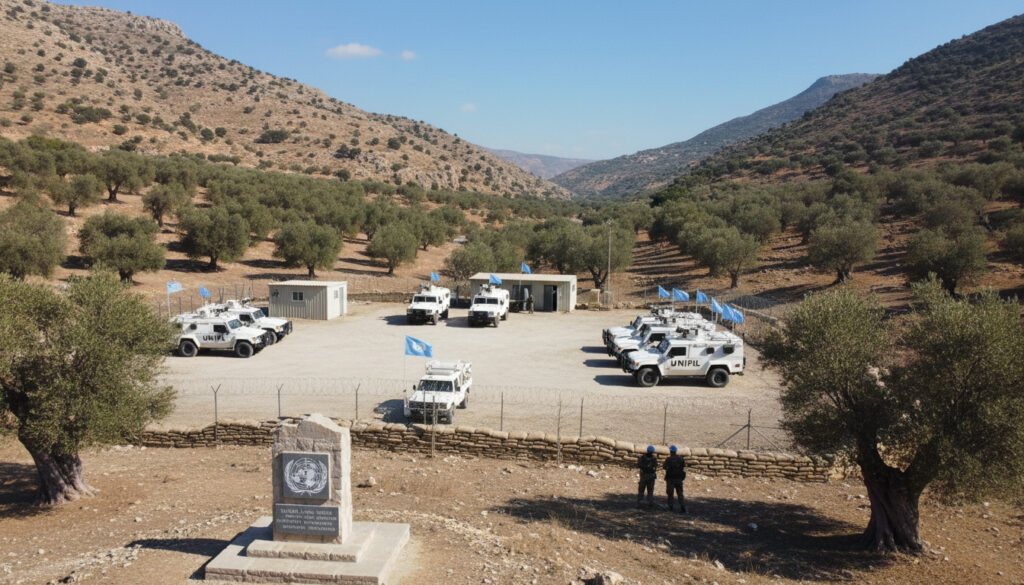
The United Nations Interim Force in Lebanon operates as one of the longest-running peacekeeping missions in UN history. Established in 1978 following Israeli military action in southern Lebanon, the force maintains headquarters in Naqoura near the Lebanese-Israeli border. Its personnel monitor the volatile boundary known as the Blue Line while navigating complex relationships with Israeli forces, Lebanese authorities, and Hezbollah militants.
UNIFIL’s trajectory spans multiple conflicts and mandate expansions, evolving from an initial observer force of roughly 4,000 troops to a potentially 15,000-strong operation with enhanced powers following the 2006 Lebanon War. The mission faces persistent challenges including movement restrictions, direct attacks on personnel, and the difficulty of operating within what researchers describe as a “state within a state” controlled by non-state actors.
Understanding UNIFIL requires examining its foundational mandates, historical setbacks, and current operational constraints. What’s New on Netflix – October 2024 Highlights may provide context for international affairs coverage, but the force’s specific circumstances demand detailed scrutiny of UN Security Council resolutions and field reports spanning four decades.
What is UNIFIL and What is Its Mandate?
UNIFIL constitutes a multidimensional peacekeeping operation with authorization extending across military observation, humanitarian assistance, and security support functions. UN Peacekeeping documentation confirms the mission operates under Chapter VI of the UN Charter, emphasizing consent-based deployment rather than enforcement action.
- Original Mandate (1978): Confirm Israeli withdrawal from southern Lebanon, restore international peace and security, assist the Lebanese government in reestablishing effective authority.
- 1982 Expansion: Resolution 511 added humanitarian assistance and civilian protection following the Israeli invasion.
- 2006 Enhancement: Resolution 1701 expanded troop ceilings to 15,000 and added tasks including monitoring cessation of hostilities and supporting Lebanese Armed Forces deployment.
- Blue Line Monitoring: Post-2000 operations focus on the UN-demarcated boundary separating Israeli and Lebanese forces.
- Demilitarization Verification: Mandate includes confirming Hezbollah demilitarization south of the Litani River, though implementation remains incomplete.
- Regular Renewal: UNSC extends the mandate periodically, most recently maintaining authorization through successive resolutions.
- Movement Constraints: Freedom of operation remains restricted by non-state actors and conflicting party interests.
| Metric | Detail | Source Basis |
|---|---|---|
| Establishment Date | March 19, 1978 | UNSC Resolutions 425 & 426 |
| Initial Deployment | March 23, 1978 | First troops from existing UN missions |
| Original Troop Strength | 4,000 (increased to 6,000) | UN deployment records |
| Current Authorized Strength | Up to 15,000 | Resolution 1701 (2006) |
| Headquarters Location | Naqoura, near Israeli border | UN mission specifications |
| Triggering Event | Coastal Road Massacre (March 9, 1978) | Historical records |
| Casualties (Early Years) | 36 peacekeepers killed | Georgetown case study |
| Key Expansion Resolution | 1701 (August 2006) | Post-Lebanon War mandate |
UNIFIL’s Core Mandate
The foundational authority derives from UN Security Council Resolutions 425 and 426, issued in response to Israel’s March 1978 invasion. These texts established three priority tasks: confirming Israeli military withdrawal, restoring peace and security, and enabling Lebanese governmental authority to return to southern territories.
Resolution 1701 fundamentally altered operational scope following the July-August 2006 conflict. The text mandated expanded personnel ceilings alongside new responsibilities: facilitating humanitarian access, assisting displaced persons’ return, and preventing insurgent weapon smuggling. The resolution also explicitly required Hezbollah’s demilitarization south of the Litani River, creating an ongoing verification challenge.
The Blue Line and Southern Lebanon
The Blue Line represents a UN cartographic demarcation established after Israel’s 2000 withdrawal from occupied southern Lebanon. European Parliament documentation describes this boundary as distinct from the formal international border, functioning instead as a “line of withdrawal” for practical military separation.
UNIFIL personnel maintain observation posts and conduct patrols along this 120-kilometer boundary, reporting violations by either Israeli or Lebanese forces. The mission coordinates with the Lebanese Armed Forces to prevent escalation, though operational effectiveness depends on cooperation from all parties—a condition frequently absent during periods of heightened tension.
When Was UNIFIL Established and What Is Its History?
Between 1978 and 1982, UNIFIL faced severe movement restrictions, ambushes, kidnappings, and sniping attacks by local militias. The South Lebanon Army under Saad Haddad maintained control of portions of the mission area, forcing UNIFIL to operate behind Israeli lines with limited territorial access.
Establishment in 1978
The Coastal Road Massacre of March 9, 1978, precipitated UNIFIL’s creation. Palestinian militants killed 38 Israeli civilians aboard a bus, prompting Israel’s “Operation Litani” invasion of southern Lebanon three days later. The UN Security Council acted within days, authorizing the force on March 19 and deploying initial elements by March 23.
Original troop contributors included contingents from Canada, Iran, Sweden, France, Nepal, and Norway, transferred from existing UN operations including UNEF, UNTSO, and UNDOF. Israel completed withdrawal by June 13, 1978, yet the South Lebanon Army’s continued presence prevented UNIFIL from fully deploying across its designated area of operations.
Key UN Security Council Resolutions
Resolution 511 (June 1982) modified the mandate following Israel’s “Operation Peace for Galilee” invasion. With UNIFIL positions overrun and personnel operating behind advancing Israeli lines, the Council added explicit humanitarian protection tasks while maintaining original territorial objectives.
The 2000 Israeli withdrawal to the Blue Line prompted another mandate shift, transforming UNIFIL into primarily an observing and monitoring mission per the Secretary-General’s reports. Historical records confirm this period marked relative operational stabilization before the 2006 conflict necessitated further expansion.
How Many Troops Serve in UNIFIL and Which Countries Contribute?
Troop Strength and Composition
Initial deployments ranged between 4,000 and 6,000 military personnel. Following Resolution 1701, authorized strength increased to match the Lebanese Armed Forces commitment of 15,000 troops, though actual deployment numbers fluctuate based on contributing nation decisions and operational requirements.
Historical contributors maintain ongoing commitments. France has provided continuous participation since 1978, deploying approximately 700 personnel as of 2017 alongside Finnish forces in Operation Daman. Equipment includes light armored vehicles, radar systems, and surface-to-air missile batteries positioned at Dayr Kifa. Defense industry records detail the mechanized capabilities deployed to secure UNIFIL positions.
Headquarters and Deployment
Naqoura hosts the primary headquarters, situated directly on the coast near the Israeli border. Operational deployment extends across southern Lebanon through static observation posts, mobile patrols, and checkpoint operations designed to monitor the Blue Line and surrounding territory.
How to Make Fried Rice – Perfect Grains at Home demonstrates how international personnel maintain domestic connections while serving in challenging environments, though UNIFIL troops face significantly more restrictive conditions than standard expatriate assignments.
What Are Recent Incidents and Challenges Facing UNIFIL?
Thirty-six peacekeepers died in direct attacks during UNIFIL’s early operational years. Ongoing threats include Hezbollah drone activity, tunneling operations into Israeli territory, and sporadic direct fire incidents targeting UN positions.
UNIFIL operates within a “state within a state” configuration where Hezbollah maintains de facto control south of the Litani River. This structure limits the mission’s ability to conduct unannounced inspections or enforce arms embargoes without risking confrontation.
Clashes with Hezbollah and Israel
The 2006 Lebanon War, triggered by a Hezbollah attack killing three IDF soldiers and kidnapping two others, exposed UNIFIL’s vulnerability. During hostilities, the force documented Hezbollah drone shootdowns and identified tunneling activity from Lebanon into Israel, though stopping such operations exceeded its authorization.
1982 marked another critical incident when Israeli invasion forces overran UNIFIL positions, displacing personnel and forcing operations to continue behind Israeli lines. Georgetown University research confirms these events established patterns of non-cooperation that persist in current operations.
Ongoing Border Tensions
Freedom of movement restrictions remain the primary operational impediment. Both Israeli forces and Hezbollah militias have hindered patrol access, while the lack of Lebanese governmental authority in southern regions complicates coordination. The mission continues monitoring ceasefire compliance under Resolution 1701, though verifying Hezbollah’s demilitarization proves particularly challenging given the organization’s refusal to disarm.
Specific incident data for 2024-2025 remains limited in available documentation, with most recent analysis focusing on historical patterns through 2017. Danish Institute research suggests UNIFIL faces a potential “vacuum of peace” where mandate objectives outstrip achievable outcomes given political constraints.
Major Events in UNIFIL’s Operational History
- March 19, 1978: UN Security Council establishes UNIFIL through Resolutions 425 and 426 following the Coastal Road Massacre and Israeli invasion.
- March 23, 1978: First contingents deploy from Canada, Iran, Sweden, France, Nepal, and Norway, initially numbering 4,000 troops.
- June 13, 1978: Israel completes withdrawal from southern Lebanon, though the South Lebanon Army retains control of key positions.
- June 1982: Resolution 511 expands the mandate to include humanitarian assistance after Israeli forces overrun UNIFIL positions during “Operation Peace for Galilee.”
- May 2000: Israel withdraws to the Blue Line, prompting UNIFIL to shift focus toward monitoring and observation functions.
- July-August 2006: The Lebanon War triggers Resolution 1701, expanding troop authorization to 15,000 and adding Lebanese Armed Forces support tasks.
- 2006-Present: Continuous mandate renewal with emphasis on monitoring cessation of hostilities and preventing weapons smuggling.
What Can UNIFIL Do? Mandate Enforcement and Limitations
| Established Capabilities | Uncertain or Constrained Areas |
|---|---|
| Monitoring and reporting Blue Line violations by Israeli and Lebanese forces | Specific 2025 operational details and recent escalation responses (documentation gaps exist) |
| Supporting Lebanese Armed Forces deployment in southern Lebanon | Complete freedom of movement throughout Hezbollah-controlled territory |
| Providing humanitarian assistance to civilian populations | Forced disarmament of non-state actors without Lebanese government authorization |
| Verifying Israeli military withdrawals from Lebanese territory | Prevention of all weapons smuggling across the Syria-Lebanon border |
| Patrolling and maintaining observation posts along the withdrawal line | Political resolution of underlying Israel-Lebanon border disputes |
| Coordinating with UN Truce Supervision Organization (UNTSO) for technical verification | Enforcement actions under Chapter VII authorization without explicit Security Council direction |
The Geopolitical Context of UNIFIL
UNIFIL operates within the fractured sovereignty of southern Lebanon, a region where state authority has historically competed with militia control. The mission’s presence spans the Lebanese Civil War (1975-1990), multiple Israeli invasions, and the subsequent rise of Hezbollah as a dominant non-state military actor. This environment creates unique peacekeeping constraints, as the force must maintain neutrality while operating within territory effectively governed by armed groups hostile to its verification activities.
Mission documentation emphasizes civilian protection and infrastructure support, yet operational reality requires constant negotiation with actors who view UNIFIL’s presence as either necessary stability or inconvenient observation. The force’s longevity—exceeding four decades—testifies to the enduring instability of the Israel-Lebanon relationship rather than the resolution of underlying territorial and security disputes.
The Blue Line’s function as a provisional military withdrawal line rather than a recognized international border perpetuates ambiguity. Both Israeli and Lebanese forces contest specific points, while Hezbollah’s military infrastructure south of the Litani River directly contradicts Resolution 1701’s demilitarization requirements. UNIFIL’s reporting mechanisms document these violations without possessing the enforcement capacity to resolve them.
Official Statements and Documentation
UNIFIL’s mandate is to confirm Israeli withdrawal from southern Lebanon, restore international peace and security, and assist the Lebanese government in reestablishing effective authority in the area.
— UN Security Council Resolution 425, March 19, 1978
The mandate was adjusted to include humanitarian assistance and protection for civilians while UNIFIL operated behind Israeli lines during the 1982 invasion.
— UN Security Council Resolution 511, June 1982
Resolution 1701 expanded UNIFIL to up to 15,000 troops, adding tasks to monitor cessation of hostilities, support Lebanese Armed Forces deployment, ensure humanitarian access, aid displaced persons’ return, and confirm Hezbollah demilitarization.
— UN Security Council Resolution 1701, August 11, 2006
Summary of UNIFIL’s Role
The United Nations Interim Force in Lebanon represents an enduring international commitment to monitoring one of the Middle East’s most volatile boundaries. From its 1978 establishment following the Coastal Road Massacre through successive mandate expansions in 1982 and 2006, the mission has adapted to evolving conflict dynamics while remaining constrained by the geopolitical realities of Lebanese sovereignty and regional hostility. With headquarters at Naqoura and authorization for up to 15,000 personnel, UNIFIL continues monitoring the Blue Line and supporting Lebanese security forces despite operational restrictions imposed by Hezbollah’s presence and intermittent Israeli operations. The mission’s history of 36 fatalities in early years and ongoing safety concerns underscores the hazardous nature of peacekeeping in contested territories where state and non-state actors maintain conflicting objectives.
Frequently Asked Questions
What event led to the creation of UNIFIL in March 1978?
The Coastal Road Massacre of March 9, 1978, where Palestinian militants killed 38 Israeli civilians, triggered Israel’s invasion of southern Lebanon. The UN Security Council established UNIFIL on March 19 through Resolutions 425 and 426 to oversee Israeli withdrawal and restore stability.
How many UN peacekeepers have been killed while serving with UNIFIL?
Thirty-six peacekeepers died in direct attacks during UNIFIL’s early operational years between 1978 and 1982, according to Georgetown University research. Personnel continue facing safety risks from ambushes, shelling, and sniping incidents.
Which resolution expanded UNIFIL’s mandate after the 2006 Lebanon War?
Resolution 1701, adopted August 11, 2006, expanded UNIFIL to potentially 15,000 troops and added tasks including monitoring hostilities cessation, supporting Lebanese Armed Forces, ensuring humanitarian access, and verifying Hezbollah demilitarization south of the Litani River.
What specific tasks were added to UNIFIL’s mandate in 1982?
Resolution 511, adopted during the Israeli “Operation Peace for Galilee” invasion, added humanitarian assistance and civilian protection tasks while UNIFIL operated behind Israeli lines after its positions were overrun.
Is UNIFIL operational in 2025?
Available documentation confirms UNIFIL maintains ongoing operations at its Naqoura headquarters, though specific 2025 incident details and current escalation responses remain unclear in published sources, which largely cover events through 2017.
What restrictions limit UNIFIL’s freedom of movement?
Hezbollah’s de facto control of southern Lebanon south of the Litani River, Israeli military operations, and competing militia interests all restrict UNIFIL patrol access. The force frequently cannot conduct unannounced inspections or access certain territories without prior negotiation.
Where exactly is UNIFIL’s headquarters located?
UNIFIL maintains its headquarters in Naqoura, a coastal town in southern Lebanon situated immediately adjacent to the Lebanese-Israeli border near the Mediterranean coast.
How does UNIFIL differ from traditional peacekeeping missions?
Unlike traditional Chapter VI observer missions, UNIFIL operates as a multidimensional force combining military monitoring with humanitarian assistance and Lebanese Armed Forces support, though it lacks Chapter VII enforcement authority to disarm militias unilaterally.
More related posts
 Tommee Tippee Bottle Maker – 2025 Guide and Review
 Why Does My Eye Keep Twitching? Causes and How to Stop It
 Slavia Praha vs Arsenal: Prediction, Stats & Head-to-Head
 What Size Ovarian Cyst Is Dangerous? Symptoms & Chart
 Q-Park Grand Parade Cork: Parking Rates, Hours & Rules
 Farm for Sale Cork: Buying Guide 2025
 Cast of The Office UK: Actors and Characters Guide
 Santos FC Standings: Current Classifications & League Table