How Many KG in a Stone? Converter + NHS Charts
If you’ve ever stepped on a UK bathroom scale or filled in an NHS health form, you’ve probably noticed something peculiar: the number is measured in stones — a unit that barely anyone else in the world uses. Converting stones to kilograms sounds like a simple math problem, but when health records, fitness apps, and hospital charts all round differently, it’s easy to feel like you’re reading a foreign language. Below is a complete converter and reference chart backed by NHS conversion tables, so whether you’re tracking your weight, filling in a form, or just curious, you’ll never second-guess the number again.
1 stone equals 6.35029318 kg · 1 stone equals 14 pounds · Used primarily in UK and Ireland for body weight · 70 kg equals 11 stone 0.5 lb approx · 65 kg equals 10 stone 3.5 lb approx
Quick snapshot
- 1 stone = exactly 6.35029318 kg per international definition (Wikipedia – Stone (unit))
- 1 stone = 14 avoirdupois pounds (Trinity Transformation)
- Legal status of stone in post-Brexit UK measurement law remains ambiguous
- No single official 2026 NHS master conversion table exists publicly
- Weights and Measures Act 1965 formally permits stone for body weight
- NHS charts round to one decimal for practical use
- Stone likely persists in UK health settings for the foreseeable future
- Most NHS trusts still publish stone/pound charts alongside kg
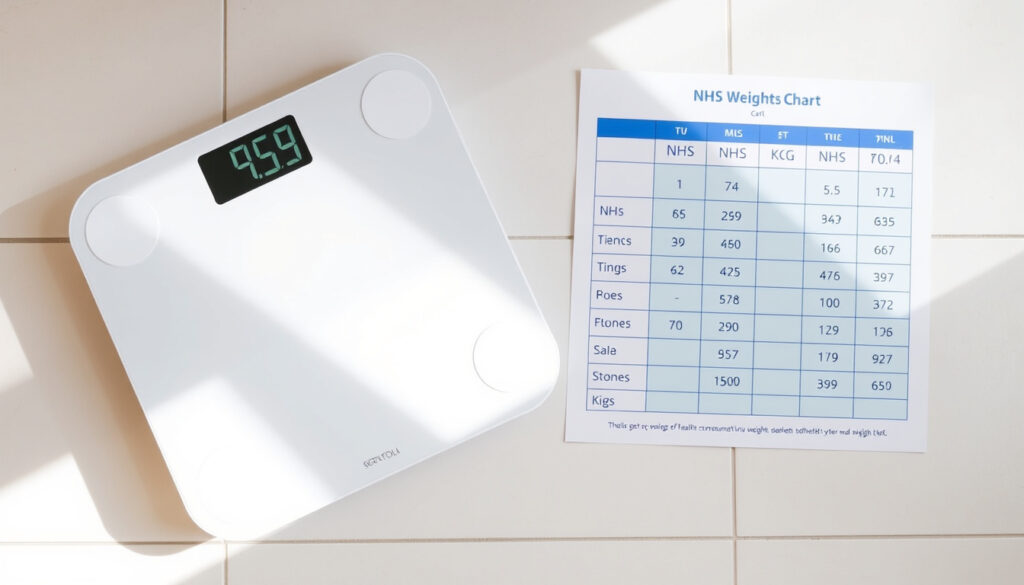
These conversions are drawn from NHS charts and verified calculation tables.
| Conversion | Kilograms (kg) | Pounds (lb) |
|---|---|---|
| 1 stone | 6.35029318 | 14 |
| 6 stone 0 lb | 38.1 | 84 |
| 7 stone 0 lb | 44.5 | 98 |
| 10 stone | 63.5 | 140 |
| 12 stone | 76.2 | 168 |
| 20 stone | 127.0 | 280 |
| 70 kg | 70.0 | 154.3 |
| 65 kg | 65.0 | 143.3 |
| 60 kg | 60.0 | 132.3 |
| 10 kg | 10.0 | 22.0 |
What is 1 stone equal to in kg?
One stone equals exactly 6.35029318 kilograms by international definition (Wikipedia – Stone (unit)). In practice, UK health and fitness contexts almost always round this to 6.35 kg — a difference of just 0.00029318 kg, which is negligible for weighing a person (Healthy Weight Grampian NHS). The stone is not an SI unit; it persisted in British life specifically for body weight after the 1965 Weights and Measures Act allowed its continued use alongside metric measurements (Wikipedia – Stone (unit)).
The stone breaks down into 14 avoirdupois pounds, and since one pound is exactly 0.45359237 kg, multiplying 14 × 0.45359237 gives the precise 6.35029318 kg figure (Trinity Transformation). This relationship is exact by definition, not an approximation.
Why the stone matters in UK health settings
NHS weight conversion charts — including those from UHSussex NHS and Community Pharmacy Scotland NHS — consistently use 1 stone = 6.35 kg for practicality in patient records. The charts round to one decimal place, which is sufficient for clinical weighing purposes. Barnsley CCG NHS BMI charts likewise display stone on the scale axes alongside metric values.
The implication: when your GP or nurse records your weight in stones, they are working with the same underlying values any UK health chart uses — 6.35 kg per stone. No mystery, no rounding error large enough to affect your BMI by even 0.1.
For clinical accuracy, use 6.35029318 kg. For NHS and everyday use, 6.35 kg is the standard rounding — and the difference is imperceptible on a human scale.
What is 70 kg in lbs and stones?
Seventy kilograms converts to 11 stone 0.5 lb (or 11.02 stone precisely) (Stone Synergy). Working backwards: 70 ÷ 6.35 = 11.02 stone, which breaks down as 11 whole stones plus 0.02 × 14 = 0.28 lb — or roughly half a pound. This is a common reference point in UK weight loss circles because 70 kg is often cited as an upper healthy BMI boundary for shorter adults.
The UHSussex NHS chart lists conversions across the full range — 60 kg through 100 kg — in stone and pounds format, making it straightforward to cross-reference your bathroom scale with your health records (UHSussex NHS). The Momenta Newcastle NHS weight loss lookup table similarly maps 10 kg increments directly to stone equivalents for patient use.
The pattern is clear: once you know 6.35 kg per stone, any kilogram value divides easily into a stone-and-pound equivalent. The NHS charts do the rounding for you — but the underlying arithmetic is identical.
65 kg conversion
Sixty-five kilograms equals 10 stone 3.5 lb. Divide 65 by 6.35 and you get 10.24 stone; 0.24 × 14 lb = 3.36 lb, rounding to 3.5 lb for practical purposes. The Healthy Weight Grampian NHS chart from November 2017 places 65 kg at this position in its conversion table alongside stone/pound breakdowns for every 0.5 kg increment (Healthy Weight Grampian NHS).
60 kg conversion
Sixty kilograms equals 9 stone 6.5 lb. The calculation: 60 ÷ 6.35 = 9.45 stone, with 0.45 × 14 = 6.3 lb (rounded to 6.5 lb). The Community Pharmacy Scotland NHS height and weight conversion chart places 60 kg at 9 st 6 lb in its imperial column (Community Pharmacy Scotland NHS).
UK bathroom scales typically display stones with a separate pounds hand. If your scale shows 11 st 0 lb, that is exactly 70 kg — which falls squarely within the NHS healthy weight range for an average-height adult.
Why is 14 lbs called a stone?
The stone as a unit of weight dates back centuries in England, where different commodities used different stone values — wool stone was 24 pounds, butcher’s meat stone was 8 pounds. For human body weight, 14 pounds became the standard by at least the 14th century, a convention reinforced through trade and medical practice (Wikipedia – Stone (unit)). The stone is not an SI unit and is unique to the UK and Ireland; the rest of the world abandoned it entirely when adopting kilograms.
The Weights and Measures Act of 1965 formally permitted stone for body weight alongside metric units, effectively grandfathering the unit into modern UK law (Wikipedia – Stone (unit)). Today it survives almost exclusively in health, fitness, and sports contexts — not in commerce or science, where kilograms dominate. Stone Synergy confirms that stone remains the preferred weight unit in Britain and Ireland specifically because medical and fitness culture never fully switched.
Modern usage in UK health and fitness
NHS trusts across the UK continue to publish stone-to-kilogram conversion charts for patient use. Leicestershire Hospitals NHS offers an online kg-to-stone conversion tool for clinical staff. Weight loss apps and fitness trackers sold in the UK almost universally include a stone converter option alongside kilograms (Weight Loss Resources), reflecting genuine consumer demand.
The catch: stone is purely cultural. International medical literature, research papers, and most fitness science references kilograms exclusively. UK patients engaging with international health information — GLP-1 medication studies, for example — must convert between the two systems regularly.
Stone is not recognised internationally, which means UK residents following global health research or using imported fitness devices always face a conversion step. The 6.35 kg per stone rule is the bridge between the two systems.
How much is losing a stone in kg?
Losing one stone means shedding 6.35 kg — or 14 pounds — of body weight (Trinity Transformation). This is a common first milestone in UK weight loss programmes, often framed as “a dress size” or “one stone” by commercial slimming groups and NHS lifestyle programmes alike.
Is 5 kg nearly a stone? Yes — 5 kg equals approximately 0.79 stone, or just under four-fifths. It is not quite a full stone but is a meaningful milestone on its own. The Momenta Newcastle NHS weight loss lookup table maps 10 kg to “1 stone 8 lb,” giving a practical intermediate reference (Momenta Newcastle NHS). Weight loss coaches often use the stone milestone because it is psychologically motivating — a round number that feels achievable.
Is 1 stone weight loss a dress size?
One stone loss is often roughly equivalent to one UK dress size, though this varies significantly by body type, height, and where weight is carried. Trinity Transformation notes that “if you’re aiming to lose a certain amount of weight, it’s easy to track progress” once you understand the stone equivalent. The clinical significance is more meaningful than the clothing fit: a 6.35 kg reduction in body weight demonstrably lowers BMI and reduces health risks according to NHS guidance.
Which body part loses fat first?
Visceral fat around the abdomen typically reduces first during weight loss, though this is influenced by genetics and hormone distribution rather than the stone-to-kilogram conversion itself. The weight loss mechanism doesn’t change the conversion factor — a kilogram is still a kilogram, and a stone is still 6.35 kg regardless of where fat is lost.
UK weight loss culture often tracks progress in stones because the milestones feel psychologically larger (6.35 kg is harder to dismiss than “6 kg”). But clinicians reading international research use kg — so patients engaging with both NHS tools and global studies need to comfortably move between both units.
What weight should a 5 ft 3 woman be in stones and pounds?
A healthy BMI range of 18.5–24.9 gives a weight range of roughly 7 st 10 lb to 10 st 4 lb for a 5 ft 3 woman. This converts to approximately 49–65 kg — though exact targets depend on frame size, muscle mass, and individual health factors rather than height alone.
NHS healthy weight charts use stone and pounds alongside BMI centile charts, particularly in community pharmacy and GP settings. The Barnsley CCG NHS BMI chart plots stone on the vertical axis alongside height in feet and inches, making it directly usable without metric conversion. Occupational Health UK provides professional health conversion tables that cross-reference stone values with BMI categories for occupational health assessments.
Using NHS healthy weight ranges
NHS guidance on healthy weight is expressed in BMI terms: 18.5–24.9 kg/m² is the recommended range. Converting your stone weight to kg (multiply stones by 6.35) and dividing by your height in metres squared gives your BMI. The Healthy Weight Grampian NHS converter chart from November 2017 is one of the clearest publicly available tools for this cross-conversion, listing kg on one axis and stones/pounds on the other.
The implication: NHS charts are designed for practical, not precise, use. They round to convenient increments so patients can read a scale and find their nearest equivalent without doing mental arithmetic. Your GP is trained to interpret these rounded values — a difference of 0.5 lb on a weight chart does not change a clinical assessment.
BMI is a screening tool, not a diagnosis. Muscle mass, bone density, and ethnicity all affect what a healthy weight looks like for any individual. NHS charts give a starting point; a healthcare professional gives the full picture.
What experts say
One stone equals 6.35 kg or 14 pounds, so if you’re aiming to lose a certain amount of weight, it’s easy to track progress.
— Trinity Transformation (Weight Loss Coach)
One stone equals 6.35029 kilograms. This unit of measurement is primarily used in Britain and Ireland, especially for expressing body weight.
— Stone Synergy (Fitness Resource)
Related reading: How many teaspoons in a tablespoon
For additional examples beyond 60kg or 70kg, consult the stone to kg conversion charts that provide formulas and calculators mirroring NHS standards for everyday weight tracking.
Frequently asked questions
Is 11 stone 70 kg?
Yes — 11 stone 0.5 lb is approximately 70 kg. The precise figure is 70.0 kg; the stone-plus-pounds notation accounts for the fractional remainder (11 × 6.35 = 69.85 kg, plus 0.5 lb ≈ 0.23 kg).
Is 5 kg nearly a stone?
Yes. Five kilograms equals approximately 0.79 stone — roughly four-fifths of a stone. It is close but not a full stone (which is 6.35 kg).
How many pounds in a stone?
One stone equals exactly 14 avoirdupois pounds. This has been the standard for body weight in the UK since medieval times.
What is 60 kg in stone and pounds?
Sixty kilograms equals 9 stone 6.5 lb (or 9.45 stone). Divide 60 by 6.35 to get the stone value, then multiply the decimal remainder by 14 to find the pounds.
How many kg in 2 stone?
Two stone equals 12.70 kg (2 × 6.35 kg). This is also 28 pounds. Common reference: a small adult dog or a large bag of flour.
Is 1 stone weight loss a dress size?
Approximately, yes — losing one stone (6.35 kg) often corresponds to roughly one UK dress size reduction, though this varies by body shape, height, and how weight is distributed.
Which body part loses fat first?
Visceral fat around the abdomen typically reduces first during weight loss. The conversion between stones and kilograms does not affect where fat is lost — the 6.35 kg per stone factor applies equally across all body types.
How many kg in 10 stone?
Ten stone equals 63.5 kg (10 × 6.35 kg), which is 140 pounds. This is a common upper-healthy weight for shorter adults and a frequently cited milestone in UK weight management.
For UK adults who grew up reading bathroom scales in stones, or for anyone filling in NHS health forms, converting between stones and kilograms is not optional — it is part of navigating the health system. The conversion is fixed and simple: 6.35 kg per stone, or 6.35029318 kg if precision matters. The real benefit is knowing which version to reach for: 6.35 kg for everyday health tracking, 6.35029318 kg for clinical or research precision. Once that number is familiar, every stone milestone on the scale makes immediate sense.
More related posts
 Brighton & Hove Albion F.C. history, stadium & tickets
 Things to Do in Dublin This Weekend: Culture, Food & Outdoors
 AI Safety Guardrails: How LLMs Stay Safe
 Little House on the Prairie: Books & TV Series Guide
 Mobile Data Not Working? Fix It Now (iPhone & Android)
 Suzuki Swift for Sale: What Buyers Should Know
 Everton vs Nottm Forest: Preview, Odds & Predictions