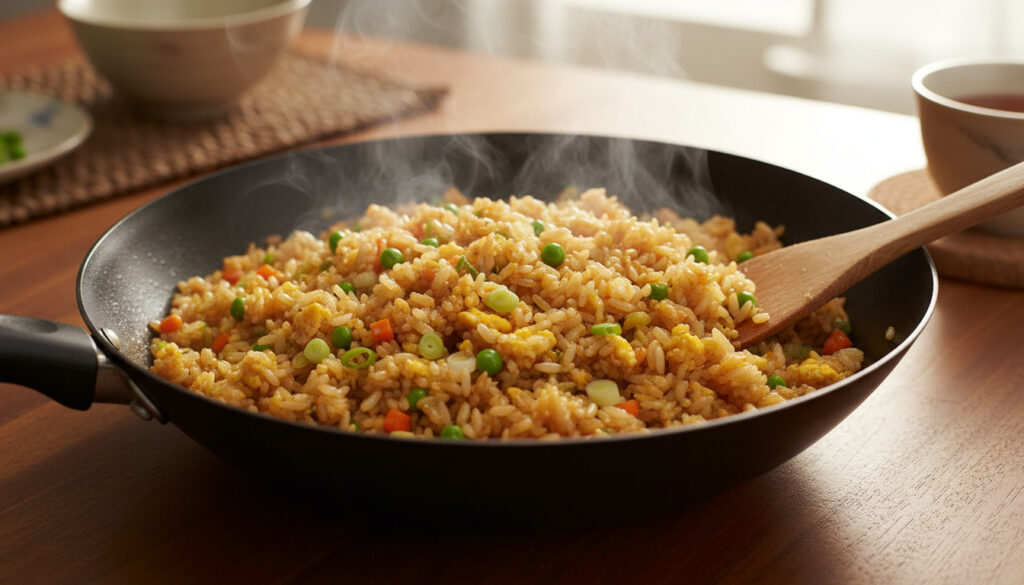
How to Make Fried Rice – Perfect Grains at Home
Fried rice transforms leftover ingredients into a complete meal through high-heat cooking and precise timing. This technique demands chilled starches, intense heat, and sequential ingredient addition to achieve the characteristic separated grains and savory depth that distinguishes restaurant-quality results from clumpy home attempts.
Unlike boiling or steaming, stir-frying requires specific preparation to prevent gummy textures. Success depends on understanding how temperature affects rice starch and how oil distribution prevents sticking. Professional kitchens rely on day-old rice and carbon steel woks, but effective alternatives exist for home equipment.
Mastering this method reduces food waste while creating customizable meals adaptable to dietary preferences and available ingredients. The foundational approach accommodates proteins ranging from rotisserie chicken to firm tofu, making it an essential technique for efficient home cooking.
What Is the Secret to Good Fried Rice?
Consistent results require understanding the interplay between ingredient preparation and heat management. According to The Woks of Life, a foundational formula for 2-4 servings provides the structural baseline for endless variations.
- Day-old rice prevents gummy texture through starch crystallization that occurs during refrigeration
- High heat mimics wok hei, creating proper caramelization without oil breakdown
- Pre-cooked proteins integrate better than raw additions, which require separate blanching
- Constant scooping motion prevents sticking and ensures even ingredient distribution
- Eggs require separate preparation and late addition to maintain tenderness
- Sauce application works best at mid-cook stages rather than initial frying
- Shaoxing wine provides traditional finishing aromatics when available
| Ingredient | Quantity | Substitutes |
|---|---|---|
| Cooked rice | 4½-5 cups | Thoroughly chilled jasmine or basmati |
| Vegetables | 3-4 cups | Carrots, peas, corn, peppers, broccoli |
| Onion | ½ cup | Shallots or leeks |
| Aromatics | 2-3 cloves | Garlic, scallions, or ginger |
| Cooked protein | 6-8 oz | Raw equivalent: 10-12 oz |
| Eggs | 2 large | Duck eggs or omission |
| Cooking oil | 3-4 tbsp | Peanut, vegetable, or canola |
| Soy sauce | 2-3 tbsp | Tamari for gluten-sensitive diets |
| Sesame oil | 1 tsp | None recommended; distinct flavor profile |
| Shaoxing wine | 1 tbsp | Dry sherry or omission |
How Do You Make Fried Rice Not Sticky?
Sticky rice ruins texture and indicates improper preparation or technique. Gimme Some Oven emphasizes that starch moisture levels determine final consistency more than cooking duration.
Rice Drying Techniques
Thoroughly chilling cooked rice remains the non-negotiable foundation. Spread cooked grains on a baking sheet and refrigerate uncovered for several hours or overnight. This process creates starch retrogradation, where amylose molecules crystallize and harden, preventing the gummy texture that fresh, warm rice produces during frying.
Equipment and Heat Management
Medium-high to high heat ensures rice grains cook individually rather than clumping. A 14-inch carbon steel wok provides optimal heat distribution and tossing room, though large nonstick skillets accommodate proper movement for home cooks. Delish recommends maintaining consistent high temperatures throughout the cooking sequence.
Oil Distribution Methods
Insufficient oil prevents proper grain separation. Use three to four tablespoons minimum, ensuring the fat coats every grain thoroughly. The oil must reach all surfaces to prevent sticking and allow free movement during the scooping motion required throughout cooking.
Using fresh, warm rice instead of thoroughly chilled rice causes mushiness. Plan ahead and refrigerate cooked rice completely before frying to maintain distinct grain structure.
What Is the Best Rice for Fried Rice?
Long-grain varieties provide the structural integrity necessary for high-heat tossing. The specific cultivar matters less than the grain’s age and moisture content.
Jasmine Versus Basmati
Jasmine rice offers the traditional foundation with its slightly sticky nature when fresh, though this characteristic disappears after chilling. Basmati provides longer, slender grains that separate easily but require careful handling to prevent breaking during vigorous stirring. Both varieties perform adequately when properly chilled.
Storage and Preparation Methods
Break up chilled rice clumps completely before cooking begins. Uniform separation ensures even heating and sauce distribution. Store cooked rice in airtight containers during chilling, but break up grains immediately before adding to the hot wok. Video demonstrations emphasize this mechanical separation step.
Fried Rice Variations and Pairings
The foundational formula accommodates virtually any ingredient combination. RecipeTin Eats documents variations ranging from traditional Chinese sausage to modern bacon adaptations.
Protein Adaptations
Pre-cooked rotisserie chicken requires shredding or dicing before incorporation, added during final stages to prevent overcooking. Shrimp demands pre-searing or blanching until 90% cooked before final addition. Food safety guidelines recommend ensuring all proteins reach safe internal temperatures during the final 30-second combining stage.
Vegetarian Configurations
Firm tofu serves as an effective protein substitute when pre-seared until golden. Vegetable combinations include snow peas, snap peas, thawed frozen mixed vegetables, bean sprouts, and lettuce, added according to cooking duration requirements. Longer-cooking vegetables like carrots and broccoli enter early, while delicate greens finish the dish.
Complementary Dishes
Kimchi fried rice represents a popular fermented variation that builds on these foundational techniques. Standard pairings include egg drop soup, steamed dumplings, or simply What’s New on Netflix – October 2024 Highlights for a complete evening at home, though traditional meals balance the savory rice with lighter vegetable sides.
Once you master the basic formula and technique, you can riff on fried rice using virtually any ingredients you may have on hand, adapting to available leftovers and preferences.
Pre-cooked rotisserie chicken and cold cooked shrimp work best when added with eggs and quick-cooking vegetables in the final step to prevent overcooking and toughness.
How Do You Make Fried Rice? Step-by-Step Timeline
- Scramble eggs: Beat eggs lightly and scramble in butter or oil until barely cooked, breaking into small pieces. Transfer to a plate immediately to prevent overcooking.
- Sauté aromatics: Heat oil over medium-high heat. Add onion, garlic, and longer-cooking vegetables (carrots, mushrooms, peppers, broccoli). Stir-fry for 2-3 minutes until softened.
- Add proteins: Incorporate fattier cooked proteins (roast pork, ham, Chinese sausage) and stir-fry at high heat for 30-60 seconds. If using raw protein, blanch separately until 90% cooked before adding. Cooking science supports this pre-cooking method.
- Fry rice: Add chilled rice and stir-fry for 3 minutes, using a scooping motion from the wok bottom. Flatten rice with a metal spatula to break up clumps. Grains should become individual and separate.
- Season: Pour pre-mixed sauce over rice and continue stir-frying for 2-3 minutes until steam rises. Taste and adjust seasoning with salt and pepper.
- Final additions: Incorporate pre-seared proteins like shrimp, rotisserie chicken, or tofu along with quick-cooking vegetables (snow peas, snap peas) and scrambled eggs. Stir-fry for 30 seconds.
- Finish: Add chopped scallions and optional bean sprouts. For traditional finishing, pour Shaoxing wine around the wok perimeter and stir-fry for 20-30 seconds, allowing rice to contact the hot outer edges.
Established Facts Versus Unanswered Questions
| Verified Techniques | Information Requiring Further Research |
|---|---|
| Cold rice prevents sticking through starch retrogradation | Precise nutritional breakdowns per serving variation |
| High heat (medium-high to high) ensures grain separation | Safe storage duration and reheating procedures |
| 14-inch wok or large skillet accommodates proper movement | Historical origins and regional development timeline |
| Eggs require separate preparation and late addition | Vegan adaptation standards and protein substitutions |
| 3-4 tablespoons oil minimum prevents clumping | Gluten-free modification protocols for traditional sauces |
| Pre-cooked proteins prevent overcooking | Comparative analysis of rice cultivar performance |
Current research provides comprehensive guidance on traditional technique but lacks verified data on nutrition facts, storage safety, and historical origins. Recipe databases offer user-tested variations, but scientific analysis of these specific gaps requires additional study.
The Science Behind Stir-Frying
Starch retrogradation explains why day-old rice outperforms fresh grains. As cooked rice cools, amylose molecules reorganize into crystalline structures that resist absorbing additional moisture during the second cooking phase. This physical change prevents the gummy texture that plagues fresh-rice attempts.
High-heat cooking triggers the Maillard reaction, creating complex flavor compounds through amino acid and sugar interaction. Carbon steel woks store and distribute thermal energy efficiently, allowing the brief, intense heat exposure necessary for proper texture without oil degradation. The process resembles Phases of the Moon – 8 Stages and Cycle Timeline in its cyclical nature of heating and cooling stages, though this analogy serves purely descriptive purposes.
Expert Perspectives
“riff on fried rice using any ingredients you may have”
— Culinary Demonstration Analysis
Professional sources emphasize adaptability within the structural formula. The foundational combination of 4½-5 cups cooked rice, 3-4 cups vegetables, and 6-8 ounces protein provides a template rather than a rigid prescription, accommodating available ingredients while maintaining technique integrity.
Mastering Home Fried Rice
Perfect fried rice requires chilled starches, intense consistent heat, and strategic ingredient sequencing. While specific nutritional data and historical origins remain undocumented in current research, the verified techniques above provide reliable foundations for consistent results. The method accommodates dietary variations and available equipment, transforming leftovers into structured meals through precise thermal and mechanical manipulation.
Frequently Asked Questions
Is fried rice healthy?
The health profile depends entirely on ingredient choices. Brown rice and increased vegetables create more nutritious versions than those heavy on processed proteins or excessive oil.
Which pan works best for fried rice?
Carbon steel woks provide optimal heat distribution and tossing room, though large nonstick skillets serve as effective alternatives for home cooks.
Can you use freshly cooked rice?
Fresh warm rice becomes mushy during frying. Thoroughly chilled day-old rice maintains distinct grains and proper texture throughout the cooking process.
How much oil does fried rice require?
Use three to four tablespoons initially, ensuring every grain receives coating. Insufficient oil causes sticking and clumping during high-heat cooking.
What dishes complement fried rice?
Steamed dumplings, egg drop soup, or stir-fried vegetables create balanced meals. Kimchi provides fermented contrast to the savory rice base.
How do you prepare egg-free fried rice?
Simply omit the eggs or substitute with firm tofu cubes pre-seared until golden. The dish maintains structural integrity without egg proteins.
More related posts
 Marks and Spencers Dublin: Grafton and Mary Street Guide
 Houses for Sale in Kilmallock: Your Guide to Local Listings
 What to See in Dublin: Top Attractions, Itineraries & Local Tips
 When Was Easter 2025? Date, History, and Why It Moves
 Everton vs Nottm Forest: Preview, Odds & Predictions
 Ireland v New Zealand 2026: Kick-off Time & Free Stream
 Crystal Palace vs AZ Alkmaar: How to Watch, Odds & Stats
 Razer Viper V3 Pro Review: Worth It in 2025? | Specs & Price