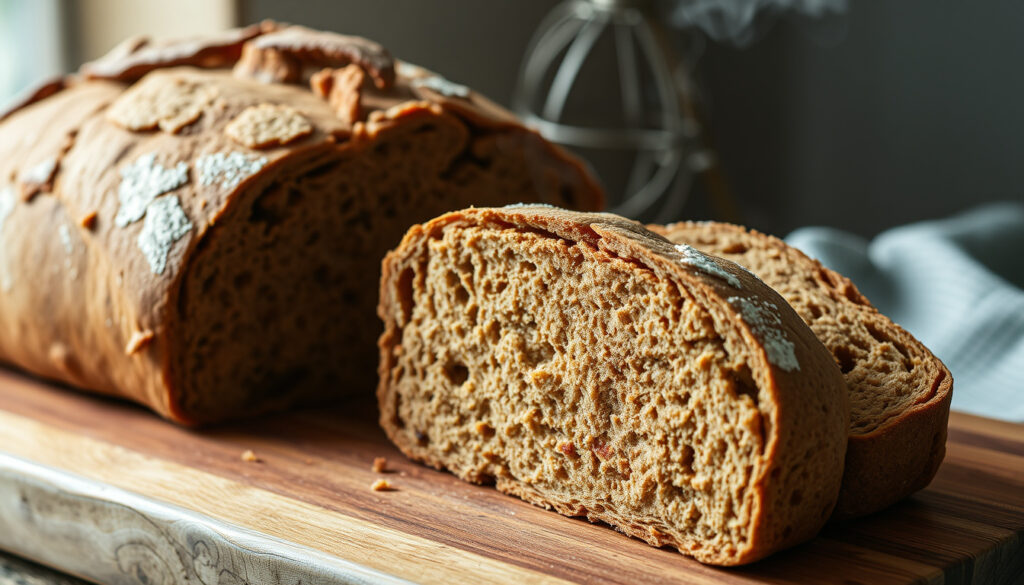
Simple Brown Bread Recipe: Authentic Irish Loaf
Irish brown bread is a hearty, wholesome loaf traditionally made with wholemeal flour, buttermilk, and baking soda, yielding a dense, nutty bread with a crunchy crust. This simple brown bread recipe produces results comparable to artisan bakery loaves without requiring advanced skills or specialized equipment.
Brown Bread Recipe Summary
Prep Time
10–15 minutes
Bake Time
35–45 minutes
Total Time
45–60 minutes
Temperature
180–200°C (350–400°F)
Yield
1 loaf (~12 slices)
Storage
2–3 days at room temperature; up to 3 months frozen
What Is Irish Brown Bread
Irish brown bread is a traditional quick bread made primarily with wholemeal flour, often combined with a portion of plain flour for improved structure and rise. Unlike yeasted breads, it relies on baking soda reacting with acidic buttermilk for leavening. It typically differs from white bread by retaining the bran and germ layers of the wheat grain, which contribute to its denser texture and nuttier flavor profile.
The distinction between brown bread and whole wheat bread lies in the specific flour blends used. While whole wheat bread uses exclusively whole wheat flour, traditional Irish brown bread typically employs a mixture that may include both wholemeal and refined flours, creating a balance between authentic heartiness and a lighter crumb. This type of bread holds cultural significance in Ireland, where it has been a staple for centuries in both home kitchens and bakeries.
Ingredients for Simple Brown Bread
| Ingredient | Amount | Purpose |
|---|---|---|
| Wholemeal flour | 1½–2 cups (200–250g) | Provides fiber, nutty flavor, and dense texture |
| Plain/all-purpose flour | 1–1½ cups (125–190g) | Balances density and improves rise |
| Baking soda | 1 tsp | Leavening agent that reacts with acid in buttermilk |
| Salt | ¾–1 tsp | Enhances overall flavor |
| Buttermilk | 1¾ cups (400ml) | Adds tanginess, moisture, and activates leavening |
| Optional: brown sugar or honey | 1 tbsp | Subtle sweetness and caramel notes |
| Optional: butter (melted) | 1–2 tbsp | Richness and softer crumb |
Step-by-Step Brown Bread Instructions
The mixing process involves combining dry ingredients thoroughly before gradually incorporating wet ingredients until a soft, slightly sticky dough forms. Unlike yeasted breads, this quick bread requires minimal handling to achieve the best texture.
Instructions
- Preheat your oven to 200°C (400°F) and line a baking sheet or grease a loaf pan.
- In a large mixing bowl, whisk together the wholemeal flour, plain flour, baking soda, and salt until evenly combined.
- Make a well in the center of the dry ingredients and pour in the buttermilk along with any optional additions like melted butter or honey.
- Stir the mixture with a wooden spoon or your hands until a shaggy, soft dough forms—avoid overmixing.
- Turn the dough onto a lightly floured surface and gently shape it into a round loaf, handling it minimally.
- Flatten the dough to about 5cm (2 inches) thick and score a deep cross pattern across the top with a sharp knife.
- Place on the prepared baking sheet and bake for 35–45 minutes until the crust sounds hollow when tapped on the bottom.
Baking Your Brown Bread to Perfection
Brown bread typically bakes at temperatures ranging from 180–200°C (350–400°F) for approximately 30–45 minutes depending on loaf size and oven characteristics. The key indicators of doneness include a golden-brown crust and a hollow sound when the bottom is tapped.
Some recipes employ a two-stage baking approach, starting at a higher temperature for the first 15 minutes to set the crust, then reducing heat for the remaining baking time. Using a skewer or toothpick inserted into the center should yield a clean insert when the bread is fully cooked through.
Allow the bread to cool on a wire rack for at least 10 minutes before slicing to let the internal structure set properly. Cutting too early may result in a gummy center texture.
Tips for the Best Brown Bread Results
- Buttermilk quality: Using buttermilk instead of regular milk can produce a more tender crumb and tangier flavor in brown bread, though plant-based alternatives with a splash of vinegar may work as substitutes.
- Flour texture: For a lighter result, use fine-ground wholemeal flour rather than coarse grain meals; a blend of wholemeal and plain flour typically yields the best rise.
- Handling matters: Do not overmix the dough as excessive handling develops gluten strands, resulting in a tough, dense loaf that lacks the desired soft interior.
- Dough consistency: The dough should remain soft and slightly sticky; add buttermilk a tablespoon at a time if the mixture appears too dry.
- Fresh leavening: Verify that baking soda is fresh by testing it in a small amount of vinegar—it should fizz immediately if active.
Common Brown Bread Problems and Solutions
| Sign/Situation | Risk Level | Recommended Action | Urgency |
|---|---|---|---|
| Dense, heavy loaf that did not rise | Medium | Check that baking soda is fresh; ensure buttermilk is not too cold; verify correct flour ratios—using too much wholemeal can weigh down the dough. | High |
| Bread crumbles when sliced | Low | The dough may have been too dry or over-handled during shaping; add moisture gradually and minimize kneading to 3–5 gentle folds. | Medium |
| Gummy or doughy center | High | Under-baking is likely the cause; extend baking time until the internal temperature reaches approximately 93°C (200°F) and the skewer test comes out clean. | Immediate |
| Bitter aftertaste | Medium | Over-measured baking soda often creates bitterness; measure ingredients precisely and sift leavening agents to prevent uneven distribution. | Medium |
| Flat top with no rise | Medium | Stale buttermilk lacks sufficient acid to react with baking soda; use fresh buttermilk at room temperature for optimal leavening. | High |
Serving and Storing Your Brown Bread
Brown bread stays freshest when stored in an airtight container at room temperature for 2–3 days, though this timeframe may vary depending on humidity and ambient conditions. The bread may also be frozen for longer-term storage—typically up to three months when wrapped properly in freezer-safe packaging.
For best results when freezing, slice the bread before freezing to allow for convenient individual portions. Thaw slices at room temperature or refresh them in a warm oven for a few minutes to restore the crust’s crunch. Brown bread pairs exceptionally well with soups, stews, and preserves, with its hearty crumb absorbing liquid beautifully.
Frequently Asked Questions About Brown Bread
Can brown bread be made without yeast?
Yes, brown bread can be made without yeast using baking soda as the leavening agent. Traditional Irish brown bread relies on the reaction between baking soda and acidic buttermilk, allowing for a quicker preparation time of under an hour compared to yeasted breads.
What flour substitutions work for brown bread?
Wholemeal flour substitutions such as spelt or rye may alter the flavor and texture characteristics of the final loaf. Spelt tends to produce a lighter result, while rye adds a distinct earthy depth. Gluten-free flour blends with xanthan gum can work, though the resulting texture may differ from traditional versions.
Is brown bread more nutritious than white bread?
Brown bread is generally considered more nutritious than refined white bread due to its higher fiber content from retaining the bran and germ layers of the wheat grain. The exact nutritional profile varies based on the flour blend used and any additional ingredients, but the fiber advantage is consistent across most versions.
Why is a cross scored on top of Irish brown bread?
The traditional cross cut on Irish brown bread serves both practical and symbolic purposes. Functionally, it helps steam escape during baking and guides the bread’s rise for more even distribution. Culturally, the cross represents a blessing and reflects centuries of Irish baking tradition.
Can I make brown bread vegan?
Vegan brown bread can be made by substituting traditional buttermilk with plant-based alternatives such as oat milk or soy milk combined with a tablespoon of vinegar or lemon juice to create the necessary acidity for the baking soda reaction.
How do I know when brown bread is fully baked?
Fully baked brown bread should feel firm when gently pressed, produce a hollow sound when tapped on the bottom, and register approximately 93°C (200°F) on an internal thermometer. A skewer inserted into the center should emerge clean without wet dough attached.
Trust and Transparency
Information sources used: This article draws from publicly available recipe resources and traditional Irish baking practices documented across multiple cooking websites, including The View from Great Island, Vintage Kitchen Notes, Bigger Bolder Baking, EthnicSpoon, and The Irish Man’s Wife.
Could not be independently verified: Specific nutritional values, precise baking times for individual oven models, and long-term storage outcomes may vary. Recipe proportions represent commonly cited ranges rather than a single authoritative standard.
What to Verify
- Confirm baking soda freshness before each use by testing with a small amount of vinegar—it should fizz immediately if active.
- Verify oven temperature accuracy using an independent oven thermometer, as dial settings may not reflect actual internal temperatures.
- For food safety questions about ingredient storage or shelf life, consult official sources such as the Food Safety Authority of Ireland.
- Check gluten content labeling on flour packages if preparing bread for individuals with celiac disease or gluten sensitivity.
More related posts
 Words Starting with X: Short, Common & Scrabble Words
 Best Plants for Beginners: Easy Indoor & Outdoor Picks
 Golf Grand Slam Winners: Who Has Won All Four Majors
 Suzuki Swift for Sale: What Irish Buyers Need to Know
 Real Madrid vs Athletic Club: All-Time Record & El Viejo Clásico
 Dunnes Stores Ravioli Gluten Recall: Refund Details
 Houses for Sale in Trim: 2025 Guide to Trim Property Market
 What’s On in Dublin Today: Free Events, Exhibitions & Concerts