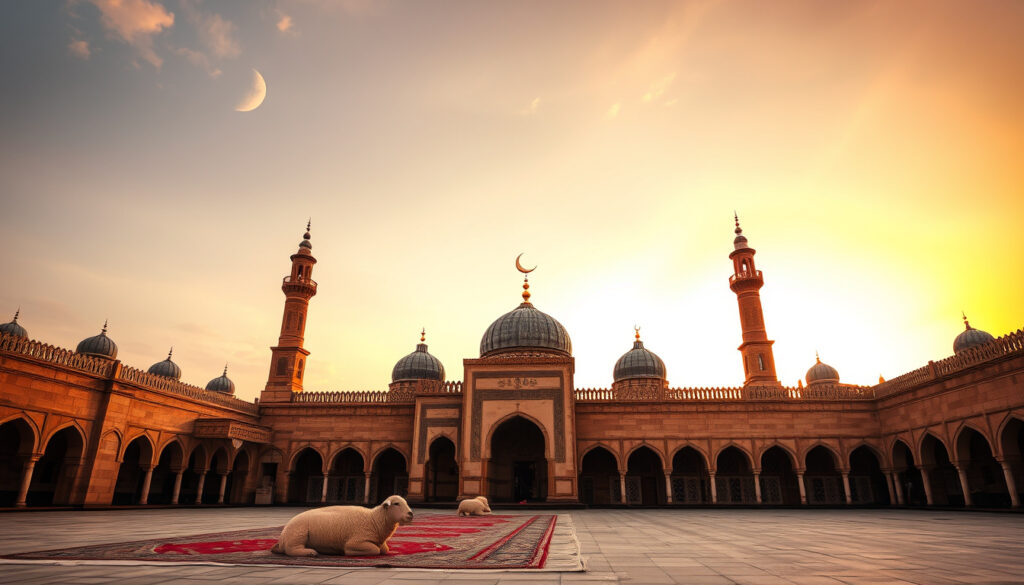
Eid al-Adha 2026: Predicted Dates, Duration, and Key Facts
Figuring out exactly when Eid al-Adha 2026 will fall can feel like a small puzzle, especially when different countries seem to be celebrating on different days, but the reason isn’t confusion—it’s the moon. This guide pulls together the most reliable predictions for the 2026 observance, looks at how long the holiday lasts, and answers practical questions.
Most official sources agree that Eid al-Adha will begin on the evening of Tuesday, 26 May 2026, with the main day falling on Wednesday, 27 May 2026, in Saudi Arabia and most Gulf states. A few regions, including South Africa, East Asia, and Oceania, may start a day later because their moon-sighting conditions differ. Let’s walk through the details, the differences, and what they mean for your plans.
Predicted start date: 26 May 2026 (evening) · Main holiday day: 27 May 2026 · Islamic date: 10 Dhul-Hijjah 1447 AH · Duration: 3–4 days in most countries · Alternate start (some regions): 28 May 2026
Confirmed facts
- Saudi Arabia & most Gulf states: 27 May 2026 (main day) — Gulf News
- Predicted start (evening): 26 May 2026 — Ahram Online
- Alternate start (South Africa, East Asia, Oceania): 28 May 2026 — Gulf News
- 10 Dhul-Hijjah 1447 AH (first day of Eid) — Ahram Online
- 9 Dhul-Hijjah: Day of Arafah (observed one day before Eid) — Gulf News
- Most regions: 3 to 4 days — Islamic Relief UK
- Saudi Arabia: 4 days (27–30 May) — Gulf News
- Philippines: 1 day national holiday (27 May, with possible extended break) — GMA News Online
- Feast of Sacrifice (English) — Islamic Relief UK
- Bakrid / Bakra-Eid (South Asia) — Wikipedia
- Hari Raya Haji (Southeast Asia) — Wikipedia
- Tabaski (West Africa) — Wikipedia
What are the possible dates for Eid al-Adha 2026?
The date of Eid al-Adha depends on the sighting of the crescent moon of Dhul-Hijjah, the 12th month of the Islamic calendar. According to Ahram Online (Egyptian state-affiliated media), the predicted date for Eid al-Adha in 2026 is Wednesday, 27 May. This aligns with the prediction from Gulf News (UAE-based daily newspaper), which reports that the UAE will likely observe Eid al-Adha starting on 27 May 2026, with Arafat Day on 26 May.
Astronomical calculations support these predictions. The Islamic Crescent Observation Project (ICOP) expects the crescent to be visible on 17 May 2026 from parts of East Asia, southern Africa, and South America, which would make 18 May the first day of Dhul-Hijjah and 27 May the first day of Eid, according to Gulf News (UAE-based daily newspaper). However, the same source notes that some regions, including South Africa, East Asia, and Oceania, may see the crescent a day later, pushing their Eid to 28 May.
For Egypt, Ahram Online (Egyptian state-affiliated media) reports that the country’s Dar Al-Ifta announced Eid al-Adha would begin on Wednesday, 27 May 2026, after confirming the moon sighting. This gives Egypt the same start date as Saudi Arabia.
How long is Eid al-Adha 2026?
The calendar below shows how the predicted dates align across different regions, making it easier to see where the moon-sighting difference could play out.
| Region / Country | Predicted first day of Eid | Duration | Public holiday status |
|---|---|---|---|
| Saudi Arabia | 27 May 2026 | 4 days (27–30 May) | Yes (official) |
| UAE | 27 May 2026 | 4 days | Yes (official) |
| Egypt | 27 May 2026 | 3–4 days | Yes (official) |
| Philippines | 27 May 2026 | 1 day (public holiday) | Yes (national, for Muslim regions) |
| South Africa, East Asia, Oceania | 28 May 2026 (possible) | 3–4 days | Depends on official announcement |
The table highlights a clear pattern: the moon sighting determines the date, and regions with different visibility windows can be one day apart. This is not a scheduling error—it is the nature of a lunar calendar.
What is Eid al-Adha?
Eid al-Adha, or the “Feast of Sacrifice,” commemorates the willingness of the Prophet Ibrahim (Abraham) to sacrifice his son as an act of obedience to God. According to Islamic tradition, God provided a ram to sacrifice instead. To remember this event, Muslims around the world perform Qurbani—the ritual slaughter of an animal (sheep, goat, cow, or camel)—and distribute the meat among family, friends, and those in need.
The holiday follows the completion of the Hajj pilgrimage in Mecca, which is one of the Five Pillars of Islam. The Day of Arafah, which falls on 9 Dhul-Hijjah, is considered the most important day of the pilgrimage, and many Muslims who are not performing Hajj observe it with fasting.
What is the difference between Eid al-Adha and Eid al-Fitr?
One of the most common questions is how Eid al-Adha compares to Eid al-Fitr. While Eid al-Fitr marks the end of Ramadan and is a celebration of fasting completion, Eid al-Adha is tied to the Hajj and the story of sacrifice. The two holidays differ in their rituals and their timing—Eid al-Fitr is observed on the first day of Shawwal, while Eid al-Adha is observed on the 10th day of Dhul-Hijjah.
Is Eid al-Adha a holiday in 2026?
In most Muslim-majority countries, Eid al-Adha is officially recognized as a public holiday. Here’s how it shapes up in a few key places:
- Saudi Arabia – A long break of four days (27–30 May) is expected, with many government and private sectors closed during this period.
- UAE – The government typically announces a four-day break for public and private sectors, beginning with Arafat Day on 26 May.
- Egypt – A three-to-four-day break is announced by the cabinet, covering the Eid days and adjacent weekend.
- Philippines – The National Commission on Muslim Filipinos (NCMF) recommends declaring 27 May 2026 as a national holiday. This is currently a recommendation, not yet a final proclamation, as explained by GMA News Online (Philippine news network).
Notably, Eid al-Adha is not a federal holiday in the United States. Many American Muslims take personal or vacation days, and some schools and businesses may close in areas with large Muslim populations, but there is no federal recognition.
For workers in countries that do not officially recognize the holiday, planning ahead is essential—much like planning for Mother’s Day 2026. The predicted dates give employers and employees enough notice to arrange time off, even before the official moon-sighting announcement.
How is the date determined each year?
The Islamic calendar is lunar, meaning each month begins with the sighting of the crescent moon. The day of Eid al-Adha is set for the 10th day of Dhul-Hijjah, but the first day of that month depends on the moon’s visibility. This creates a natural variation of one day between regions, as explained by the Islamic Relief UK (humanitarian organization).
Some countries rely on physical moon-sighting, while others use astronomical calculations. Saudi Arabia and Egypt use official moon-sighting committees, while countries like Turkey and Malaysia often rely on astronomical predictions. This does not mean one is more “correct” than the other—it simply reflects different interpretative traditions.
In 2026, the crescent of Dhul-Hijjah is predicted to be visible on 17 May from parts of East Asia, southern Africa, and South America. However, weather conditions and atmospheric visibility can make it difficult to spot the crescent, which is why some regions may start a day later than others. (Similar to how Easter’s date is determined by the lunar calendar.)
What does Qurbani involve in 2026?
Qurbani is a central ritual of Eid al-Adha. It involves sacrificing an animal—typically a sheep, goat, cow, or camel—and dividing the meat into three parts: one for the family, one for friends and relatives, and one for the poor and needy. For 2026, families who are financially able are expected to perform Qurbani on 27, 28, or 29 May, depending on their local Eid date.
The process requires an animal that is healthy and has reached the proper age. Sheep and goats should be at least one year old, cows at least two, and camels at least five. Many organizations offer Qurbani services, where the sacrifice is performed on your behalf and the meat is distributed to communities in need.
One important point: Qurbani is obligatory for those who are financially capable, not for every Muslim. The threshold for “capability” is usually having savings above the Nisab (the minimum amount of wealth that makes Zakat obligatory). If you plan to perform Qurbani, it’s wise to arrange it in advance—both the animal and the distribution—so you can meet the Eid deadline.
Confirmed facts vs. what’s still uncertain
While the predicted date is well documented across multiple sources, there are a few details that remain unconfirmed. Let’s separate what we know from what is still open to change.
- Confirmed: The predicted Gregorian date for Eid al-Adha in 2026 is 27 May (with 26 May evening as the start).
- Confirmed: The Islamic date is 10 Dhul-Hijjah 1447 AH.
- Confirmed: Duration is 3 to 4 days in most regions.
- Confirmed: It is not a federal holiday in the United States.
- Reportedly: The Philippines may declare 27 May 2026 as a national holiday, but this is still a recommendation from the NCMF and requires presidential proclamation.
- Reportedly: Some regions (South Africa, East Asia, Oceania) may start on 28 May 2026 due to moon-sighting differences.
The distinction matters. If you are planning travel or work bookings, treat the 27 May date as the most likely scenario, but leave some flexibility if you are in a region that sometimes follows a different sighting.
What the experts and sources are saying
The predictions for 2026 come with strong confidence from reputable sources, but there is also a layer of contingency built into every announcement.
“Egypt’s Dar Al-Ifta announced that Egypt would celebrate Eid al-Adha starting on Wednesday, 27 May 2026 after confirming the sighting of the moon for Dhul-Hijja.”
“The crescent for Dhul-Hijjah is expected to be visible on that day using telescopes from parts of East Asia, southern Africa, and South America.”
The consistent message from Arabic-language and international news outlets is that the predicted date is 27 May 2026, with an evening start on 26 May. The moon-sighting event that will confirm this is expected to occur on 17 May 2026.
For the Philippines, GMA News Online (Philippine news network) provides a slightly different angle: the NCMF has recommended 27 May 2026 as the holiday, but the final decision rests with the Office of the President. This illustrates how even official recommendations can change.
gulfnews.com, ndtvprofit.com, gulfnews.com, english.ahram.org.eg, english.ahram.org.eg, hindustantimes.com, english.ahram.org.eg, dispatch.com
Frequently asked questions
What is Eid al-Adha and why is it celebrated?
Eid al-Adha, or the Feast of Sacrifice, commemorates Prophet Ibrahim’s willingness to sacrifice his son. Muslims celebrate by performing Qurbani and sharing meat with those in need.
Is Eid al-Adha a public holiday in the Philippines?
The NCMF has recommended declaring 27 May 2026 as a national holiday, but the official proclamation has not yet been made. Once signed by the President, it will apply nationwide.
Is Eid al-Adha a public holiday in the United States?
No, Eid al-Adha is not a federal holiday in the United States. It is a religious observance, and many American Muslims take personal leave to celebrate.
Can I celebrate Eid al-Adha if I am not Muslim?
Yes, many non-Muslims join their Muslim friends, neighbors, and colleagues in celebrations, meals, or charity events during Eid al-Adha. It is a community-oriented holiday.
Why do some regions celebrate Eid al-Adha on different days?
The start of the Islamic month of Dhul-Hijjah depends on a physical moon sighting. Atmospheric conditions and geographic location can cause a one-day difference between regions.
Eid al-Adha in 2026 will be a time of reflection, generosity, and community for Muslims worldwide. With the predicted date now clear for most regions, the practical steps—planning time off, arranging Qurbani, and coordinating with family—can all move forward. The only real variable is the moon, and that is a variable every Muslim community has learned to live with.
What’s next
Check your local moon-sighting committee’s announcement in the days before 17 May 2026.
Contact a trusted organization to arrange your sacrifice if you plan to perform Qurbani.
If you’re in a country with a 4-day break, use the confirmed calendar to book travel or rest.
More related posts
 What Size Ovarian Cyst Is Dangerous? Symptoms & Chart
 Cheltenham Gold Cup 2026: Race Overview & Key Facts
 Houses for Sale Limerick 2025: City & County Listings Guide
 EUR to INR Forecast 2026: Will the Euro Rise or Fall
 Match of the Day Tonight – BBC Schedule and Viewing Guide
 World Book Day Ireland 2026: Date, Events and How to Participate
 Movies to Watch 2025: Top 10 Picks from Critics & IMDb
 Romeo and Juliet 1996 – Cast, Plot, Facts and Legacy