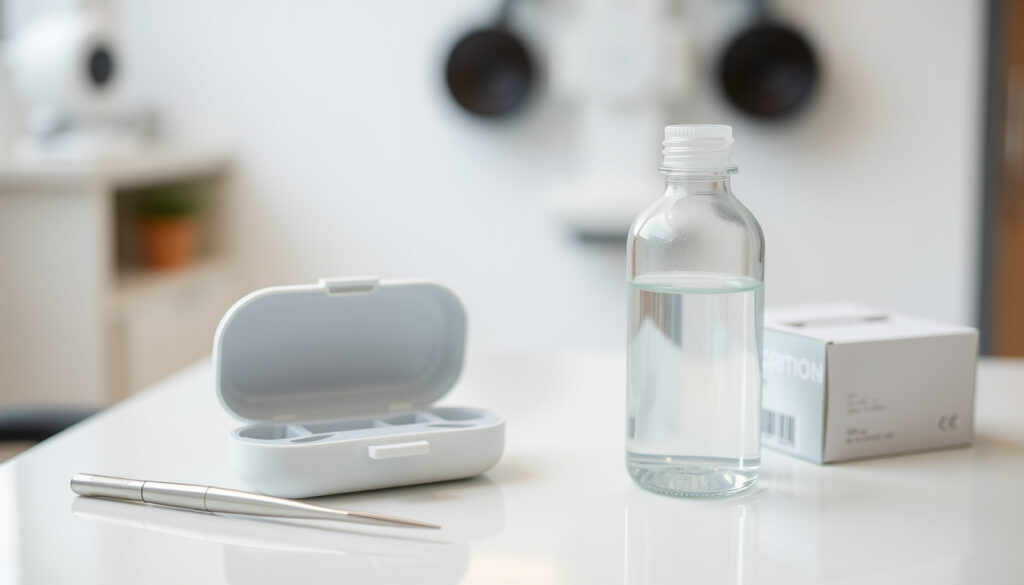
Contact Lenses Same Day: Can You Get Them
Getting contact lenses same day is possible, but speed and safety don’t always align. Whether you’ve run out of your supply or your eyes have felt uncomfortable all day, you need to know the real options.
Contact lens wearers in the US: Over 40 million · Percentage of wearers using daily disposables: Approximately 30% · Typical prescription validity: 1–2 years · Opticians offering same‑day dispensing: Most high‑street opticians · Online order cut‑off for same‑day dispatch: Often 2:00 PM local time · Daily wear recommended maximum hours: 8–12 hours
Quick snapshot
- Contact lenses require a prescription in most countries (National Eye Institute (US government eye health authority))
- Extended wear lenses are FDA‑approved for up to 30 nights of continuous wear (National Eye Institute)
- Exact same‑day availability varies by retailer and stock
- Specific policies for walk‑in purchases differ between chains
- Online orders placed before 2:00 PM local time are often dispatched the same day
- No unverified claims currently identified
- Verify your prescription and choose between a walk‑in visit or online same‑day dispatch
Five key facts to keep in mind when planning an urgent lens purchase.
| Category | Detail |
|---|---|
| Same‑day availability | Yes, at many opticians and online stores with next‑day delivery |
| Prescription needed | Yes, a valid contact lens prescription is required |
| Overnight wear approval | Only for FDA‑approved extended wear lenses |
| Nap safety | Not recommended for daily wear lenses |
| Solution travel limit | 3.4 oz (100 ml) per container, in a quart‑sized bag |
Is it possible to get contacts the same day?
Same‑day options: walk‑in vs online
- Many opticians and online retailers offer same‑day dispensing if stock is available and your prescription is on file. In‑store fitting appointments may require a prior eye exam, but some stores can perform an exam and dispense the same day (National Eye Institute).
- Online orders placed before a cutoff time (often 2:00 PM local time) are dispatched the same day, with next‑day delivery.
Typical wait times for prescription verification
- If your prescription is already on file, the store can verify it within minutes. New prescriptions require an eye exam, which can usually be completed in a 30‑ to 60‑minute appointment at an optician (FDA (US food and drug regulator)).
For a same‑day purchase, your best bet is to call ahead and confirm stock and prescription status. Online ordering shaves off the wait time but costs a day in shipping.
The implication: Same‑day availability depends on having a valid prescription and stock, so planning ahead is essential.
Can you walk into a store and buy contacts?
Requirements for in‑store purchase
- Most optical stores require a valid contact lens prescription before selling. Some stores may offer a temporary trial pair during an eye exam (FDA).
- A prescription is legally required in the US and UK, even if you know your power.
Which retailers allow walk‑in sales?
- High‑street opticians (e.g., Specsavers, Vision Express) typically accept walk‑ins for eye exams and immediate lens dispensing if stock is available.
- Pharmacies like Boots (UK) or Walmart (US) may stock contact lenses but will still ask for a valid prescription before completing the sale.
Without a prescription, walk‑in purchase is impossible. Schedule an eye exam first if yours is expired or you haven’t worn contacts before.
The catch: A prescription is the non‑negotiable gateway to any same‑day lens purchase.
Can you get 24 hour contact lenses?
What are extended wear contact lenses?
- Extended wear lenses are FDA‑approved for up to 6–30 nights of continuous wear. They are made of materials that allow more oxygen to reach the cornea (National Eye Institute).
- The American Academy of Ophthalmology (AAO (leading professional eye association)) states that extended wear can be useful and safe for properly selected and carefully monitored users.
Safety guidelines for overnight wear
- Overnight wear increases the risk of serious corneal infection by six to eight times compared to daily wear (American Academy of Ophthalmology).
- The FDA advises that eye care professionals generally do not recommend extended wear lenses for children and teens because they can increase the incidence of corneal ulcers (FDA).
- Smoking also raises the risk of corneal ulcers for contact lens users, especially when lenses are worn overnight (FDA (medical device premarket approval data)).
What this means: Extended wear lenses are not a free pass to sleep in contacts; they require careful medical supervision and carry elevated risks.
Can I take a 20 minute nap with contacts in?
Risks of napping in contacts
- Sleeping in daily lenses reduces oxygen flow to the cornea and can trap debris, increasing infection risk. Even a short nap is not recommended for daily wear lenses (National Eye Institute).
- The American Academy of Ophthalmology warns that overnight wear, regardless of lens type, increases the likelihood of corneal infection (AAO).
What to do if you fall asleep accidentally
- If you nap accidentally, use rewetting drops immediately after waking and give your eyes a break for a few hours before reinserting fresh lenses.
- If you experience redness, pain, or blurred vision, remove the lenses and consult an eye doctor promptly.
Daily wear lenses are not designed to be slept in — a 20‑minute nap still cuts oxygen and raises infection risk. Extended wear lenses are marginally safer but still carry danger. The safest option is to remove lenses before any sleep.
The pattern: Even brief naps with daily wear lenses significantly increase infection risk, making removal the only safe practice.
What is the 3:1:1 rule for contacts?
TSA regulations for contact lens solution
- The TSA 3‑1‑1 rule applies to contact lens solution: containers must be 3.4 oz (100 ml) or less, all placed in one quart‑sized bag, one bag per passenger (TSA (US Transportation Security Administration)).
- Contact lenses themselves are not restricted, but solution is considered a liquid.
Packing tips for travel with contacts
- Frequent travelers may purchase travel‑sized solution or use daily disposables to simplify security screening.
- Always carry a spare pair of lenses and a backup solution bottle in your carry‑on in case checked luggage is delayed.
If you rely on a large bottle of solution, transfer it into multiple small TSA‑approved containers to avoid confiscation. Better yet, switch to daily disposables for the trip — no solution needed.
The implication: The 3‑1‑1 rule is straightforward, but planning ahead with travel‑sized solutions or daily disposables can save time at security.
Upsides and Downsides of Same‑Day Contact Lenses
Upsides
- Immediate relief if you lose or damage lenses
- Can combine an eye exam and lens purchase in one visit
- Online ordering with same‑day dispatch often delivers by next morning
- Many retailers accept insurance and flexible spending accounts
Downsides
- Requires a current prescription — expired or no prescription means a wait for an exam
- Walk‑in stock may be limited, especially for specialty lenses (toric, multifocal)
- Extended wear options carry higher infection risk and require careful monitoring
- Same‑day online orders cost shipping and may not arrive until late the next day
How to Get Contact Lenses Same Day: A Step‑by‑Step Guide
- Check your prescription. Contact lenses require a valid prescription (usually 1–2 years old). If expired, schedule an eye exam (National Eye Institute).
- Choose your channel: Walk into an optician for immediate pickup, or order online before the retailer’s cutoff time (commonly 2:00 PM local time) for same‑day dispatch.
- Place your order. Provide your prescription details. Online orders will verify with your eye doctor. In‑store, the staff will pull your lenses and check fit if needed.
- Pick up or receive delivery. If bought in store, lenses are yours immediately. Online orders ship the same day and arrive via next‑day courier.
- Wear safely. Follow the wearing schedule: daily disposable lenses must be removed and discarded each evening; extended wear lenses must be replaced on schedule and require proper hygiene (FDA).
Skipping the prescription step puts your eyes at risk. Even if you think your power hasn’t changed, an outdated prescription can lead to discomfort or infection.
The pattern: Following the steps ensures you get lenses safely and legally, avoiding the dangers of outdated prescriptions.
What We Know for Sure
Confirmed facts
- Contact lenses require a prescription in most countries (National Eye Institute).
- Extended wear lenses exist and are approved for overnight use (National Eye Institute).
- Napping in daily wear lenses increases infection risk (American Academy of Ophthalmology).
- The TSA 3‑1‑1 rule applies to contact lens solution (TSA).
What’s unclear
- Exact same‑day availability varies by retailer and stock.
- Specific policies for walk‑in purchases differ between chains.
Expert Perspectives on Contact Lens Safety
“Sleeping in contact lenses increases the risk of serious corneal infection by six to eight times.”
American Academy of Ophthalmology (leading professional eye association)
“The FDA advises not to sleep in contact lenses unless they are prescribed to be used that way.”
FDA (US food and drug regulator)
“Contact lens solution must be in containers of 3.4 ounces (100 ml) or less and placed in a single quart‑sized bag per passenger.”
Summary
Getting contact lenses the same day is feasible if you have a valid prescription and choose the right channel. But the convenience of same‑day access should never compromise eye health. Sleeping in lenses — even for a short nap — dramatically raises infection risk, and extended wear lenses, while available, require careful medical supervision. For anyone in the US or UK seeking urgent lenses, the smartest move is to prioritize safety over speed: schedule an eye exam if needed, buy only from reputable sources, and never wear daily lenses overnight.
accessdata.fda.gov, lens.com, guidelinecentral.com, aao.org, accessdata.fda.gov, aao.org, meriden-sbroad.refocuseyedoctors.com
Frequently asked questions
Can I buy contact lenses without a prescription?
No. In the US, the FDA classifies contact lenses as medical devices, and a valid prescription is legally required for purchase. The same applies in the UK and most other countries (FDA).
How long does it take to get contact lenses after ordering online?
If you order before the retailer’s cut‑off (often 2:00 PM local time), lenses are dispatched the same day and typically arrive the next business day. Some retailers offer express delivery for a fee.
What should I do if my contact lens gets stuck in my eye?
Wash your hands, try to blink or use rewetting drops to encourage movement. If the lens remains stuck or causes pain, seek medical help. Never force it out (National Eye Institute).
Are daily contact lenses cheaper than monthly?
Daily disposables have a higher per‑lens cost but eliminate cleaning solutions and cases. Monthly lenses are less expensive per pair but require ongoing solution purchases. The total annual cost is similar depending on usage frequency.
Can I swim with contact lenses?
No. Swimming with contacts exposes them to waterborne bacteria and increases the risk of corneal infection, including Acanthamoeba keratitis (American Academy of Ophthalmology).
How often should I replace my contact lens case?
Replace your lens case every three months — or sooner if it becomes cracked, cloudy, or difficult to clean. Rinse it with fresh solution (not water) after each use (National Eye Institute).
Do colored contact lenses require a prescription?
Yes. Even non‑corrective colored lenses are medical devices in the US and require a prescription. Unregulated purchase can lead to corneal scratches, infections, and vision loss (FDA).
Related reading
More related posts
 The Grey Cat in Reykjavík, Iceland: Not a Bar, But a Breakfast Café
 Where is the Black Sand Beach in Iceland? Reynisfjara Location
 Homestore & More Blanchardstown: Hours, Location & Ownership
 The Day of the Jackal (TV Series) Episodes: List & Season 2
 Words Starting with X: Short, Common & Scrabble Words
 Jake Paul vs Anthony Joshua: Result, Date, Highlights
 Valero Texas Open 2025: Tickets, Players, Scores & TV
 George Strictly Come Dancing: Who is George Clarke? Age & Career