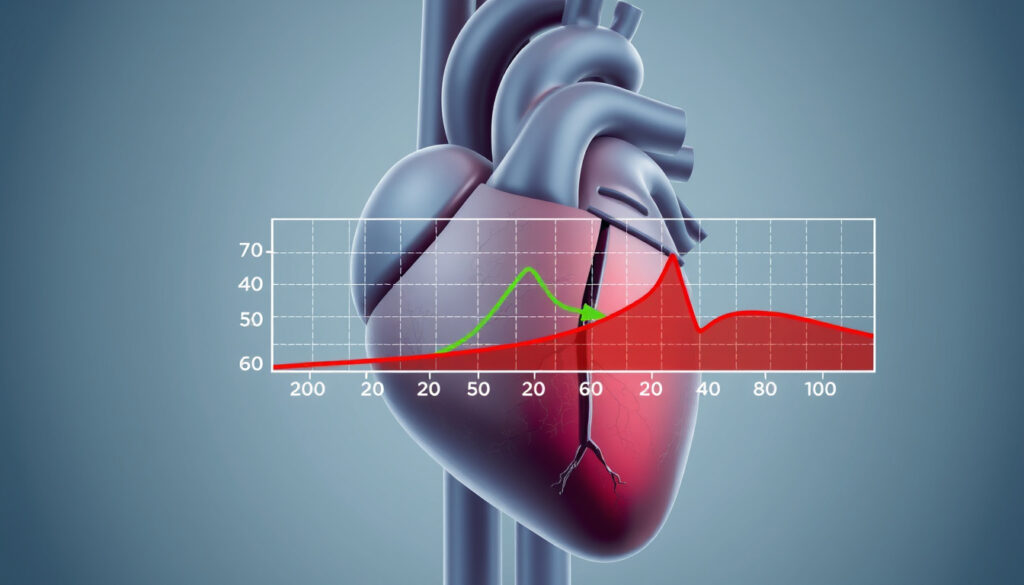
Resting Heart Rate by Age: Normal Ranges and Danger Zones
You’ve probably checked your pulse after a workout or during a restless night and wondered: is this number normal? The truth is, resting heart rate isn’t one-size-fits-all — it shifts with age, fitness level, and even the time of day.
Normal adult resting heart rate (18+): 60–100 bpm ·
Above average fitness resting heart rate: 40–60 bpm ·
Children (6–12 years) resting heart rate: 75–118 bpm ·
Elderly (over 60) typical resting heart rate: 60–100 bpm ·
Danger zone (tachycardia) threshold: >100 bpm at rest
Quick snapshot
- Normal adult resting heart rate is 60–100 bpm (American Heart Association)
- Children 6–12 years: 75–118 bpm (Cleveland Clinic)
- Tachycardia defined as >100 bpm at rest (Cleveland Clinic)
- Exact “stroke level” bpm varies by individual and underlying condition
- Whether 50 bpm is “better” than 80 depends on fitness, medications, and symptoms
- Gender-specific official normal ranges are not established by AHA
- Resting heart rate naturally declines from childhood through adolescence, stabilising in adulthood, then may rise slightly after age 65 (Cleveland Clinic)
- More research into gender-specific bpm reference ranges
- Wearable devices may soon provide personalised age-adjusted alerts
The table below breaks down normal resting heart rate by age group, drawing on data from leading medical institutions.
| Age group | Normal resting heart rate (bpm) | Source |
|---|---|---|
| Newborn (birth–4 weeks) | 100–205 | Cleveland Clinic |
| Infant (4 weeks–1 year) | 100–180 | Cleveland Clinic |
| Toddler (1–3 years) | 98–140 | Cleveland Clinic |
| Preschool (3–5 years) | 80–120 | American Heart Association |
| School-age (5–12 years) | 75–118 | CDC |
| Adolescent (13–17 years) | 60–100 | Cleveland Clinic |
| Adult (18+) | 60–100 | American Heart Association |
| Athlete (any adult age) | 40–60 | Mayo Clinic |
Eight age bands, one pattern: heart rate slows as children grow, stabilises through adulthood, then stays in the same 60–100 bpm corridor from adolescence onward. Athletes are the exception, often resting 20–40 beats lower.
What is an ideal resting heart rate by age?
Normal resting heart rate ranges for children
- Newborn (birth–4 weeks): 100–205 bpm — a newborn’s heart works harder to support rapid growth (Cleveland Clinic)
- Infant (4 weeks–1 year): 100–180 bpm
- Toddler (1–3 years): 98–140 bpm
- Preschool (3–5 years): 80–120 bpm
- School-age (5–12 years): 75–118 bpm
- Adolescent (13–17 years): 60–100 bpm
Children’s hearts beat faster than adults’ — a preschooler’s normal resting rate can look like an adult’s moderate-exercise zone. By adolescence, the rate settles into the adult range.
Normal resting heart rate ranges for adults
For anyone 18 years and older, the American Heart Association defines normal as 60–100 bpm. But Harvard Health notes that most healthy adults sit between 55 and 85 bpm. Highly conditioned athletes can drop to 40–60 bpm because their heart pumps more blood per beat.
A resting rate of 50 bpm might be a sign of excellent fitness in a 30-year-old marathon runner, but the same number in a 70-year-old on blood-pressure medication could indicate bradycardia. Context — not the number alone — determines whether it’s healthy.
Resting heart rate by age chart
If you prefer a visual summary, the table above captures all age bands in one view. The key takeaway: from adolescence onward, the normal target stays remarkably stable — around 60–100 bpm — unless you’re an athlete.
The implication: age is a smaller factor after your teenage years than fitness level or underlying health. A 50-year-old who exercises regularly can easily have a resting heart rate closer to 50 bpm, and that’s healthy.
What is a good resting heart rate by age and gender?
Does gender affect resting heart rate?
Yes — women tend to have a resting heart rate 3–7 bpm higher than men of the same age, according to Mayo Clinic. This difference is linked to smaller heart size and lower blood volume, which means the heart must beat slightly faster to circulate blood.
Typical resting heart rate for women
Although the official AHA guideline of 60–100 bpm applies to both men and women, a woman’s normal resting rate often sits in the 65–80 bpm range. Some medical sources, including Harvard Health, report that values above 90 bpm consistently warrant a doctor’s awareness, regardless of gender.
Typical resting heart rate for men
Men’s resting rates typically fall between 60 and 75 bpm. A lower rate in men is often tied to higher stroke volume — the amount of blood ejected with each contraction — which can be a sign of good cardiovascular fitness.
The catch: the AHA does not publish separate gender-specific charts for resting heart rate, so any claim of “normal for women: X bpm” comes from population averages rather than official clinical cut-offs. Your personal baseline matters more than a general chart says.
What is a dangerous heart rate?
What is the danger zone for resting heart rate?
- Tachycardia: resting heart rate consistently above 100 bpm (Cleveland Clinic)
- Bradycardia: resting heart rate below 60 bpm, unless you are a trained athlete (Johns Hopkins)
- Extreme danger: resting heart rate above 120 bpm or below 40 bpm with symptoms like dizziness, shortness of breath, or fainting
What is an unsafe resting bpm?
For a person without athletic training, a resting rate below 60 bpm can be bradycardia — especially if accompanied by fatigue, lightheadedness, or fainting. On the other end, a resting rate above 100 bpm that persists over days or weeks is reportedly a strong predictor of cardiovascular events, according to Harvard Health.
One isolated high reading from a wrist monitor after coffee or stress is not an emergency. A resting rate that stays above 100 bpm for several days — or suddenly climbs 20+ bpm from your personal baseline — warrants a call to your doctor.
When to call a doctor for heart rate
- Resting heart rate consistently above 100 bpm with no obvious cause (exercise, fever, dehydration)
- Resting heart rate below 40 bpm with dizziness or fainting
- A sudden jump in resting rate over a few days
- Irregular pulse — skipping beats, fluttering, or feeling like your heart is “racing” for no reason
Why this matters: a persistently elevated resting heart rate stresses your heart muscle over time. Cleveland Clinic reports that patients with tachycardia are at higher risk for blood clots, stroke, and sudden cardiac arrest — especially when combined with other conditions like high blood pressure. The pattern: a sustained deviation from your baseline, not a single reading, is the more reliable danger signal.
What is stroke level heart rate?
How high does heart rate have to be for stroke risk?
There is no single “stroke level” bpm that guarantees a stroke. However, prolonged tachycardia — a resting heart rate above 100 bpm — can increase the risk of stroke, particularly when it is caused by atrial fibrillation (afib). The American Stroke Association states that afib raises stroke risk approximately five-fold, independent of other risk factors.
Atrial fibrillation and stroke link
In afib, the heart’s upper chambers quiver instead of contracting effectively, allowing blood to pool and clot. If a clot travels to the brain, it causes a stroke. The Cleveland Clinic notes that while afib often produces a rapid, irregular heartbeat, some people experience no symptoms — making regular pulse checks important.
The upshot: focusing on a specific bpm number for stroke risk is less useful than monitoring for irregular rhythm. If your resting heart rate jumps above 100 bpm and feels erratic, that is the more urgent signal.
What are the four signs your heart is quietly failing?
Early signs of heart failure
Heart failure can develop silently over months. Cleveland Clinic identifies four key early signs that are often linked to changes in resting heart rate:
- Shortness of breath during everyday activities (climbing stairs, walking to the car)
- Persistent fatigue or low energy
- Swelling in the legs, ankles, or feet (oedema)
- Rapid or irregular heart rate, especially at rest
When to see a cardiologist
If your resting heart rate is consistently above 100 bpm and you notice any of the above signs, especially swelling or breathlessness, schedule an appointment. A resting rate that climbs 10–15 bpm above your baseline over a few weeks can reportedly be an early marker of declining heart function, according to Harvard Health.
For a 55-year-old with a previously steady 65 bpm resting rate, a jump to 85 bpm for no obvious reason — no infection, no change in caffeine — is worth investigating.
Which resting heart rate is healthier, 50 or 80?
Is 52 resting heart rate good for a 60 year old?
A resting rate of 52 bpm in a 60-year-old can be perfectly normal — if that person is active and has no symptoms. Johns Hopkins notes that athletes and highly fit individuals often have resting rates in the 40s and 50s. However, if the same 52 bpm is accompanied by dizziness, shortness of breath, or fatigue, it could indicate bradycardia requiring evaluation.
Lower heart rate benefits
A lower resting heart rate generally means your heart pumps more efficiently — it doesn’t need to work as hard to deliver oxygen. Studies from Harvard Health suggest that people with resting rates in the 50–70 bpm range have lower long-term cardiovascular risk compared to those with rates consistently above 80 bpm.
Risks of very low heart rate
The trade-off: a resting rate below 40 bpm in a non-athlete can be dangerous. It may prevent enough blood from reaching the brain and organs, causing fainting, fatigue, or — in severe cases — cardiac arrest. Medications such as beta-blockers can also lower heart rate, which is desirable for some conditions but requires monitoring.
For a 60-year-old who exercises regularly and feels fine, 52 bpm is likely a sign of good fitness. For a sedentary 60-year-old who feels lightheaded at 52 bpm, it is a clinical question.
Quotes from leading heart-health organizations
“For most adults, a resting heart rate between 60 and 100 beats per minute is normal.”
— American Heart Association (official guidelines on target heart rates)
“A resting heart rate above 100 bpm is called tachycardia.”
— Cleveland Clinic (clinical resource on heart rate)
“A heart rate of 50 bpm can be completely normal for an athlete.”
— Harvard Health (patient guidance on heart rate ranges)
Your resting heart rate is a vital sign — but it’s not a verdict. For most people, staying within the 60–100 bpm range is normal, and being on the lower end without symptoms is usually a positive sign. For the 60-year-old wondering about 52 bpm or the anxious reader checking a reading of 105 bpm, the real question is whether you have symptoms and whether the number is sustained. Track your baseline for a week, measure at the same time each morning before coffee, and if the number stays outside the normal range or feels wrong, talk to a doctor. The pattern matters more than any single reading.
medicinenet.com, everlywell.com, cardiaccarepc.com, healthdirect.gov.au
Frequently asked questions
What is a low resting heart rate that is dangerous?
A resting heart rate below 40 bpm that causes dizziness, fatigue, or fainting is dangerous. In very fit athletes, rates as low as 30 bpm can be normal, but if you experience symptoms, it warrants evaluation by a cardiologist.
Can anxiety cause a high resting heart rate?
Yes. Anxiety and stress trigger the release of adrenaline, which can raise resting heart rate temporarily. Chronic anxiety may contribute to a persistently elevated baseline, but a sustained rate above 100 bpm should be investigated.
How does physical fitness affect resting heart rate?
Regular cardiovascular exercise strengthens the heart muscle, allowing it to pump more blood with each beat. This typically lowers resting heart rate by 5–20 bpm over time, which is a marker of improved fitness. For more on building fitness, see our guide on How to Lose Weight: Science-Backed Methods.
Does caffeine increase resting heart rate?
Caffeine is a stimulant that can temporarily raise heart rate by 3–15 bpm, depending on tolerance and dose. The effect usually subsides within a few hours as caffeine is metabolised.
What is the best time to measure resting heart rate?
First thing in the morning, before getting out of bed or consuming caffeine, provides the most accurate baseline. Avoid measuring after exercise, stress, or a full meal.
Can medication lower resting heart rate?
Yes. Beta-blockers, calcium channel blockers, and some antiarrhythmic drugs are designed to lower heart rate. Always monitor resting rate as instructed by your doctor, and report numbers below 50 bpm or any new symptoms.
Is it normal for heart rate to increase with age?
Resting heart rate generally stays stable from late adolescence through middle age. After age 65, some people experience a slight increase due to natural changes in the heart’s electrical system, but a rise above 100 bpm is not considered normal aging and should be evaluated.
How can I lower my resting heart rate naturally?
Regular aerobic exercise (150 minutes per week of moderate activity), staying hydrated, limiting caffeine and alcohol, managing stress, and getting adequate sleep can all help lower resting heart rate over weeks to months. For overall body awareness, it helps to know other body metrics — see our article on How Many Bones Are in Human Body? Adult, Baby & Gender.
More related posts
 UK Car Tax 2001-2017 Increase: VED Rate Changes Guide
 Tommy Hilfiger Polo Shirt: Style and Design Guide
 Best Plants for Beginners: Easy Indoor & Outdoor Picks
 Social Welfare Phone Number Ireland: Contact the DSP
 Tralee Woman Body Identification Canal – Gardaí Investigation Facts
 New York Marathon 2025: Date, Start Time, Qualifying, and Odds
 Tesco Easter Opening Hours: Sunday Closures and More
 Ireland Six Nations Squad 2026: Players, Captain & Key Facts