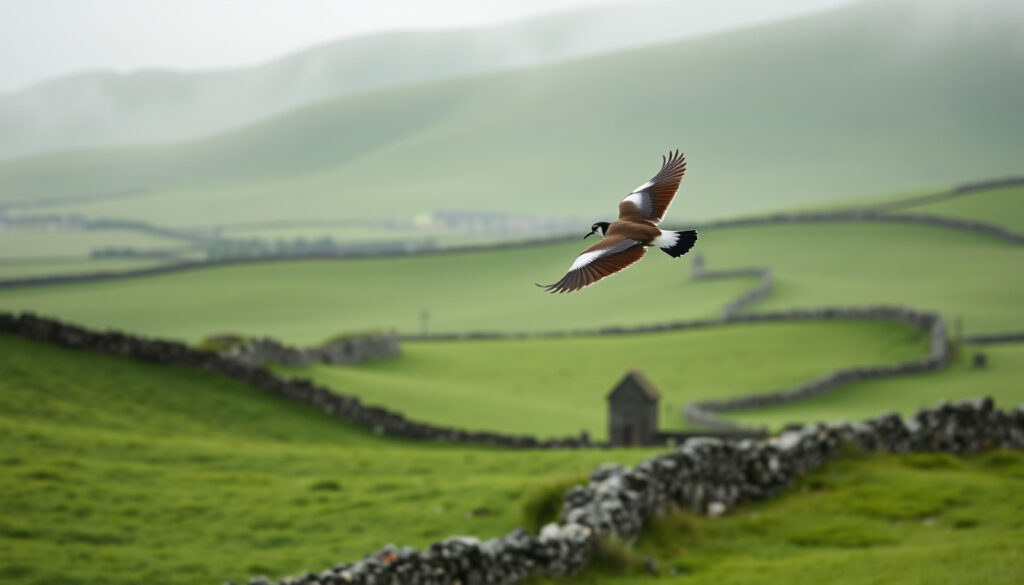
National Bird of Ireland – Lapwing’s Unofficial Status
The Northern Lapwing, known in Ireland as Pilibín, frequently appears in lists of Ireland’s national symbols. Yet despite its widespread recognition and cultural significance, no formal government designation has ever established the species as the country’s official national bird. This distinction matters considerably when examining the intersection of ornithology, conservation policy, and national identity on the island of Ireland.
Ornithological organizations and conservation groups have long championed the lapwing as an emblematic species of Irish farmland and wetlands. However, the absence of any legislative or executive declaration raises important questions about how national symbols gain their status and whether popular recognition carries the same weight as formal designation.
For those researching Ireland’s wildlife and national symbols, understanding this distinction between popular association and official status provides essential context. The lapwing’s story encompasses both its remarkable ecological characteristics and the ongoing conservation challenges facing one of Ireland’s most recognizable wading birds.
What Is the National Bird of Ireland?
The bird most commonly associated with Ireland’s national identity is the Northern Lapwing (Vanellus vanellus). This distinctive wader belongs to the waders family and is known for its prominent crest, striking black-and-white plumage, and characteristic wheezing call that gives rise to alternative names such as peewit and green plover.
Northern Lapwing
Vanellus vanellus
Popularly Recognized (Not Official)
Wetlands, Farmlands
The lapwing’s association with Irish landscapes runs deep in the country’s environmental consciousness. According to BirdWatch Ireland, the species serves as an indicator of healthy farmland ecosystems and wetland habitats across the island.
- The Northern Lapwing measures between 28 and 31 centimetres in length, with a wingspan of 67 to 72 centimetres
- The species displays a distinctive green-tinted back, black crown, and prominent crest that makes identification straightforward
- Its wheezing “pee-wit” call, most audible from March to May during breeding season, has become synonymous with Irish springtime
- The lapwing breeds inland from mid-February through late July, then congregates on coasts during winter months
- Winter populations receive significant boost from migratory birds arriving from western and central Europe, France, and Iberia
- The species forages primarily on worms and insects found in short, dry vegetation approximately 5 centimetres in height
- Despite its cultural prominence, the lapwing remains a species of serious conservation concern, classified as Red-listed in Ireland
| Characteristic | Details |
|---|---|
| Body Length | 28–31 cm |
| Wingspan | 67–72 cm |
| Primary Diet | Insects, worms |
| Breeding Method | Ground nests |
| Irish Conservation Status | Red-listed |
| Global IUCN Status | Near Threatened |
Why Is the Lapwing Considered Ireland’s National Bird?
The lapwing has achieved its status as Ireland’s de facto national bird through decades of public recognition rather than formal government action. No official timeline exists for when or how the species became associated with Irish national identity, and no declaration from any governmental body has ever confirmed this designation.
Cultural Recognition and Public Perception
The lapwing appears prominently in global references listing national birds, yet these compilations reflect popular consensus rather than official status. This distinction proves significant when examining how national symbols are formally established versus how they gain cultural traction.
Conservation discourse has further cemented the lapwing’s position as an emblematic species. BirdWatch Ireland and other organizations frequently highlight the bird as a flagship species representing the broader challenges facing farmland wildlife across the island.
The Gap Between Popular Association and Official Status
The lapwing’s presence in international national bird lists does not equate to formal governmental recognition. The Republic of Ireland maintains no official list designating a national bird, creating a situation where popular association and official status remain distinctly separate matters.
No search results confirm official national bird status for Ireland. The lapwing appears emblematic in conservation contexts due to its declining populations and cultural presence, but lacks government verification or historical designation as a formally recognized national symbol.
What Does Ireland’s National Bird Look Like and Where Is It Found?
The Northern Lapwing possesses distinctive physical characteristics that make it unmistakable among Irish bird species. Its black-and-white plumage, green-tinted back, and prominent crest create an appearance that birdwatchers and casual observers alike find memorable.
Identifying the Lapwing
In flight, lapwings display a characteristic round-winged shape with contrasting black-and-white markings that prove diagnostic for identification. The species’ wheezing call, from which its alternative name “peewit” derives, provides an auditory clue during the breeding season from March through May.
Adult lapwings measure approximately 28 to 31 centimetres in length with a wingspan reaching 67 to 72 centimetres. The species’ black crown and distinctive crest distinguish it from other waders sharing Irish habitats.
Where to Find Lapwings in Ireland
Lapwings demonstrate specific habitat preferences that influence their distribution across Ireland. The species favours short, dry vegetation at approximately 5 centimetres in height, commonly found on grassland, spring-sown crops, fallow land, pasture, and ploughed fields.
Breeding occurs inland from mid-February through late July, with birds congregating on coasts during winter months. The greatest concentrations of lapwings occur between September and April, when populations receive substantial additions from migratory birds arriving from western and central Europe, France, and the Iberian Peninsula.
Significant lapwing populations have been recorded at several notable sites: Wexford Harbour and Slobs in County Wexford hosts over 10,000 birds during peak periods, while Strangford Lough in County Down and the Cull and Killag area in County Wexford regularly support populations exceeding 8,000 individuals. The Shannon and Fergus Estuary in County Clare and the Shannon Callows in County Offaly also provide crucial habitat for this species.
Does Ireland Have an Official National Bird?
Despite widespread assumption to the contrary, Ireland has never formally designated an official national bird. No governmental body has enacted legislation or issued a declaration establishing any species as the nation’s official avian symbol. This absence of formal designation creates an unusual situation where popular perception and official status diverge significantly.
Research across official government sources and ornithological records reveals no timeline, declaration, or governmental endorsement confirming any species as Ireland’s national bird. The lapwing’s association with national identity stems entirely from cultural recognition and public sentiment rather than legislative or executive action.
Some sources suggest the barn owl holds unofficial recognition in certain contexts, yet even this alternative lacks formal government backing. The situation in Northern Ireland mirrors that of the Republic, with no distinct national bird designated by governmental authority in either jurisdiction.
Conservation Status and Legal Protection
While official national bird status remains absent, the lapwing receives substantial legal protection through other mechanisms. The species is protected under the Wildlife Acts and listed under Annex II of the EU Birds Directive, which designates species requiring special conservation measures.
BirdWatch Ireland classifies the lapwing as a Red-listed species of serious conservation concern, reflecting the severe population declines documented across the island. The Birds of Conservation Concern listing further emphasizes the challenges facing this emblematic wader.
The lapwing population has experienced sharp declines linked to habitat loss from agricultural intensification, land drainage, and afforestation. Approximately 63% of Irish bird species face conservation challenges, with 26% classified as Red-listed and 37% as Amber-listed. The lapwing exemplifies these broader ecological concerns affecting farmland bird communities.
What Are Ireland’s Other National Symbols?
While Ireland’s official national bird designation remains unestablished, several other national symbols have achieved formal recognition. Understanding how these symbols differ from the lapwing situation provides useful context for appreciating the complexity of national identity representation.
The national animal, harp, and shamrock have all received official recognition through various governmental and historical processes. The absence of similar formal recognition for a national bird highlights the unique circumstances surrounding avian symbolism in Irish culture.
For those interested in exploring Ireland’s administrative systems, the country utilizes identification numbers similar to how other nations designate official symbols. Resources such as the Irish PPS Number Guide provide insight into how governmental systems categorize and track information within the jurisdiction.
The broader question of national symbolism extends to Ireland’s international commitments as well. Ireland’s participation in peacekeeping missions, including its significant involvement with the United Nations Interim Force in Lebanon, demonstrates how national identity manifests through actions beyond traditional symbols and emblems.
The Conservation Timeline: Lapwing Decline and Recovery Efforts
Understanding the trajectory of lapwing populations in Ireland requires examining both historical trends and recent conservation interventions that have influenced the species’ fortunes.
- Pre-1990s: Lapwing populations remain relatively stable across traditional breeding habitats throughout Ireland
- 1994–2001: Irish Wetland Birds Survey documents population trends, establishing baseline data for monitoring changes
- Early 2000s: Agricultural intensification and habitat modification contribute to accelerating population declines
- 1995–2018: Scotland experiences 56% decline in lapwing populations, paralleling Irish trends and indicating widespread environmental pressures across northwestern Europe
- 2020–2023: Curlew EIP projects demonstrate measurable success in habitat improvement, with breeding lapwing populations in the Corrib area increasing by 215% (from 27 to 85 pairs)
- 2024: Launch of National Breeding Wader EIP builds upon previous conservation success
- Present: Ongoing habitat management through Shannon Callows EIP under the Common Agricultural Policy continues supporting wader populations
The documented increase in breeding populations within protected and managed areas demonstrates that targeted conservation intervention can reverse declining trends when appropriate habitat conditions are maintained.
Established Facts and Remaining Uncertainties
For readers seeking clarity on this topic, distinguishing between established facts and areas of genuine uncertainty proves essential. The following comparison summarizes what can be definitively stated versus what remains unclear.
| Established Information | Uncertain or Unclear |
|---|---|
| No formal government designation of a national bird exists for Ireland | When or how the lapwing first became associated with Irish national identity |
| The lapwing is Red-listed in Ireland due to severe population decline | Whether any formal process to designate a national bird has ever been considered by government |
| The species enjoys broad public recognition and appears in international compilations of national birds | The extent of lapwing symbolism in traditional Irish folklore and cultural practices |
| Conservation efforts have produced measurable population recovery in managed areas | Whether Northern Ireland authorities have considered or discussed national bird designation |
The Broader Context: National Symbols and Environmental Identity
Ireland’s approach to national symbols reflects a broader pattern where formal designation often lags behind cultural recognition. The lapwing situation exemplifies how species can achieve symbolic status through organic cultural processes rather than top-down governmental action.
Conservation organizations have inadvertently reinforced the lapwing’s symbolic status by highlighting the species as a flagship indicator of farmland ecosystem health. This ecological framing has strengthened public association between the bird and Irish environmental identity, creating a self-reinforcing cycle of cultural significance.
The species’ conservation challenges have also contributed to its symbolic weight. As a Red-listed species experiencing severe population decline, the lapwing represents broader concerns about biodiversity loss in Irish agricultural landscapes, adding ecological gravitas to its cultural associations.
Sources and Expert Perspectives
Several authoritative sources provide information regarding the lapwing’s status in Ireland, though none confirm official national bird designation.
The lapwing is synonymous with Irish fields. It appears emblematic in conservation discourse as a declining farmland icon, highlighted for its conservation needs rather than symbolism.
— BirdWatch Ireland, Species Information Resources
BirdWatch Ireland maintains detailed records of lapwing populations, habitat preferences, and conservation requirements. Their species pages document the bird’s characteristics, distribution patterns, and the legal protections afforded to this wader under Irish and European law.
Governmental sources, including records from biodiversity mapping initiatives, provide population data and conservation status assessments. The National Biodiversity Data Centre maintains species distribution information that informs understanding of lapwing populations across Ireland.
Academic and policy sources, including research published through agricultural environment programmes, contribute additional context regarding habitat management practices that benefit lapwing populations and other wader species. The IUCN Red List provides the global conservation assessment classifying the species as Near Threatened, reflecting international concern for population trends across its range.
Summary
The Northern Lapwing holds a distinctive position in Irish environmental consciousness despite the absence of formal governmental recognition as a national bird. The species combines visual distinctiveness, characteristic vocalizations, and widespread distribution with significant conservation challenges that have captured public attention. While international references frequently list the lapwing as Ireland’s national bird, this designation reflects popular recognition rather than official status. For those seeking to understand Ireland’s approach to national symbols, the lapwing offers an instructive case study in the distinction between cultural association and formal governmental recognition. Those interested in related administrative aspects of Irish systems may find the Irish PPS Number Guide useful for understanding how official categorization operates within the jurisdiction.
Frequently Asked Questions
What is the national animal of Ireland?
The Irish hare is often associated with Irish national identity, though formal governmental designation of a national animal remains unclear. The species holds cultural significance and appears in various contexts representing Irish wildlife.
What is the national flower of Ireland?
The shamrock (young clover) serves as Ireland’s national flower emblem, though like the national bird situation, this designation stems from cultural rather than official governmental recognition. Saint Patrick’s association with the shamrock contributed to its symbolic status.
How can I identify a lapwing?
The Northern Lapwing displays a green-tinted back, black crown, prominent crest, and black-and-white plumage. In flight, its round-winged shape and contrasting markings prove diagnostic. The characteristic wheezing “pee-wit” call provides auditory identification during breeding season.
Is there a national bird for Northern Ireland?
No distinct national bird has been designated for Northern Ireland by governmental authorities in either jurisdiction. The lapwing’s distribution includes Northern Ireland, with Strangford Lough serving as an important site, but no formal symbol status applies.
Why is the lapwing declining in Ireland?
Lapwing populations have declined sharply due to habitat loss from agricultural intensification, land drainage, and afforestation. Conservation efforts through various EIP projects have demonstrated that targeted habitat management can support population recovery.
Where is the best place to see lapwings in Ireland?
Wexford Harbour and Slobs hosts the largest concentrations with over 10,000 birds during peak periods. Other important sites include Strangford Lough in County Down, Shannon and Fergus Estuary in County Clare, and the Shannon Callows in County Offaly.
What legal protection does the lapwing have?
The species receives protection under the Wildlife Acts and the EU Birds Directive (Annex II). As a Red-listed species of conservation concern, it also benefits from various conservation programmes and habitat management initiatives across Ireland.
More related posts
 Wrexham vs Ipswich Town: FA Cup Result, H2H & TV Guide
 George Strictly Come Dancing: Who is George Clarke? Age & Career
 Is Saturday a Working Day for An Post? 2025 Update
 Houses for Sale in Kilmallock: Your Guide to Local Listings
 EUR to UAH Exchange Rate Today: Banks & Exchangers Ukraine
 2025 Ballon d’Or Winner Ousmane Dembélé: Ceremony & How to Watch
 Trinity College Dublin Book of Kells: Tickets & Visitor Guide
 Impetigo First Signs Pictures – Recognize Early Symptoms