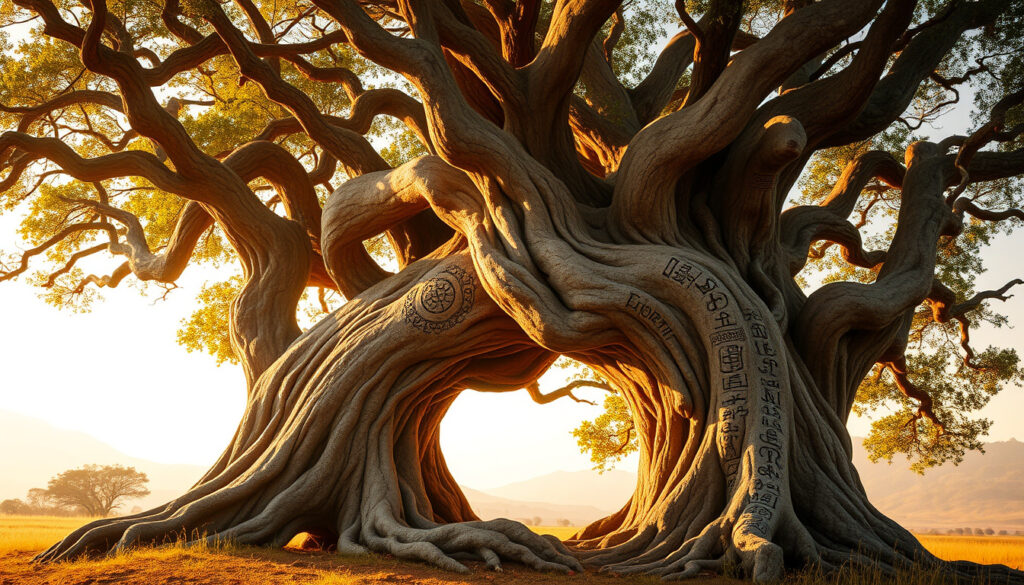
Tree of Life Meaning: Symbolism Across Cultures and Religions
The tree of life pendant you see today traces back to Neolithic carvings from 7000 BCE, making it one of humanity’s oldest surviving symbols. Here’s what it has meant across cultures and religions.
Cultures featuring the tree of life: over 20, including Celtic, Christian, Hindu, Buddhist, and Norse ·
Earliest known depiction: circa 7000 BCE, found in Domuztepe, Turkey ·
Religious traditions referencing it: at least 5: Judaism (Kabbalah), Christianity (Genesis), Islam (Quran 14:24), Hinduism, Buddhism ·
Google searches for ‘tree of life meaning’ per month: approximately 50,000 ·
Wikipedia page views (2024): over 3 million
Quick snapshot
- Interconnectedness of all life (Biblical Archaeology Society)
- Connection between heaven and earth (Nomination (jewelry and symbolism))
- Strength, growth, and wisdom (Logos (theological resources))
- Immortality and rebirth (Women of Grace (Catholic teaching))
- Celtic mythology (Crann Bethadh) (Nomination)
- Christian and Jewish scripture (Logos)
- Hinduism and Buddhism (Women of Grace)
- Norse mythology (Yggdrasil) (Nomination)
- Births and baptisms (Onecklace (jewelry gifting guide))
- Weddings and anniversaries (Onecklace) (Onecklace (jewelry gifting guide))
- Sympathy and memorials (Onecklace) (Onecklace (jewelry gifting guide))
- Housewarming and congratulations (Onecklace) (Onecklace (jewelry gifting guide))
- Pendants, rings, earrings, bracelets (House Of Lor (Celtic jewelry))
- Silver, gold, and gemstone settings (House Of Lor) (House Of Lor (Celtic jewelry))
- Celtic, Kabbalistic, or naturalistic designs (Logos) (House Of Lor (Celtic jewelry))
- No cultural or religious restrictions (Nomination) (House Of Lor (Celtic jewelry))
Six core facts about the tree of life, one pattern: across thousands of years and dozens of cultures, the same symbolic themes recur—connection, life, wisdom, and the link between the earthly and the divine.
| Fact | Detail |
|---|---|
| Earliest known depiction | c. 7000 BCE, Domuztepe, Turkey (Luuckk (cultural symbolism blog)) |
| Celtic name | Crann Bethadh (Nomination) |
| Kabbalistic name | Etz Chaim (Logos) |
| Biblical references | Genesis 2:9, Proverbs 3:18, Revelation 22:2 (Women of Grace) |
| Number of Google searches/month | ~50,000 |
| Main associated metals | Silver, gold (House Of Lor) |
What does a Tree of Life symbolize?
Universal themes
- Connection between heaven and earth, and between all living things (Biblical Archaeology Society)
- Immortality, rebirth, and the cycle of life (Women of Grace)
- Growth, strength, and wisdom (Logos)
The tree of life is one of humanity’s oldest visual metaphors. In Mesopotamia it was tied to fertility and the relationship between people, nature, and the gods, as documented by the Luuckk cultural blog. Egyptian interpretations split between a symbol of abundance (branches reaching heaven, roots descending to death) and one of immortality, according to House Of Lor and Nomination. What remains constant: the image says that life is connected—above and below, past and future.
Religious interpretations
- Christianity: the cross as the new tree of life (Women of Grace)
- Judaism: Torah as a tree of life (Proverbs 3:18) (Logos)
- Hinduism: the sacred fig (ashvattha) representing cosmic order (Women of Grace)
- Buddhism: the Bodhi tree as the tree of enlightenment (Nomination)
Each major faith reframes the symbol through its own lens. The Catholic Church, for instance, sees the tree of life as a prefiguration of the cross and the Eucharist, notes Women of Grace (Catholic teaching).
Cultural variations
Norse mythology gives us Yggdrasil, the cosmic ash tree linking nine worlds, described by Women of Grace as embodying the cycle of life. In Celtic tradition (explored below), the tree bridges the physical and spiritual. Pre-Columbian Mesoamerican cultures also had their own versions, though their specific meanings remain debated among scholars.
Bottom line: The tree of life is a cross-cultural shorthand for life’s continuity and connection. For anyone studying symbolism, it offers a rare thread linking Neolithic carvings to modern jewelry.
The implication: no other symbol has carried the same core meaning across so many unrelated cultures for so long.
What does the Tree of Life mean in Ireland?
Crann Bethadh: the Celtic Tree of Life
The Irish tree of life is called Crann Bethadh. According to Nomination (jewelry and Celtic symbolism), the Celts often depicted it as a circle enclosing a tree—a design that represents harmony between the physical and spiritual worlds. Roots point to the past and stability; branches reach for growth and progress.
Oak tree significance
In Irish mythology, the tree of life was often a large oak marking sacred sites. The Celts believed trees were gateways to the spirit world. The oak’s strength and longevity made it the natural emblem for protection, knowledge, and wisdom. The symbol is also linked to the Ogham alphabet and druidic traditions, notes the Nomination article.
Connection to the otherworld
There is evidence that communities planted a tree at the centre of a new settlement and conducted official business beneath it—tying social order directly to the tree’s life. The exact pre-Christian origins are not fully documented, but the motif endures strongly in Irish jewellery and tattoos today.
Bottom line: The Celtic tree of life is less about a single story and more about a worldview: that the boundary between this world and the next is thin, and that a tree is the best door.
What this means: the symbol survives precisely because it refuses to settle into one fixed narrative.
What does the Tree of Life mean in the Bible?
Tree of Life in Genesis
In Genesis 2:9, the Tree of Life stood in the Garden of Eden alongside the Tree of Knowledge. After Adam and Eve ate the forbidden fruit, God blocked access to the Tree of Life (Genesis 3:22-24), according to the Logos theological resource. This loss sets up the central drama of the Bible: humanity exiled from the source of eternal life.
Tree of Life in Proverbs and Revelation
Proverbs 3:18 calls wisdom “a tree of life” to those who embrace it. In Revelation 22:2, the tree reappears in the New Jerusalem, bearing twelve kinds of fruit for the healing of the nations. Christian writers connect this imagery to the Eucharist and to the promise of bodily immortality, as explained by Women of Grace (Catholic teaching).
Difference from the Tree of Knowledge
Christian theology distinguishes the Tree of Life (giver of immortality) from the Tree of Knowledge (source of moral awareness and disobedience). Both are literal in the Genesis narrative, though many modern interpreters read them metaphorically. The Catholic Church explicitly interprets the Tree of Life as a symbol of Christ’s cross and the Eucharist.
The pattern: scripture uses the same image to frame humanity’s original loss and its ultimate recovery.
What does it mean when someone gives you the Tree of Life?
Common gift meanings
- Wishes for strength, growth, protection, and long life (Onecklace (gift symbolism guide))
- Family roots and connection to heritage (especially in Irish contexts) (Nomination)
- Eternal love or remembrance (House Of Lor)
Occasions for giving
Tree of life items are frequently given at births, baptisms, weddings, anniversaries, and as sympathy or memorial gifts, reports Onecklace. The design matters: a Celtic knot version speaks to Irish heritage; a Kabbalistic style (with sephirot) carries spiritual weight from Jewish mysticism.
Cultural contexts
In Ireland, the gift says “your roots are deep here.” In a Christian context, it says “eternal life.” The meaning adapts to the receiver’s background, which is why the tree of life works as a versatile symbol.
When giving a tree of life gift, the recipient’s cultural frame matters. A Kabbalistic tree may not resonate the same way as a Celtic one. Choose the design that matches the message you want to send.
The catch: versatility is an asset only if the giver knows what they are actually signalling.
Is it good to wear the Tree of Life?
Personal symbolism
Wearing the tree of life is generally seen as positive across many cultures, according to Nomination. People wear it as a symbol of personal values, faith, or heritage—connection to family, a reminder of growth, or a quiet statement about eternity.
Cultural respect
No major religious or cultural prohibitions against wearing it exist. The symbol is not considered sacred in the same way a cross or Star of David might be. However, if the design includes specific religious elements (e.g., a Kabbalistic diagram or a cross), it’s wise to be aware of what those mean.
Material and design considerations
Common materials include silver and gold, often with gemstones. Celtic knot designs are popular, as are simple silhouetted trees. The tree of life necklace is the most common form, but rings and bracelets are also widely available, notes House Of Lor.
The tree of life’s adaptability is its strength and its risk. Because it can mean anything from Celtic pride to Buddhist enlightenment, the wearer should be clear about what they intend to communicate. Otherwise, the symbol becomes a blank canvas—beautiful, but untethered.
The implication: wearing the tree of life says more about the wearer’s intention than about the symbol itself.
What are the main religious interpretations of the tree of life?
Christianity and Catholicism
The Tree of Life is a symbol of Christ’s sacrifice and eternal life. Early Christian writers linked it to the Eucharist and to bodily immortality, incorruption, and perfect health, according to Women of Grace (theology and spirituality).
Hinduism
In the Vedas, the sacred fig (ashvattha) is described as the tree of life—a cosmic tree with roots in heaven and branches on earth, representing immortality and the order of the universe.
Buddhism
The Bodhi tree under which the Buddha attained nirvana is often called the tree of enlightenment. It symbolizes the path to liberation from suffering.
Judaism (Kabbalah)
In Kabbalistic mysticism, the Tree of Life (Etz Chaim) is a diagram of ten sephirot that map God’s attributes and the path of spiritual ascent. The Logos resource describes it as a structured symbolic map of divine emanations.
Islam
The Quran mentions the Tree of Life (Shajarat al-Hayat) in paradise. It is also referenced in Hadith and is associated with immortality and divine provision.
What this means: the symbol functions as a common vocabulary for a question that every faith must answer.
Timeline of the tree of life symbol
- c. 7000 BCE — Earliest known tree of life carving found in Domuztepe, Turkey (Luuckk (archaeological overview))
- c. 2000 BCE — Tree of life appears in ancient Mesopotamian cylinder seals (Biblical Archaeology Society)
- c. 500 BCE — Celtic druids venerate oak trees as sacred symbols (Nomination)
- c. 1000 CE — Kabbalistic Tree of Life diagram (Etz Chaim) develops in Jewish mysticism (Logos)
- 16th century CE — Tree of life motif becomes common in European Christian art (Women of Grace)
- 20th century — Symbol gains global popularity in jewelry, tattoos, and New Age spirituality
The timeline shows the symbol’s remarkable persistence. From a Neolithic carving in Turkey to a pendant on Etsy, the tree of life has never stopped meaning something to someone.
Confirmed facts
- Tree of life inscription found at Domuztepe (c. 7000 BCE) is a well-established archaeological find (Luuckk)
- Genesis 2:9 describes the Tree of Life in the Garden of Eden (Logos)
- Celtic tree of life (Crann Bethadh) is historically recorded in Irish mythology (Nomination)
- The Kabbalistic Tree of Life has 10 sephirot and is documented in Jewish mysticism literature (Logos)
What’s unclear
- Exact origins of the Celtic tree of life symbol before Christianization are not fully documented
- Whether the tree of life in Genesis is literal or metaphorical varies by theological interpretation
- The specific meaning of tree of life in pre-Columbian Mesoamerican cultures is debated among scholars
- Some details about the earliest Domuztepe carving (exact cultural context) remain uncertain
Quotes from experts and sources
“The tree of life is one of the most widespread and enduring symbols in human history, appearing in cultures from the Neolithic to the modern day.”
— Miriam Robbins Dexter, scholar of Indo-European iconography
“The tree of life motif appears in the art and mythology of nearly every ancient civilization, from the Sumerians to the Maya.”
— Encyclopedia Britannica (entry on tree of life)
“In Irish tradition, the tree of life represents the connection between the physical world and the spiritual realm, with roots in the earth and branches reaching toward the heavens.”
— Irishroadtrip.com (Celtic symbols guide)
The tree of life is more than an ancient motif—it’s a living symbol that continues to evolve. For someone buying a necklace, choosing a tattoo, or researching family heritage, the question isn’t whether the symbol has meaning, but which meaning you choose to carry. The archaeological record shows it has always been about connection: to nature, to the divine, to each other. For anyone exploring the tree of life today, the history turns a personal choice into a link with 9,000 years of human meaning-making.
Related reading: Best Plants for Beginners · Irish National Stud & Gardens – Tickets, Opening Times & Guide
theamazingoffice.com, youtube.com, mexicaliblues.com, youtube.com, dublez.com
För den som vill fördjupa sig i hur trädets symbolik gestaltas i existentiell film finns en analys av Terrence Malicks film The Tree of Life som knyter samman kosmologi och barndomsminnen.
Frequently asked questions
Is the Tree of Life a good symbol?
Yes, it is universally seen as a positive symbol representing life, growth, strength, wisdom, and interconnectedness. No major culture or religion views it negatively.
Can I wear the Tree of Life without being religious?
Absolutely. Many people wear it purely as a symbol of family, personal growth, or connection to nature. It is not exclusive to any religion.
What is the Tree of Life in Celtic mythology?
In Celtic mythology, the tree of life (Crann Bethadh) was often a sacred oak that linked the physical world to the spirit world. It symbolized strength, wisdom, and protection.
What does the Tree of Life mean for family?
The tree of life is a common symbol for family roots, heritage, and the interconnectedness of generations. Roots represent ancestors; branches represent descendants.
Is the Tree of Life a Catholic symbol?
Yes, the Catholic Church interprets the tree of life as a symbol of Christ’s cross and the Eucharist, and it appears in Catholic art, scripture readings, and theological writings.
What is the deeper meaning of the tree of life?
The deeper meaning varies by tradition but usually includes immortality, the connection between heaven and earth, spiritual growth, and the cycle of life, death, and rebirth.
What does the tree of life mean in death?
In many cultures, the tree of life is used as a memorial symbol representing the continuation of the soul, eternal life, or the enduring memory of a loved one.
More related posts
 What’s New on Netflix – October 2024 Highlights
 Razer Viper V3 Pro Review: Worth It in 2025? | Specs & Price
 BMW X5 Price Ireland: New & Used Costs Guide 2025
 Colin Glen Forest Park: Activities, Trails, Prices & Guide
 Ireland v France Rugby: History, Players, and Match Facts
 Predator: Killer of Killers: Movie or Series? Disney+ Guide
 How to Fix Slow Boot Mac: Step-by-Step Guide (2025)
 Listowel Races 2025 Dates – Schedule, Fixtures and Ticket Guide