Symptoms of Strep Throat: Key Signs, Causes, and Treatment
Strep throat is a bacterial infection caused by Group A Streptococcus (GAS) that produces sudden, severe sore throat pain, often accompanied by fever, swollen lymph nodes, and white patches on the tonsils. Symptoms typically appear 2–5 days after exposure and require prompt medical evaluation for proper diagnosis and antibiotic treatment. Unlike viral sore throats, strep throat responds to antibiotics and can lead to serious complications if left untreated, including rheumatic fever and kidney inflammation.
Bacterial infection by Streptococcus pyogenes (Group A Strep)
2–5 days after exposure to the bacteria
Antibiotics (typically 10-day course) with symptom relief
2–5 days before symptoms; 2–3 weeks if untreated
What Is Strep Throat?
Strep throat is a bacterial infection of the throat and tonsils caused by Streptococcus pyogenes (Group A Streptococcus, or GAS). Among the over 120 known strains of GAS, this particular bacterium targets the upper respiratory system, creating inflammation and pain that distinguishes it from typical viral sore throats [source]. The infection spreads readily through respiratory droplets when an infected person coughs, sneezes, or talks, making it particularly common in close-contact environments like schools, daycare centers, and households [source].
The bacteria can also transmit through direct contact with infected fluids or open sores, or indirectly by touching contaminated surfaces such as shared utensils, cups, or doorknobs [source]. Some individuals carry GAS without displaying symptoms (asymptomatic carriers) and can still spread the infection, though transmission is less efficient than from symptomatic individuals [source]. Children aged 5–15 experience strep throat most frequently, though the infection can affect anyone [source]. Understanding the underlying condition sets the stage for recognizing its symptoms.
Primary Symptoms of Strep Throat
The hallmark of strep throat is a sudden, severe sore throat that often feels like “swallowing glass” — pain that appears rapidly without the gradual buildup typical of viral infections [source]. This pain typically worsens when swallowing, and many patients report difficulty even swallowing saliva. The sore throat usually appears alongside or is immediately followed by a fever, often exceeding 101°F (38.3°C) [source].
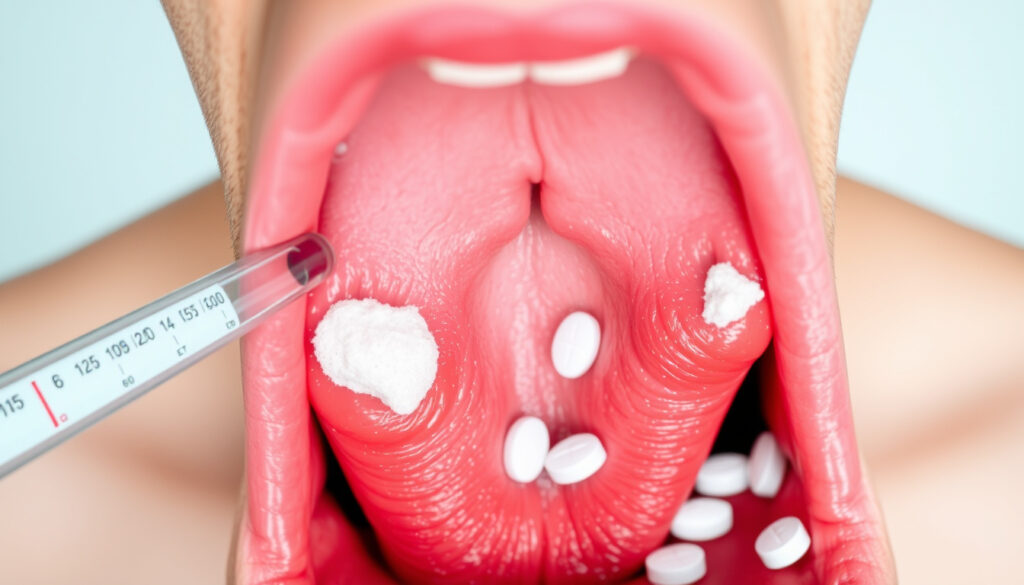
Visual inspection often reveals red, swollen tonsils with white patches or streaks of pus — a distinctive sign that distinguishes bacterial strep from many viral throat infections [source]. Healthcare providers may also observe tiny red spots (petechiae) on the roof of the mouth. The lymph nodes in the front of the neck become swollen and tender to the touch [source]. These primary symptoms help distinguish strep throat from other throat infections.
Additional Symptoms and Signs
Beyond the primary throat symptoms, strep infection frequently produces headache and body aches as the immune system responds to bacterial invasion [source]. Many patients experience general fatigue and malaise. In children especially, abdominal pain, nausea, and vomiting commonly accompany throat symptoms [source]. Some individuals develop a fine, sandpaper-like rash on the neck, chest, or elsewhere — a condition known as scarlet fever, which indicates a toxin produced by certain GAS strains [source].
Notably absent in strep throat are the symptoms associated with viral upper respiratory infections: a prominent cough, runny nose, and nasal congestion are typically absent in true strep throat [source]. Recognizing these additional signs alongside the primary symptoms can aid in early detection and treatment.
When to Seek Medical Care
Seek medical care promptly if sore throat pain is severe, if fever exceeds 101°F persisting beyond 24–48 hours, or if you experience difficulty breathing or swallowing [source]. For children, any combination of vomiting, stomach pain, drooling (indicating inability to swallow), or difficulty breathing warrants immediate evaluation [source]. In infants and toddlers, strep throat may present differently — watch for fussiness, decreased appetite, and fever rather than prominent throat complaints.
If antibiotics have been prescribed, contact your healthcare provider immediately if symptoms show no improvement after 48 hours of treatment, or if they worsen at any point [source]. Seek emergency care for signs of severe dehydration (dizziness, dark urine, confusion), high fever unresponsive to medication, or rapidly swelling neck tissues. Knowing when professional care is needed prevents complications.
Untreated strep throat can lead to serious complications including rheumatic fever (which may cause permanent heart damage), kidney inflammation, sinus infections, ear infections, and skin infections. The risk of complications drops dramatically once antibiotic treatment begins [source].
Difference From Other Throat Infections
The distinction between bacterial strep throat and viral sore throat is critical because treatment approaches differ entirely [source]. Viral sore throats — caused by cold viruses, influenza, or other pathogens — account for the majority of throat pain cases and resolve with supportive care alone. Strep throat specifically presents with the absence of cough, sudden onset, white patches on tonsils, and high fever — a constellation that suggests bacterial rather than viral origin [source].
Viral infections typically bring cough, runny nose, hoarseness, and cold symptoms alongside throat discomfort [source]. However, symptom overlap exists, making visual inspection alone insufficient for diagnosis. Only medical testing — not symptoms alone — can definitively confirm or rule out strep. Understanding the difference guides appropriate treatment decisions.
| Aspect | Strep Throat | Viral Sore Throat |
|---|---|---|
| Cause | Bacterial (Group A Strep) | Viral (cold, flu, other viruses) |
| Key Signs | White patches on tonsils, no cough, sudden fever | Cough, runny nose, hoarseness typically present |
| Treatment | Antibiotics required | Supportive care (rest, fluids, OTC relief) |
| Contagious Period (untreated) | 2–3 weeks | Typically shorter, varies by virus |
Diagnosis Methods
Healthcare providers diagnose strep throat through a combination of physical examination and laboratory testing [source]. The physical exam focuses on the throat, tonsils, lymph nodes, and skin for the characteristic signs described above. The provider will assess for fever, examine the roof of the mouth for petechiae, and check for swollen lymph nodes in the neck.
The primary diagnostic tools are the rapid strep test (which provides results within minutes) and the throat culture (which takes 24–48 hours but is more sensitive) [source]. Many clinics perform the rapid test first and follow with a culture if negative but clinical suspicion remains high. Some individuals test positive for GAS but display no symptoms — these asymptomatic carriers generally do not require treatment unless they pose transmission risk to high-risk individuals [source]. Proper diagnosis confirms the presence of strep bacteria.
Treatment Overview
Antibiotics are the cornerstone of strep throat treatment [source]. A typical course lasts 10 days and effectively kills the bacteria, speeds recovery (with improvement often seen within 1–3 days), reduces the contagious period, and prevents complications [source]. It is essential to complete the entire prescribed course even after symptoms improve, to ensure eradication and prevent antibiotic resistance [source].
Once antibiotic treatment begins, individuals become non-contagious after 24–48 hours and may return to normal activities if fever-free [source]. Symptom management includes over-the-counter pain relievers such as ibuprofen or acetaminophen for fever and throat pain. Rest and adequate fluid intake support recovery. Throat lozenges and warm fluids (broth, tea with honey) can provide comfort. Treatment addresses both infection and symptom relief.
For Children: The American Academy of Pediatrics recommends children with strep throat can return to school after being fever-free for at least 24 hours and having taken antibiotics for a full day [source].
Prevention Tips
Preventing strep throat transmission centers on rigorous hygiene practices and minimizing contact with infected individuals [source]. Frequent hand washing with soap and water for at least 20 seconds — especially after coughing, sneezing, or touching shared surfaces — remains the most effective preventive measure. When soap is unavailable, alcohol-based hand sanitizers provide an acceptable alternative.
Avoid sharing food, beverages, utensils, cups, towels, or other personal items with anyone who has or recently had strep throat [source]. Cover your mouth and nose when coughing or sneezing, and dispose of used tissues immediately. Maintain distance from individuals showing signs of respiratory illness when possible. Regular cleaning of high-touch surfaces (doorknobs, countertops, electronics) reduces environmental contamination. Prompt treatment of diagnosed cases significantly reduces transmission risk within households and communities.
Action Checklist
- Step 1: Assess symptoms — Note sudden severe sore throat pain, fever, pain when swallowing, and any visible white patches on tonsils. Check for swollen neck lymph nodes and absence of cough/runny nose.
- Step 2: Check for red flags — Determine if you have difficulty breathing or swallowing, high fever above 101°F, dehydration signs, or symptoms lasting more than 48 hours without improvement.
- Step 3: Contact healthcare provider — Call your doctor’s office, urgent care clinic, or telehealth service to describe symptoms and request evaluation. Mention any exposure to confirmed strep cases.
- Step 4: Prepare for testing — Expect a rapid strep test and possibly a throat culture. Avoid eating, drinking, or smoking for 30–60 minutes before the appointment if possible.
- Step 5: Follow treatment plan — If prescribed antibiotics, take the full 10-day course as directed. Use OTC pain relievers (ibuprofen/acetaminophen) for symptom management.
- Step 6: Prevent spread — Stay home until fever-free for at least 24 hours and you’ve taken antibiotics for 24–48 hours. Wash hands frequently, cover coughs, and avoid sharing items.
- Step 7: Monitor and follow up — If symptoms worsen after 48 hours on antibiotics or don’t improve within 5–7 days, contact your provider immediately. Watch for rash, joint pain, or urine changes (signs of complications).
Red Flag Decision Table
| Sign/Situation | Risk Level | Recommended Action | Urgency |
|---|---|---|---|
| Difficulty breathing or swallowing | High | Call 911 or go to emergency department immediately | Immediate |
| Severe throat pain preventing fluid intake | High | Seek urgent medical care within hours | Same day |
| Fever above 101°F persisting 48+ hours | Moderate-High | Contact healthcare provider within 24 hours | Within 24 hours |
| Symptoms unchanged after 48 hours of antibiotics | High | Call healthcare provider immediately | Immediate |
| Signs of dehydration (dizziness, dark urine, confusion) | High | Seek emergency care or call 911 | Immediate |
| Rash, joint pain, or swelling after strep infection | Moderate-High | Contact healthcare provider within 24 hours | Within 24 hours |
| Vomiting or severe abdominal pain in child | Moderate-High | Seek pediatric evaluation same day | Same day |
Frequently Asked Questions
What are the first signs of strep throat?
The first signs typically include sudden, severe sore throat pain that feels like “swallowing glass,” often accompanied by fever and pain when swallowing. Many people notice red, swollen tonsils with white patches or pus, and tender swollen lymph nodes in the neck. Symptoms usually appear 2–5 days after exposure to the bacteria.
How do I know if I have strep throat or a sore throat?
While both cause throat pain, strep throat typically presents with sudden onset (no cough), white patches on tonsils, fever above 101°F, and swollen lymph nodes. Viral sore throats usually include cough, runny nose, hoarseness, and cold symptoms. Only a rapid strep test or throat culture performed by a healthcare provider can definitively distinguish between them.
How long does strep throat last?
With antibiotic treatment, symptoms typically begin improving within 1–3 days, with full recovery after completing the 10-day course. Without treatment, symptoms may resolve in 3–5 days but can persist up to 7–10 days. Importantly, untreated strep throat remains contagious for 2–3 weeks or longer.
Is strep throat contagious?
Yes, strep throat is highly contagious. An infected person can spread bacteria starting 2–5 days before symptoms appear. Without treatment, contagiousness lasts approximately 2–3 weeks. Once antibiotic treatment begins and fever subsides for at least 24 hours, the person is generally no longer contagious.
Can strep throat go away on its own?
Strep throat can potentially resolve on its own within a week, but this approach carries significant risks. Without antibiotic treatment, the risk of complications including rheumatic fever (which can cause permanent heart damage), kidney inflammation, sinus infections, and ear infections increases substantially. Medical treatment is strongly recommended.
What are the complications of untreated strep throat?
Untreated strep throat can lead to rheumatic fever (damaging heart valves), post-streptococcal glomerulonephritis (kidney inflammation), tonsillitis, sinus infections, ear infections, skin infections, and in rare cases, severe invasive GAS disease. Complications typically develop days to weeks after the initial infection if left untreated.
When should I go to the doctor for strep throat?
Seek medical evaluation if you have a sore throat lasting more than 48 hours, fever above 101°F, difficulty swallowing, swollen lymph nodes, or visible white patches on tonsils. Children with throat pain accompanied by fever, vomiting, or stomach pain should be evaluated promptly. Early diagnosis and treatment prevent complications and reduce transmission.
What does strep throat look like?
Visually, strep throat often shows bright red, swollen tonsils with white patches, streaks of pus, or small white spots. Tiny red spots (petechiae) may appear on the roof of the mouth. The back of the throat may appear generally red and inflamed. External signs include swollen, tender lymph nodes in the neck and potentially a sandpaper-like rash if scarlet fever is present.
More related posts
 I Heard a Fly Buzz When I Died Meaning: Analysis & Themes
 Surron Type E-Bike Classification: Light Bee X vs Ultra Bee
 Where is the Black Sand Beach in Iceland? Reynisfjara Location
 Home Alone LEGO House: Price, Build Time, Is It Discontinued
 Carlos Alcaraz Net Worth 2026: Earnings, Endorsements & Cars
 Predator: Killer of Killers: Movie or Series? Disney+ Guide
 The Brass Fox Wicklow: Seaside Gastro Pub Guide & Reviews
 Trucks for Sale in Ireland: Top Marketplaces