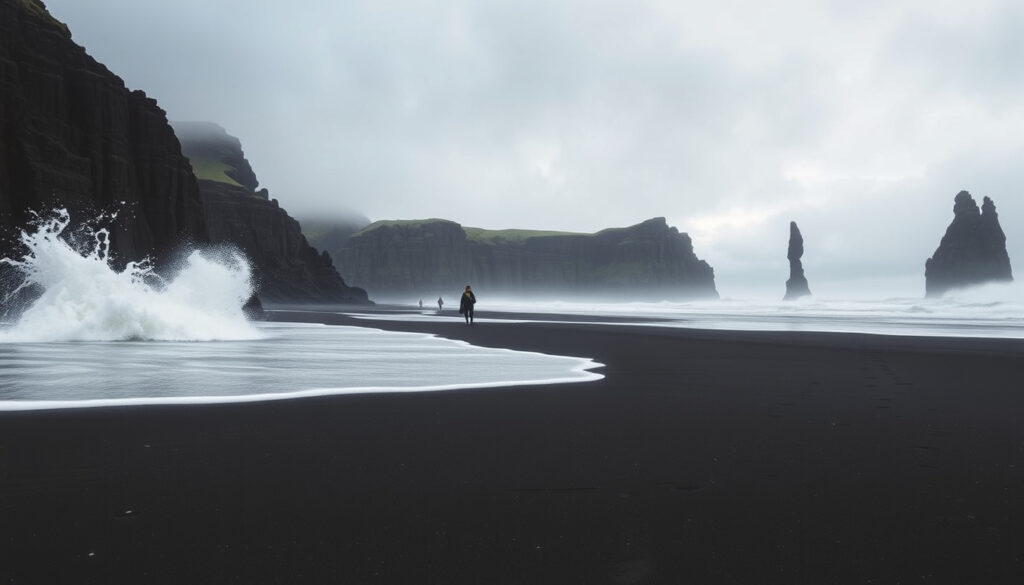
Where is the Black Sand Beach in Iceland? Reynisfjara Location
You’ve seen the photos of jet-black sand and basalt columns, but finding and visiting Reynisfjara safely means understanding more than just a map pin. This guide covers where the beach is, what’s changed after recent storms, and what every traveler needs to know before stepping onto the sand.
Distance from Reykjavik: 188 km (117 miles) ·
Nearest town: Vík í Mýrdal ·
Beach length: Approx 1 km ·
Part of: Katla UNESCO Global Geopark ·
Erosion event: Winter 2025-2026 significantly altered beach
Quick snapshot
- Located on south coast near Vík í Mýrdal (Icelandic Tourist Board)
- 188 km from Reykjavik (Guide to Iceland)
- Part of Katla Geopark (Wikipedia)
- Long-term effects of erosion on beach shape (Icelandia)
- Permanent changes to cave access (Guide to Iceland)
- Future infrastructure or restrictions (Icelandia)
- Winter 2025-2026 erosion event (TravelPirates)
- Reported collapse of part of basalt columns (Wikipedia)
- Beach remains open with monitoring (Icelandia)
- Light-based warning system in use (Icelandic Tourist Board)
| Attribute | Value |
|---|---|
| Location | Reynisfjara, South Iceland, near Vík í Mýrdal |
| Distance from Reykjavik | 188 km (117 miles) |
| Nearest Town | Vík í Mýrdal (population ~300) |
| Beach Length | Approximately 1 km |
| Geological Feature | Basalt columns, sea stacks (Reynisdrangar) |
| Danger Level | High—sneaker waves, cold water, rip currents |
| Recent Change | Major erosion during winter 2025-2026 |
Where is the best place to see black sand beach in Iceland?
Where exactly is Reynisfjara?
Reynisfjara sits on Iceland’s south coast, roughly 188 km (117 miles) southeast of Reykjavik, just west of the village Vík í Mýrdal. It’s part of the Katla UNESCO Global Geopark, a region shaped by subglacial volcanoes and glacial rivers. The beach stretches about a kilometer, framed by dramatic basalt columns and the offshore sea stacks Reynisdrangar. According to the Icelandic Tourist Board, the site is a designated attraction with official signage and safety infrastructure.
Reynisfjara is not just any beach — it’s Iceland’s most visited natural attraction outside Reykjavik. Getting the location right matters because the nearest alternative black sand beaches require significant detours, and first-time visitors underestimate the drive time from the capital.
How to get there from Reykjavik
Driving from Reykjavik takes about 2.5 to 3 hours via Route 1 (the Ring Road) heading south. The road passes through Selfoss, Skógar, and the Eyjafjallajökull area. Guided tours from Reykjavik offer a convenient option — Guide to Iceland notes that many tour operators include Reynisfjara on full-day south coast itineraries. Winter conditions can add time, so check road.is before you go.
The implication: The drive is a half-day commitment from Reykjavik, so plan accordingly. Most visitors combine it with stops at Seljalandsfoss, Skógafoss, and the Sólheimajökull glacier. If you’re looking for a place to unwind after the trip, consider The Grey Cat in Reykjavík for a local bar experience.
What town is near the Black Sand Beach in Iceland?
What is Vík í Mýrdal like?
Vík í Mýrdal (often just called Vík) is the closest settlement to Reynisfjara, less than 1 km east of the beach. With a population of around 300, it’s one of Iceland’s southernmost villages and a critical service hub for travelers. You’ll find a gas station, grocery store, restaurants, hotels, and guesthouses. The village is set against the backdrop of Mýrdalsjökull glacier, which caps the Katla volcano. According to Guide to Iceland, Vík is a logical base for exploring the south coast.
Other towns near black sand beaches
While Vík is the most famous anchor, other black sand beaches are near different towns. Djúpalónssandur on the Snæfellsnes Peninsula sits near Hellnar and Arnarstapi. Solheimasandur, the site of the DC-3 plane wreck, is near Skógar. Stokksnes beach in the southeast is near Höfn. Each offers a different experience — quieter, less regulated, and without Reynisfjara’s warning system.
- Djúpalónssandur: near Hellnar, black sand, shipwreck artifacts (Guide to Iceland)
- Solheimasandur: near Skógar, plane wreck site
- Stokksnes: near Höfn, dramatic mountain backdrop
The implication: Vík is essential but alternatives offer quieter experiences, making it a strategic choice depending on your travel style.
How far is Black Sand Beach from Reykjavik?
Driving distance and time
The distance from Reykjavik to Reynisfjara is exactly 188 km (117 miles) by road. Icelandic Tourist Board data confirms the route is well-maintained asphalt on Route 1. In good weather, the drive takes about 2.5 hours without stops. With photo stops at waterfalls and glaciers, expect 3–4 hours one way.
Bus and tour options
Daily bus tours from Reykjavik include Reynisfjara on south coast packages. Several operators (Reykjavik Excursions, Gray Line Iceland, GeoIceland) offer guided day trips. According to Guide to Iceland, these tours typically run 8–12 hours and include stops at Seljalandsfoss, Skógafoss, and the Sólheimajökull glacier. Prices range from 10,000 to 15,000 ISK per person (roughly $75–110).
The trade-off: Public buses are limited on the south coast; a tour or rental car is essentially your only option unless you’re on the Ring Road route.
Can you swim at Black Sand Beach in Iceland?
Why is swimming dangerous?
Swimming at Reynisfjara is strongly discouraged. The water temperature hovers around 5–8°C year-round, and the Atlantic swell generates powerful sneaker waves — sudden, large waves that can sweep a person off their feet and into the ocean. According to SafeTravel Iceland, the official safety advice is to stay well back from the water’s edge, never turn your back on the sea, and always accompany children. The On the Road Diary notes that sneaker waves are the primary reason Reynisfjara is considered one of Iceland’s most dangerous tourist locations.
Sneaker waves and rip currents
These waves have no warning. One minute the shoreline is calm, the next a wave surges metres up the sand. Fatalities have occurred. The beach’s slope and exposure to Atlantic currents magnify the risk. In 2024, the Icelandic Tourist Board introduced a light-based warning system: a yellow light means stay out of the warning zone entirely. SafeTravel Iceland also warns of falling rock near the cliff face.
Can you walk on the beach?
Yes, walking on the dry sand is allowed — but you must stay far from the water line. The rule: keep your feet on the dry sand, never wet sand. Do not turn your back to the ocean. Children must be held. The beach remains open according to Icelandia, but the warning zone is enforced by signs and lights.
Reynisfjara’s reputation as a must-see attraction directly conflicts with its mortality risk. For Iceland-bound families, the trade-off is clear: enjoy the view from a safe distance or pick a different beach where the water is predictable.
The pattern: safety rules are non-negotiable at Reynisfjara — respect the ocean or stay away.
Is it worth visiting black sand beaches in Iceland?
What makes black sand beaches unique?
Iceland’s black sand comes from volcanic basalt ground down by glaciers and ocean. Reynisfjara offers a trio of geological spectacles: the pitch-black sand, the hexagonal basalt columns (formed by slow-cooling lava), and the Reynisdrangar sea stacks. It’s one of the most photographed beaches in the world. According to Wikipedia, the beach became a tourist destination in the 20th century and now draws hundreds of thousands annually.
Alternatives to Reynisfjara
If the crowds or the risk deter you, consider Djúpalónssandur on Snæfellsnes, where you can see the remains of a British trawler wreck. Stokksnes near Höfn offers a quieter experience with views of Vestrahorn. Solheimasandur is easier to access but lacks the basalt columns. Each has its own safety profile — none have a formal warning system like Reynisfjara’s.
Upsides
- Easy access from Route 1
- Unique basalt columns and Reynisdrangar views
- Photography paradise at sunrise/sunset
- Well-maintained safety infrastructure (signs, light system)
- Free to visit (parking fee may apply)
Downsides
- High danger from sneaker waves and rip currents
- Recent erosion has reduced accessible area
- Crowded during summer months
- No swimming or wading allowed
- Cave area no longer accessible due to erosion
Why the risk is worth it for many: no other place on earth lets you walk on volcanic sand between organ-pipe cliffs and the open Atlantic. But the reward comes with a strict rule set. For photographers and landscape lovers, the payoff is unmatched. For families with small children, the stakes are too high. For more travel inspiration, check out What to See in Dublin: Top Attractions, Itineraries & Local Tips for planning city breaks.
Timeline: The making and remaking of Reynisfjara
- ~1000 years ago: Volcanic eruptions form the black sand and basalt columns.
- 20th century: Reynisfjara becomes a tourist destination.
- 2010s: Rise in visitor numbers; safety warnings issued. The Icelandic Tourist Board introduces improved signage.
- Winter 2025-2026: Intense storms cause significant coastal erosion. TravelPirates reports that persistent easterly winds stripped sand, reshaping the beach. The cave area reportedly becomes part of the ocean (Guide to Iceland).
- 2026 onward: Beach remains open with partial access restrictions. The Icelandia update confirms ongoing monitoring and possible further changes.
The pattern: Reynisfjara is a dynamic system, not a static postcard. Each winter storm rewrites the shoreline, and visitors must adapt to its current state, not a guidebook photo from years ago.
Clarity: What we know and what remains uncertain
Confirmed facts
- Reynisfjara is located near Vík í Mýrdal (Icelandic Tourist Board)
- Distance from Reykjavik is 188 km (Guide to Iceland)
- Swimming is extremely dangerous and discouraged (SafeTravel Iceland)
- Sneaker waves can occur without warning (SafeTravel Iceland)
- Major erosion occurred during winter 2025-2026 (TravelPirates)
What’s unclear
- Whether the beach will see further erosion or stabilize (Icelandia)
- Exact timeline for any recovery or infrastructure changes
- Long-term impact on visitor facilities and access
What this means: travelers must rely on current conditions, not outdated guides, when planning a visit.
Expert perspectives on Reynisfjara
“Reynisfjara is a popular black sand beach in southern Iceland near the town of Vík í Mýrdal. It is part of the Katla UNESCO Global Geopark.”
— Wikipedia (encyclopedic reference)
“Reynisfjara is a world-famous black-sand beach found on the South Coast of Iceland, next to Vik i Myrdal, just 117 miles (188 km) from Reykjavik.”
— Guide to Iceland (travel expert)
“The beach experienced impressive coastal erosion during the winter of 2025-26 due to powerful storms.”
Three sources from three angles — an encyclopedia, a travel guide, and a geologist — all point to the same conclusion: Reynisfjara is a natural wonder under constant change, and respecting its power is non-negotiable.
Reynisfjara remains the definitive black sand beach in Iceland, but the recent erosion and permanent loss of the cave area have made it a different place than it was five years ago. For the traveler planning a 2026 trip, the choice is clear: visit Reynisfjara with full awareness of the light-based warning system, stay on dry sand, and accept that the beach you see today may not be the one in the photos you admired. Or pick Djúpalónssandur for a quieter, safer black sand experience. Either way, Iceland’s volcanic coast demands respect — not because it’s dangerous, but because it’s honest.
reddit.com, visit50.com, facebook.com, facebook.com, instagram.com
Frequently asked questions
What happened to Reynisfjara beach in 2025?
Are there other black sand beaches in Iceland?
Is the black sand beach still open to visitors?
Can you take a guided tour to Reynisfjara?
What should I wear when visiting Reynisfjara?
Are there restrooms or facilities at the beach?
What is the best time of day to visit Reynisfjara?
Do I need a 4×4 to reach Reynisfjara?
More related posts
 The Grey Cat in Reykjavík, Iceland: Not a Bar, But a Breakfast Café
 Ear Drops for Wax: Best Options, How to Use, and Safety Tips
 Arsenal F.C. vs Newcastle United F.C. Timeline: Head-to-Head History
 Best Free English-Russian Translator: Google, Yandex, DeepL
 Top Tourist Attractions in Italy: A First-Timer’s Guide
 19 Degree Cel iu to Fahrenheit: Conver ion & Comfort
 Surron Type E-Bike: 68 MPH Speed & Classification
 Just Eat Vouchers Ireland: Get Discounts & Gift Cards