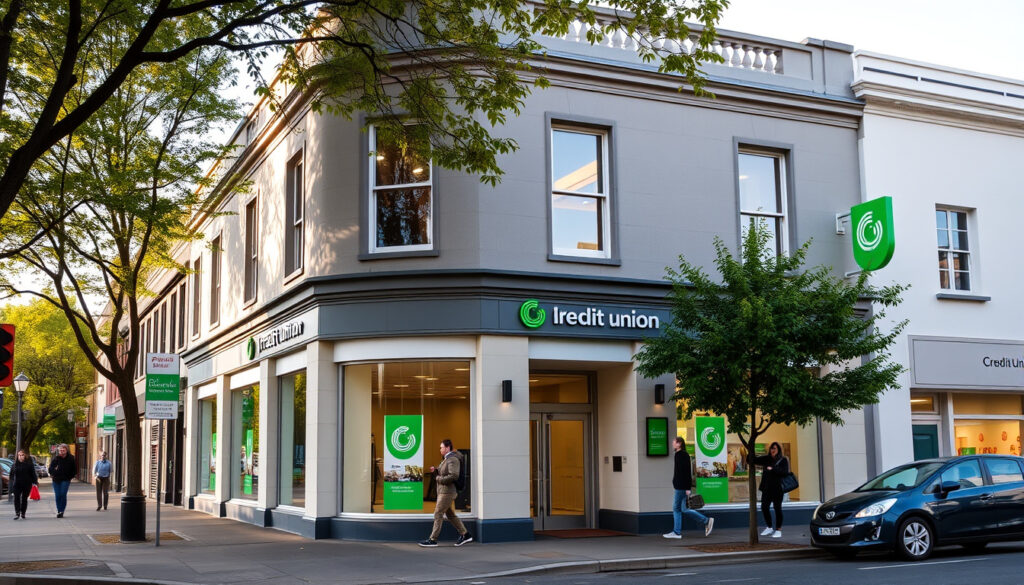
Credit Union Near Me: Your Guide to Borrowing in Ireland
When you need a loan and want to avoid the big bank experience, a credit union might be the first place that comes to mind. These member-owned cooperatives are dotted across Ireland, offering competitive rates and a personal touch. Whether you’re looking to borrow €20,000 for a car or €100,000 for home improvements, understanding how credit unions work can save you money and hassle.
Credit unions in Ireland: over 250 ·
Maximum loan amount: €100,000 ·
Average loan approval time: 1–3 business days ·
Typical interest rate (APR): 8–12%
Quick snapshot
- Credit unions are member-owned, not-for-profit cooperatives (Irish League of Credit Unions, trade body).
- Loans up to €100,000 are available at many credit unions (Kildare Credit Union).
- Approval ranges from same-day to 7 days depending on loan size. (Irish League of Credit Unions, trade body)
- Exact interest rates vary significantly between credit unions (ILCU rate page).
- Some credit unions may charge additional fees not disclosed on homepages. (ILCU rate page)
- Maximum loan amount may be lower for new members. (ILCU rate page)
- Interest rate cap: 12% nominal (12.68% APR) set by the Irish League of Credit Unions.
- Average personal loan rate in Republic of Ireland: 10.59% APR (ILCU survey).
- Join a credit union in your common bond area to start borrowing. (ILCU rate comparison)
- Compare rates across local credit unions before applying (ILCU rate comparison).
| Label | Value |
|---|---|
| Typical loan APR | 8–12% |
| Maximum loan amount (unsecured) | €100,000 |
| Minimum savings requirement for loan | Often €500–€1,000 or 10% of loan amount |
| Average approval time | 1–3 business days |
| Number of credit unions in Ireland | >250 |
| Common bond requirement | Live, work, or study in the area |
Which is the best credit union in Ireland?
There’s no single “best” credit union — the right one depends on where you live, what services you need, and what rates they offer. Credit unions are not-for-profit, member-owned institutions, so their focus is on serving their local community rather than maximising profit (Irish League of Credit Unions, trade body).
Membership requires living, working, or studying within the credit union’s common bond area. That means you can’t just join any credit union — you need one that serves your location. Some of the larger credit unions in Ireland include Core Credit Union, Capital Credit Union, and Community Credit Union, but the best choice is the one that covers your area and offers the products you need.
What is the best credit union bank to have?
Several credit unions stand out for their competitive rates. For example, East Coast Credit Union (Dublin/Wicklow) offers a lending rate of 3.40% variable (3.45% APRC). Life Credit Union (Dublin) advertises a rate of 6.5% per annum (6.7% APR). Kildare Credit Union offers standard loans at 8.9% (9.3% APR) and share-secured loans at 6% (6.2% APR). The best “bank” is the one that accepts your membership and gives you the lowest rate for your purpose.
The best credit union for you is the one that serves your area and offers the lowest APR for the loan type you need. Start by checking the ILCU rate comparison page to see average rates in your region.
The pattern: Rates vary widely — from 3.45% APRC at East Coast CU to 9.3% APR at Kildare CU. The trade-off is that lower rates often come with stricter membership criteria or require a higher savings share.
What is a weakness of a credit union?
Credit unions have some drawbacks compared to traditional banks. They may have fewer branches and ATMs, making cash access less convenient. Their loan products can be less flexible — for example, some only lend for specific purposes like car purchases or home improvements. Interest rates on savings accounts are often lower than bank rates, so your money may not grow as fast. And maximum loan amounts, while generous, may still be lower than what a high-street bank could offer for large mortgages (ILCU personal loans page).
Another weakness: if you need a very large loan (over €100,000), most credit unions will require collateral or a guarantor. And if you’re not a member yet, you can’t borrow until you’ve built up some savings share — typically a minimum of €500–€1,000 or 10% of the loan amount.
Credit unions are community-focused, which means they’re fantastic for everyday borrowing but less suited for complex financial products like investment mortgages or large unsecured loans.
The trade-off: You get lower rates and a personal relationship, but you give up some convenience and product breadth. For most borrowers, that’s a fair exchange.
What is the maximum you can borrow from a credit union?
Loan limits vary by credit union, but many offer up to €100,000 for qualified members (Kildare Credit Union lists loans from €50 to €100,000). Larger loans typically require collateral — such as a car or property — or a guarantor. The maximum amount is often tied to your savings share balance, with many credit unions lending 2–3 times your savings. Some credit unions also offer mortgages that exceed standard loan caps, but those are separate products.
Can I get a loan of €100,000 in Ireland?
Yes, several credit unions offer loans up to €100,000, especially for home renovations, debt consolidation, or business purposes. Athenry Credit Union (Co. Galway) advertises business loans over €25,000 at 6.31% per annum (6.5% APR). However, approval for such a large amount will depend on your income, savings history, and ability to provide security. The ILCU loan calculator can help you estimate monthly repayments.
Borrowing €100,000 unsecured is rare. Most credit unions will require a property or other asset as security for amounts above €50,000. Always ask about the loan-to-value ratio before applying.
Why this matters: The €100,000 cap is a ceiling, not a guarantee. Your actual limit depends on your savings, income, and the credit union’s policy. New members may start with a lower limit.
How much is a 20k loan per month?
Your monthly repayment depends on the interest rate and the loan term. For example, a €20,000 loan at 8% APR over 5 years works out to about €405 per month. That’s the standard rate many credit unions charge — Kildare Credit Union offers standard loans at 8.9% (9.3% APR), which would give a monthly payment of around €415 over 5 years. At the lower end, Life Credit Union’s 6.7% APR would bring the monthly payment to about €390.
How much would it cost to borrow 20k?
Over 5 years, the total cost of a €20,000 loan at 8% APR is about €24,300 — you pay €4,300 in interest. At 12% APR (the maximum allowed), the monthly payment jumps to about €445, and total interest reaches €6,700. Always use a loan calculator or ask your credit union for a personalised quote before committing (ILCU personal loan calculator).
How much would a 100k loan cost?
A €100,000 loan at 8% APR over 10 years would cost about €1,213 per month. Over 15 years, it drops to €955 per month. At the maximum rate of 12% APR, those figures rise to €1,434 and €1,200 respectively. Credit union loan rates are typically lower than high-street banks but higher than secured loans (ILCU loan calculator).
For a €20,000 loan, expect to pay between €390 and €445 per month depending on the rate and term. Shorter terms mean higher monthly payments but less total interest.
The implication: The difference between 8% and 12% APR on a €20,000 loan is about €55 per month — a meaningful amount over 5 years. Shopping around can save you hundreds.
How long does a credit union loan take to be approved in Ireland?
Standard approval takes 1–3 business days after submitting all required documents. Smaller amounts (under €5,000) may be approved on the same day if you’re an existing member with a good savings history. Major loans (€50,000+) often require committee approval and can take up to a week. Some credit unions offer instant online loan decisions for pre-approved amounts (ILCU personal loans page).
Which loan can I get immediately?
If you’re an existing member with a savings share, many credit unions offer instant loans up to €5,000 or even €10,000. For example, East Coast Credit Union offers a quick lending process for small amounts. New members may need to wait a few days even for small loans.
“Instant” loans usually require that you have savings already on deposit — often at least 10% of the loan amount. If you’re a new member with no savings, you’ll need to build that up first.
What this means: If you need cash fast, having an existing membership and savings balance is your best bet. Otherwise, plan for a few days to a week.
Why would a credit union refuse a loan?
Common reasons include insufficient savings history, poor credit record, unstable income, or a loan purpose outside the credit union’s policy. Credit unions typically require a minimum savings track record — often 3–6 months as a member. If you already have outstanding loans or a high debt-to-income ratio, refusal is likely. Your application may also be denied if you cannot provide acceptable security or a guarantor (ILCU personal loans page).
Another factor: the loan purpose. Some credit unions restrict lending to certain categories like car purchases, home improvements, or education. If your purpose doesn’t fit, they may decline even if you’re creditworthy.
Refusal isn’t permanent. Many credit unions will work with you to address the issue — for example, by offering a smaller loan or suggesting a guarantor. Ask for a clear reason and a plan to requalify.
The pattern: Refusal usually comes down to the “three S’s”: savings, stability, and security. Strengthen those three and your chances improve dramatically.
Is it hard to borrow money from a credit union?
It’s generally easier to borrow from a credit union than a bank if you’re a member with a good savings history. Credit unions are more lenient with credit scores and consider your overall relationship — they look at the whole person, not just a number. However, difficulty increases for non-members or those with no savings share. Borrowing limits are lower, but the process is often more personalised and supportive (ILCU personal loans page).
For new members, the first loan may be limited to a small amount (e.g., €2,000–€5,000) until you build a track record. Once you’ve repaid a couple of loans on time, larger amounts become available.
If you’re willing to join, save a little, and work with a local credit union, borrowing is straightforward. The hardest part is the first step — becoming a member.
Why this matters: For many people, credit unions are the most accessible form of borrowing in Ireland, especially after a bank refusal. The key is to start small and build your savings history.
The table below shows how rates diverge across five credit unions — the spread between the cheapest and priciest is over 6 percentage points.
| Credit Union | Personal Loan APR | Car Loan APR | Max Loan |
|---|---|---|---|
| East Coast CU | 3.45% APRC | — | €100,000 |
| Life Credit Union | 6.7% APR | — | €100,000 |
| Athenry CU | 8.4% APR | — | €100,000 |
| Kilcock CU | — | 5.07% APR (€15k+) | €100,000 |
| Kildare CU | 9.3% APR | — | €100,000 |
The implication: East Coast CU’s 3.45% APRC is the standout, but it applies only to specific lending products. Most personal loans hover between 6% and 9% APR. The car loan market is more competitive, with Kilcock CU offering 5.07%.
Loan terms vary, but six specs define the typical credit union borrowing experience.
| Specification | Typical Range |
|---|---|
| Loan amount | €50 – €100,000 |
| Interest rate (APR) | 3.45% – 12.68% |
| Loan term (personal) | 1–10 years |
| Loan term (car) | 1–7 years |
| Approval time (small) | Same day |
| Approval time (large) | 1–7 days |
| Minimum savings required | €500 or 10% of loan |
| Security required | For loans >€50,000 |
| Membership requirement | Live/work/study in common bond area |
The pattern: The lower the rate, the tighter the eligibility. East Coast CU’s 3.45% APRC is an outlier — most credit unions charge 6–9% APR for personal loans.
Upsides
- Lower interest rates than many high-street banks
- Personal, local service
- More lenient with credit scores
- Members own the institution
- Loan interest rebates possible
Downsides
- Fewer branches and ATMs
- Limited loan product flexibility
- Lower savings account interest
- Must be a member to borrow
- Maximum loan amount may be lower for new members
How to Get a Loan from a Credit Union: Step by Step
- Check your eligibility. Find a credit union that serves your area (common bond). Use the ILCU branch locator to see which ones cover your postcode.
- Become a member. Join by opening a savings account — typically a minimum deposit of €10–€50. You’ll need ID and proof of address.
- Build a savings history. Many credit unions require at least 3–6 months of regular savings before approving a loan. Aim to save at least 10% of the amount you want to borrow.
- Compare rates. Check the ILCU rate comparison page and your credit union’s own rate sheet. Look at the APR, not just the nominal rate.
- Apply online or in-branch. Submit your application with proof of income, savings history, and details of the loan purpose. Small loans (under €5,000) may be approved within hours.
- Review the offer. Check the annual percentage rate (APR), repayment term, any fees, and whether you qualify for a loan interest rebate at the end of the year.
- Accept and receive funds. Once approved, funds are usually transferred to your current account or paid by cheque within 1–3 business days.
Confirmed facts
- Credit unions are member-owned, not-for-profit cooperatives.
- Maximum interest rate cap is 12% nominal (12.68% APR) (ILCU).
- Average personal loan rate in ROI: 10.59% APR (ILCU survey).
- Average car loan rate in ROI: 7.7% APR (ILCU rate page).
- Approval time: 1–3 business days for standard loans.
What’s unclear
- Exact rates vary by credit union and are not always published online.
- Some credit unions charge processing fees – not always disclosed.
- Maximum loan amount for new members may be lower than €100,000.
- Loan interest rebate policies differ between credit unions.
What the experts say
“Credit unions offer a personal, local alternative to banks. They are owned by their members, which means any surplus is returned to the community through lower rates and loan interest rebates.”
— Irish League of Credit Unions, trade association for credit unions in Ireland
“When comparing loan offers, always look at the APR — it includes both the interest rate and any mandatory fees. A lower APR means a cheaper loan over the full term.”
“The average personal loan rate across credit unions in the Republic of Ireland is 10.59% APR, but many members pay less thanks to loan interest rebates at year-end.”
— ILCU personal loan calculator, industry data
Bottom line: Credit unions in Ireland are a practical, affordable option for borrowing — but they require membership and a savings history. For anyone living or working in a common bond area, the choice is clear: join a credit union, save a little, and you’ll unlock rates that are often lower than high-street banks. The trade-off is that you need to be a member first, and not all credit unions offer the same products. But for the typical borrower looking for a personal loan up to €100,000, the benefits far outweigh the inconvenience. A borrower in Ireland should find their local credit union, open a savings account today, and start building borrowing power.
Related reading
- Emergency Dentist Near Me: A Guide to Finding Urgent Dental Care in Ireland
- GP Visit Card Threshold 2025: What You Need to Know
creditunion.ie, creditunion.ie, anpost.com, loancalculatoronline.org, creditunion.ie, creditunion.ie, switcher.ie
Frequently asked questions
What documents do I need to join a credit union?
You’ll typically need a valid photo ID (passport or driving licence), proof of address (recent utility bill or bank statement), and your PPS number. Some credit unions also require a minimum initial deposit of €10–€50.
Can I join any credit union in Ireland regardless of where I live?
No. Credit unions have a “common bond” — you must live, work, or study in the area they serve. Use the ILCU branch locator to find credit unions that cover your location.
Do credit unions check my credit history?
Yes, most credit unions run a credit check through the Irish Credit Bureau or the Central Credit Register. However, they are often more lenient than banks and will consider your savings history and overall relationship.
What is the dividend rate on savings accounts?
Dividend rates vary by credit union and are set annually based on the credit union’s financial performance. They are typically lower than bank savings rates — often 0.5% to 2% per year — but some credit unions offer higher rates for longer-term savings.
Can I get a loan if I have a poor credit score?
Yes, it’s possible. Credit unions look at the whole picture — your savings history, income stability, and the purpose of the loan. If your credit score is low but you have a good savings record and a steady income, you may still be approved, especially for a smaller loan.
How much can I typically borrow as a new member?
New members are often limited to small loans of €2,000–€5,000 until they build a payment history. After successfully repaying a couple of loans, the limit increases. Some credit unions offer a ‘starter loan’ specifically designed for new members.
More related posts
 Waterford to Dublin Bus: Timetables, Prices & Tips
 Tralee Woman Body Identification Canal – Gardaí Investigation Facts
 What Is My BMI? Calculate & Interpret Your Score
 How Many Hours in a Year – 8,760 Common, 8,784 Leap
 Houses for Sale in Ardee: Types, Agents & Market Guide
 Hotels in Dublin City Centre: Best Areas & Budget Tips
 Pawn Shop Near Me: How Much Will They Give for Your Items
 Irritable Bowel Syndrome Symptoms: Guide to Relief & Diet