The Dubliners Grace Lyrics: Meaning, Story & History
Few Irish ballads cut as deep as “Grace” — a song that turns one of the 1916 Easter Rising’s most heart-wrenching moments into three minutes of melody and longing. If you’ve ever wondered why this particular love story still pulls at heartstrings decades later, the answer lies in the real-life couple who inspired it all. This guide walks through the full lyrics, the historical tragedy behind them, who actually wrote the song, and how to play it yourself.
Based on: 1916 Easter Rising · Setting: Kilmainham Gaol · Key figures: Joseph Plunkett and Grace Gifford · Popularized by: The Dubliners · Lyrics source: Genius.com and Bell’s Irish Lyrics
Quick snapshot
- Written in 1985 by Frank and Seán O’Meara (Wikipedia)
- Jim McCann’s 1986 single hit number 2 on Irish charts for 33 weeks (Wikipedia)
- Plunkett-Gifford wedding took place on May 3, 1916 (Irish Folk Songs)
- Whether Grace was pregnant and miscarried post-Rising remains unconfirmed (YouTube: Most Heartbreaking Song)
- No verified Plunkett inscription on Kilmainham Gaol walls despite song lyrics (Debi Simons)
- Exact origin of the Protestant song claim unclear (Irish Central)
- 1911: Plunkett publishes mystical poem “His Blood Upon the Rose” (Debi Simons)
- April 24, 1916: Easter Rising begins (Debi Simons)
- 1985: O’Meara brothers write the song (Wikipedia)
- February 2024: Green Brigade sings Grace for Palestine support (Wikipedia)
- Song remains a staple at Irish commemorations and diaspora gatherings (Irish Central)
- Continued use as a symbol of resistance beyond Ireland (Wikipedia)
- Guitar tutorials and chord guides keep the song accessible for new players (Ultimate Guitar)
The table below consolidates the key facts about “Grace” that appear repeatedly across multiple sources.
| Label | Value |
|---|---|
| Artist | The Dubliners |
| Setting | Kilmainham Gaol chapel |
| Inspires | Joseph Plunkett execution |
| Lyrics start | “As we gather in the chapel here” |
| Top source | genius.com/The-dubliners-grace-lyrics |
What is the song Grace by the Dubliners about?
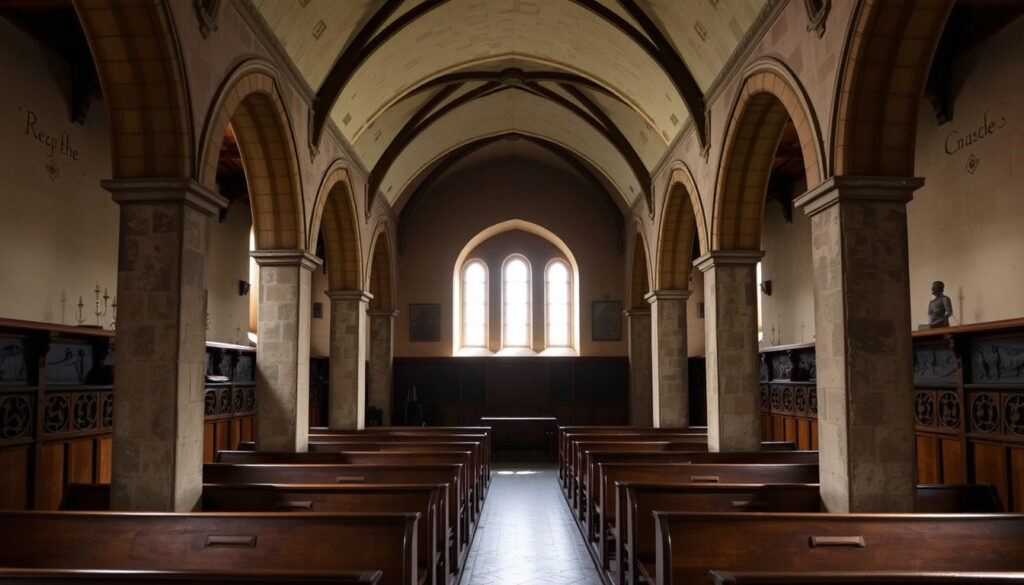
“Grace” tells the story of Joseph Plunkett and Grace Gifford — a couple who married in Kilmainham Gaol chapel on May 3, 1916, just hours before Plunkett faced execution by British forces. The lyrics open with the scene: “As we gather in the chapel here in Old Kilmainham jail,” immediately placing listeners inside that candlelit ceremony surrounded by guards and bayonets (Irish Central).
The chorus captures the desperate intimacy of those final hours: “Oh Grace just hold me in your arms and let this moment linger / They take me out at dawn and I will die.” That raw urgency is what makes the song resonate so strongly — it’s not abstract patriotism but a man saying goodbye to his wife at 8pm, knowing dawn will bring a firing squad (Irish Folk Songs).
“Married at midnight and a widow by dawn.”
— YouTube historian, describing Grace Gifford’s fate
Historical context of Kilmainham Gaol
Kilmainham Gaol was not just any prison — it had held Irish political prisoners since the late 18th century. By 1916, it had become the execution site for leaders of the Easter Rising after British forces crushed the rebellion. The chapel within the gaol was granted for the wedding ceremony, with the couple married by candlelight at 8pm, surrounded by British guards with guns and bayonets. They were allowed only a brief time together under watch (Irish Folk Songs).
Fifteen Easter Rising leaders were executed after the rebellion was defeated, including Joseph Plunkett on May 4, 1916 — the morning after his wedding. Plunkett had been a leader combining mystical Catholic spirituality with military strategy, and his final hours were spent not in despair but in composing poetry and preparing for what he saw as a sacrifice for Irish independence (Debi Simons).
The pattern: McCann created the hit, but The Dubliners cemented its place in the folk canon.
The love story in the lyrics
Grace Gifford was herself a Protestant who converted to Catholicism to marry Plunkett — a detail that adds another layer of sacrifice to the story (YouTube: Most Heartbreaking Song). She was an illustrator who drew for Sinn Féin newspapers and later, reportedly, was imprisoned in Kilmainham during the Civil War that followed the Rising. The song imagines Seán O’Meara’s lyrics driving to Kilmainham in 1984, capturing what he imagined as the final words of an Irish founding father (Irish Central).
“I think we’ll be running a revolution then.”
— Joseph Plunkett, to Grace Gifford before the Rising
The implication: this love story isn’t just about two people but about what individuals will sacrifice when conviction and love collide. “Married at midnight and a widow by dawn” — that single phrase captures everything about why the song endures.
Grace Gifford’s story didn’t end with the song — she continued her republican work and was later imprisoned herself. Her lifelong connection to the place where she married adds a depth to the lyrics that casual listeners may never know.
Who originally sang the song Grace?
The song “Grace” was first recorded by Jim McCann, who released it as a single in 1986. The song reached number 2 on the Irish charts and remained there for 33 weeks starting April 1, 1986 — an extraordinary run for any single, let alone a ballad with such somber themes (Wikipedia).
Jim McCann’s version
McCann’s recording established the template for how “Grace” would be performed — a straightforward acoustic arrangement that lets the melody carry the emotional weight without dramatic embellishment. His voice reportedly brought a particular tenderness to lines like “With all my love, I place this wedding ring upon your hand” that critics still cite as the definitive interpretation.
The Dubliners’ popularization
The Dubliners later performed “Grace” with McCann, bringing the song to their wider international audience. Their version uses capo on the 3rd fret, a detail that gives their arrangement the slightly higher register many listeners associate with the song today (Irish Folk Songs).
The catch: O’Meara’s song takes historical liberties. There is no confirmed Plunkett inscription on Kilmainham Gaol walls, despite the lyrics implying such a message. The song prioritizes emotional truth over documentary accuracy.
Who wrote the Dubliners Grace lyrics?
The Dubliners didn’t write “Grace” — they performed it. The song was written in 1985 by brothers Frank and Seán O’Meara, with Frank composing the melody and Seán writing the lyrics. The O’Meara brothers created the song nearly 70 years after the events it depicts, imagining their way back to that candlelit chapel in Kilmainham Gaol (Wikipedia).
Songwriter background
Seán O’Meara reportedly imagined the lyrics while driving past Kilmainham Gaol in 1984, and the story goes that he put himself in the mind of an Irish founding father speaking his final words. Frank O’Meara then set those words to a melody that balanced grief with hope — never letting the tune wallow entirely in melancholy. The collaboration produced what many consider one of the most emotionally precise Irish ballads of the 20th century.
“Grace” is a song of love, hope, loss, pain, steadfastness, resistance and freedom.
— Green Brigade, Celtic FC ultras group
The implication: the O’Meara brothers built their ballad on documented history but filled emotional gaps with imagination.
Is Grace a Protestant song?
This question surfaces regularly, and the confusion is understandable — Grace Gifford was born Protestant and converted to Catholicism to marry Joseph Plunkett. However, calling the song itself “Protestant” misreads both the context and the lyrics (Irish Central).
Religious themes analysis
The 1916 rebels were predominantly Catholic, and the ceremony in Kilmainham Gaol’s chapel was a Catholic wedding. Grace’s conversion wasn’t a symbolic gesture — it was a genuine spiritual commitment required by the church for her to marry Plunkett. The chapel setting reinforces the Catholic context throughout.
What likely fuels the confusion: the song’s themes of sacrifice, redemption, and love unto death resonate with Protestant hymn traditions as much as Catholic ones. Grace Gifford’s Protestant origins may lead some to assume the song itself carries Protestant associations. In reality, the song reflects the Catholic mysticism that pervaded the Easter Rising leadership — Plunkett’s own 1911 poem “His Blood Upon the Rose” is saturated with Catholic imagery, though it’s unrelated to “Grace” (Debi Simons).
The trade-off: calling “Grace” Protestant isn’t accurate, but the song’s themes of grace, sacrifice, and faith transcend any single denomination. That’s probably why it connects with listeners across faith traditions.
What are the full The Dubliners Grace lyrics?
Here are the full lyrics as performed by The Dubliners, with verse-by-verse context for the historical references embedded in each line.
Verse by verse breakdown
The song opens: “As we gather in the chapel here in Old Kilmainham jail.” This locates the action precisely — the chapel at Kilmainham Gaol in Dublin, the prison that would become a execution site for the Rising’s leaders.
The next lines reference Padraic Pearse and the General Post Office (GPO): “Our hands are rising and our blood is stirring / We will see the Pearse once more.” The Pearse referenced is Patrick Pearse, another leader executed alongside Plunkett, and the GPO was the rebels’ headquarters during the Rising.
The chorus carries the emotional weight: “Oh Grace, just hold me in your arms / And let this moment linger / They take me out at dawn / And I will die.” These words imagine what Plunkett might have said to his bride in their final hours together.
The song continues with the wedding ring motif: “With all my love, I place this wedding ring upon your hand.” Plunkett gave Grace an engagement ring previously owned by his sister Geraldine — a detail that survived in the family record.
The bridge references the broader historical context: “In the flames of my heart there’s a burning desire / To see you again.” This echoes Plunkett’s poetry, which frequently used fire and love as metaphors for sacrifice and faith.
The closing lines return to the chapel: “And when we have finished, our God will rise / With joy we will see.” This suggests a redemptive reading — the couple’s union and Plunkett’s death both pointed toward a higher purpose beyond the historical moment.
The lyrics reference an inscription Plunkett allegedly wrote on Kilmainham walls, but no verified record confirms this message exists. Scholars treat it as poetic invention rather than documented fact.
Guitar chords for the song use G, F, and C keys in the chorus, with The Dubliners’ version employing a capo on the 3rd fret to achieve their distinctive higher register. The strumming pattern follows a Down, Down-up, Up-down-up rhythm that mirrors the ballad’s steady, mournful pace.
The meaning behind the lyrics centers on love, sacrifice, and the collision between personal devotion and political conviction. Listeners who know the 1916 context hear Plunkett’s final words; those who don’t still connect with the raw emotion of farewell.
Related reading: Top 10 Places to Visit in Ireland: Road-Tested Must-Sees · Things to Do in Dublin This Weekend: Culture, Events & More
The Dubliners’ ‘Grace’ captures Irish tragedy much like the Wolfe Tones’ evocative Spancil Hill lyrics, a deathbed lament for Clare’s crossroads.
Frequently Asked Questions
What is the meaning of the Dubliners Grace lyrics?
The lyrics imagine the final conversation between Joseph Plunkett and his bride Grace Gifford on their wedding night in Kilmainham Gaol chapel. They capture the desperate intimacy of a couple saying goodbye hours before Plunkett’s execution.
What are the chords for Grace Irish song?
The song uses G, F, and C chords in the chorus. The Dubliners’ version employs a capo on the 3rd fret, creating a higher register. The strumming pattern is Down, Down-up, Up-down-up (D Du uDu).
Did Rod Stewart record Grace?
Yes, Rod Stewart recorded “Grace” after its initial success. He joined a list of artists including Jim McCann, The Dubliners, and Glaslevin (who recorded it for a Celtic FC Green Brigade fundraiser in 2016).
Are the Grace lyrics by The Dubliners in English?
Yes, the song is entirely in English. The Irish context comes from the historical subject matter, not the language.
Who wrote Grace for The Dubliners?
Frank O’Meara composed the melody and Seán O’Meara wrote the lyrics. The brothers created the song in 1985, imagining their way back to the 1916 wedding in Kilmainham Gaol.
What is the story behind Irish song Grace?
Grace tells the story of Joseph Plunkett and Grace Gifford, who married in Kilmainham Gaol chapel on May 3, 1916, hours before Plunkett’s execution. The song was written in 1985 by the O’Meara brothers and first recorded by Jim McCann.
Where can I listen to The Dubliners Grace?
The Dubliners’ version appears on streaming platforms and YouTube. Jim McCann’s original 1986 recording also remains available, charting at number 2 on Irish charts for 33 weeks.
More related posts
 World Book Day Ireland 2026: Dates, Tokens, and Resources
 Moon Knight Season 2: Status, Cast, and Release Date
 Brighton & Hove Albion F.C. history, stadium & tickets
 Hotels in Dublin City Centre: Best Areas & Budget Tips
 Suzuki Swift for Sale: What Irish Buyers Need to Know
 Galaxy Note 2 to Buy: Is It Still Worth It in 2024? – Guide
 What Is My BMI? Calculate & Interpret Your Score
 How to Reset AirPods – Complete Guide for All Models