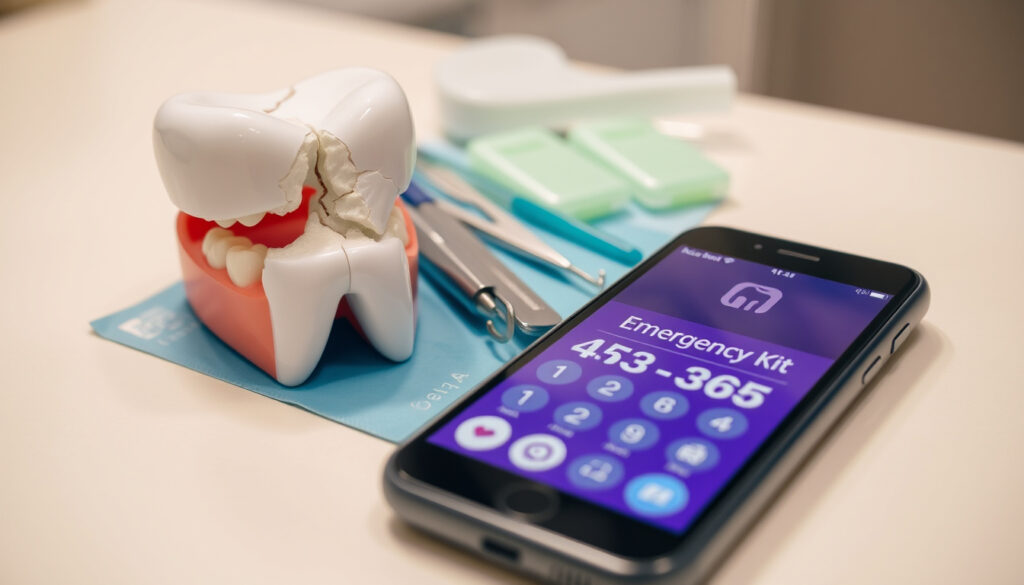
Emergency Dentist Near Me: What to Do in a Dental Emergency
At 2 a.m. on a Sunday in Ireland, an unbearable toothache turns a simple question — hospital or dentist? — into a high-stakes decision. This guide walks through what actually counts as a dental emergency, how to navigate the Irish healthcare system when you need help fast, and what to do about the pain before you can get a proper appointment — so you can make the smartest call when every minute feels like an hour.
Emergency Dentist Near Me: Your Complete Guide to Dental Emergencies
Dental emergencies in Ireland: 1 in 5 adults experience dental pain annually ·
Emergency dental clinics: Open 7 days a week in Dublin, Kildare, and nationwide ·
Dental sepsis fatality rate: Untreated sepsis can be fatal in 20% of cases
Quick snapshot
- A&E can provide pain relief and antibiotics but not dental restoration (HSE Medical Card Guidelines)
- Dental sepsis requires immediate medical attention (HSE EHIC guidance)
- Dublin Dental Hospital runs weekend emergency service 9am-11pm (Dublin Dental University Hospital)
- Effectiveness of the 3-3-3 rule for toothache relief is not medically proven
- Whether pregnant women can safely take all ER pain medications is case-dependent
- Whether a specific emergency dentist near you accepts Medical Card on a Sunday is not centrally published and varies by clinic
- Knocked-out tooth: best chance of reimplantation within 30-60 minutes (Dublin Dental University Hospital)
- Dental infection can spread to bloodstream within hours (HSE EHIC guidance)
- If no dentist available, A&E is the next step for severe pain or infection
- Medical Card holders can access contracted dentists under DTSS (HSE Medical Card Guidelines)
This snapshot distils the 24-hour decision path: act fast on red flags, treat home remedies as temporary, and confirm coverage with your dentist.
Early decisions come down to a few hard numbers: here are the five key facts to weigh before you choose where to go.
| Label | Value |
|---|---|
| Definition | Dental emergency: any condition requiring immediate treatment to save a tooth, stop bleeding, or relieve severe pain. |
| Pain threshold | Unbearable tooth pain that disrupts sleep or daily activities. |
| Time to act | For knocked-out tooth: within 30 minutes to 1 hour for best chance of reimplantation (Dublin Dental University Hospital). |
| Sepsis danger | Dental infection can spread to bloodstream within hours; seek emergency care if fever, swelling, or difficulty breathing (HSE EHIC guidance). |
| Insurance | Medical Card accepted at many emergency dental clinics in Ireland under DTSS (HSE Medical Card Guidelines). |
What would be classed as a dental emergency?
A dental emergency isn’t just pain — it’s any condition where waiting 24 hours could cost you a tooth, your health, or your life. The HSE’s threshold is clear: if it’s bleeding, swollen, infected, or knocked out, it’s time to move.
Common dental emergencies
- Severe toothache that doesn’t stop with painkillers
- Knocked-out tooth (avulsion) — time is critical
- Broken or cracked tooth exposing the nerve
- Abscess or infection causing swelling and fever
- Uncontrolled bleeding after an extraction or injury
The Dublin Dental University Hospital (Ireland’s leading emergency dental service) defines severe dental emergencies as those requiring immediate intervention — including abscesses, trauma, and uncontrollable pain. The HSE Medical Card National Assessment Guidelines list oral examination, restorations, extractions, and dentures among services available to eligible Medical Card holders under the Dental Treatment Services Scheme (DTSS).
“If a severe dental emergency occurs outside the Dublin Dental Hospital’s out-of-hours coverage, the nearest general hospital casualty department should be contacted.”
HSE Dental and Orthodontic Services Dublin South West
When to seek immediate care
If your face is swelling, you can’t swallow properly, or your breathing feels tight, you’re past the dentist stage. The HSE’s EHIC guidance for visitors to Ireland says emergency cases should call 999 or 112 for an ambulance (HSE EHIC guidance). For a knocked-out tooth, the Dublin Dental University Hospital advises acting within 30 to 60 minutes for the best chance of reimplantation.
The implication: knowing the line between a bad toothache and a real emergency can save you hours of waiting and a whole lot of risk. If it’s swelling + fever + pain, treat it like a medical emergency — not a dental appointment.
Can I go to A&E with unbearable tooth pain?
A&E can stop the pain but not the root cause. For a patient in Dublin on a Sunday, the right choice depends on whether you need a prescription or a root canal — and the HSE’s pathways are different for each.
What to expect at A&E for tooth pain
When you walk into an Irish A&E with unbearable tooth pain, the team will assess your symptoms, check for signs of infection, and provide pain relief or antibiotics. What they won’t do is fill a cavity, perform a root canal, or reattach a crown. The HSE Dental and Orthodontic Services Dublin South West page states that if a severe dental emergency occurs outside the Dublin Dental Hospital’s out-of-hours coverage, the nearest general hospital casualty department should be contacted. The Dublin Dental University Hospital runs its out-of-hours service from 5pm to 10pm Monday to Friday, and weekend/public holiday access is by phone at 01 612 7200.
“Weekend and public holiday access is by phone at 01 612 7200.”
Dublin Dental University Hospital
A&E versus emergency dentist
Here’s the trade-off: A&E is free with a Medical Card or a GP Visit Card, and it can handle infection and pain. But it’s a stopgap. An emergency dentist, on the other hand, can actually fix the tooth. The HSE Community Healthcare East dental page confirms that the Dublin Dental Hospital service on Saturdays, Sundays, and public holidays runs from 9am to 11pm for severe dental emergencies only. For pregnant women with tooth pain, the ER can help with safe medications, but the HSE Medical Card Guidelines note that decisions about medications during pregnancy are case-dependent.
What is the 3-3-3 rule for a toothache?
The 3-3-3 rule is a folk remedy that’s popular online but carries no medical backing from the HSE, the Irish Dental Association, or any clinical body. Relying on it instead of professional care can delay treatment for an infection that’s spreading.
How to apply the 3-3-3 rule
The 3-3-3 rule for toothache calls for 3 tablespoons of apple cider vinegar, 3 times a day, for 3 days. The idea is that the vinegar’s acidity might kill bacteria or reduce inflammation. Some people report temporary pain relief, but there is no peer-reviewed study or clinical guideline supporting its use. The HSE Medical Card Guidelines make no mention of the rule, and neither does any official dental body in Ireland.
Effectiveness and limitations
If you’re in pain and considering the 3-3-3 rule, treat it as a band-aid, not a cure. The risk is that you delay seeing a dentist while an underlying infection worsens. The Citizens Information dental services page advises patients to call their local HSE Dental Clinic for emergency treatment rather than rely on home remedies. The 3-3-3 rule may reduce pain temporarily, but it is not a substitute for professional dental care.
The trade-off: you might get a few hours of relief from apple cider vinegar, but every hour you wait on a home remedy is an hour an infection has to spread. For a toothache that’s keeping you up at night, the 3-3-3 rule is not a plan — it’s a delay.
How to stop throbbing nerve pain in tooth?
Home remedies can buy you time until morning, but they can’t stop a nerve from dying. The moment you’re reaching for clove oil at 3 a.m., set a reminder to call the dentist at 9 a.m.
Home remedies for tooth nerve pain
- Cold compress on the cheek — reduces swelling and numbs the area
- Salt water rinse — helps clean the mouth and reduce bacteria
- Clove oil application — a natural numbing agent (dab on a cotton ball)
- Over-the-counter painkillers like ibuprofen or paracetamol
- Elevate your head while sleeping — prevents blood from pooling in the tooth
These are the standard first-aid measures recommended by dental professionals. The Dublin Dental University Hospital advises that for severe pain, you should call their emergency line (01 612 7200) during operating hours. Avoid heat, which can worsen inflammation, and don’t sleep flat, which increases pressure in the tooth.
When to see a dentist
If home remedies work and the pain subsides, you still need to see a dentist within 24 to 48 hours. The HSE Dental and Orthodontic Services Dublin West notes that there are no walk-in dental emergency clinics operating there at the time of publication, so adults with medical cards should use dentists contracted to provide treatment through DTSS. If the pain returns or worsens, or if you develop swelling, fever, or difficulty swallowing, you’re dealing with something more serious than nerve pain.
The implication: home remedies are a bridge, not a destination. The moment you’re using them, you’ve already decided you need professional care — you’re just trying to get there in one piece.
What does dental sepsis feel like?
Dental sepsis starts as a toothache that you might think you can sleep off. By the time you can’t breathe properly, the infection has already reached your bloodstream. The HSE says untreated sepsis can be fatal in 20% of cases — and dental infections are one of the most preventable causes.
Symptoms of dental sepsis
- Fever and chills
- Swelling in the face or neck that spreads quickly
- Rapid heart rate
- Difficulty breathing or swallowing
- Confusion or disorientation
The HSE EHIC guidance emphasizes that emergency cases should call 999 or 112 for an ambulance if these symptoms are present. Dental sepsis is a medical emergency requiring immediate treatment with antibiotics and drainage of the infection. The HSE Dublin South West page confirms that if a severe dental emergency occurs outside the Dublin Dental Hospital’s out-of-hours coverage, the nearest general hospital casualty department should be contacted.
When to seek emergency care
If you have a toothache plus any of the above symptoms, do not wait for a dentist appointment. Go to the nearest A&E or call 999/112. The HSE PQ response on Kerry noted that access to dental care can be patchy — only one dentist in County Kerry was accepting new medical card patients at that time — which makes it even more critical to know when to bypass the dentist and go straight to hospital.
The pattern: dental sepsis is a ticking clock. The faster you recognize it, the better your odds. If you’re unsure, err on the side of the ER — a false alarm beats a missed infection.
Pros and Cons of A&E vs. Emergency Dentist
Upsides
- A&E is free with a Medical Card and open 24/7
- Can provide pain relief and antibiotics immediately
- Can handle life-threatening infections like sepsis
- Safe option for pregnant women with tooth pain
Downsides
- A&E cannot perform dental procedures like fillings or root canals
- Long wait times for non-life-threatening tooth pain
- Emergency dentists may charge extra for weekend appointments
- Finding an emergency dentist with Medical Card acceptance can be difficult
The real takeaway: if it’s a true emergency, A&E’s limits beat a dentist’s unavailability — and if it’s a fixable tooth, an emergency dentist beats a long A&E wait.
What to do in a dental emergency: a step-by-step guide
- Assess the severity: Is there swelling, fever, or difficulty breathing? If yes, go to A&E or call 999/112. If it’s just pain, proceed to step 2.
- Call the Dublin Dental Hospital at 01 612 7200 if you’re in Dublin or nearby and it’s within their operating hours (9am-11pm weekends and public holidays).
- Search for ’emergency dentist near me’ and check if they accept Medical Card. Call ahead to confirm same-day availability.
- If no dentist is available, head to the nearest A&E. The HSE Dublin South West states that casualty departments are the fallback for severe dental emergencies outside dental hospital hours.
- Use home remedies (cold compress, salt water rinse, clove oil) to manage pain while you wait for professional care.
- Follow up with a dentist within 24-48 hours for definitive treatment, even if the pain subsides.
This sequence keeps you moving in the right direction even when you’re in pain and short on time — the order matters as much as the destination.
hse.ie, dentist.ie, 3dental.ie, mytips.com, sandycovedentalcare.ie, citizensinformation.ie, hse.ie
Frequently asked questions
How long can you wait with a toothache?
If the pain is mild and there’s no swelling, you can typically wait 24-48 hours to see a dentist. If the pain is severe, or if you have swelling, fever, or trouble breathing, seek immediate care.
Can a tooth infection cause sepsis?
Yes. A dental abscess can spread bacteria into the bloodstream, leading to sepsis. The HSE EHIC guidance warns that sepsis can be fatal in 20% of cases if untreated.
Is a broken tooth a dental emergency?
Yes, if the break exposes the nerve or causes bleeding. A cracked tooth that doesn’t hurt can wait until regular office hours, but any break with pain or bleeding needs urgent care.
What should I do if my child has a dental emergency?
Citizens Information states that all children under 16 are entitled to attend for emergency dental treatment. Call your local HSE Dental Clinic or the Dublin Dental Hospital for guidance.
Do emergency dentists charge extra for weekend appointments?
Many private emergency dentists charge a premium for weekend or out-of-hours appointments. Always call ahead to confirm fees and whether they accept Medical Card or DTSS.
Can I use a Medical Card for a dental emergency in Ireland?
Yes. The HSE Medical Card Guidelines confirm that adults with medical cards can access dental treatment through contracted dentists under DTSS, including oral examinations, restorations, and extractions.
What is the difference between a dental abscess and a cyst?
A dental abscess is an active infection with pus, causing pain, swelling, and fever. A cyst is a fluid-filled sac that may not cause pain. Both require professional diagnosis, but an abscess is a more urgent emergency.
How do I know if my tooth pain is serious?
If the pain is constant, throbbing, and keeps you awake, or if you have swelling, fever, or a bad taste in your mouth, it’s serious. The Dublin Dental University Hospital advises calling their emergency service for guidance.
If your question isn’t here, call ahead — a 60-second phone call can tell you whether you need a dentist, an A&E, or a prescription.
Related reading
- Merlin Park Hospital Departments: A Guide to Galway Units — useful context for patients in the west of Ireland
- GP Visit Card Threshold 2025: Income Limits & Guide — important for Medical Card holders navigating healthcare costs
Use these guides as context, but for dental pain the fastest route is usually the nearest emergency service.
For patients in Ireland facing a dental emergency, the choice is clear: know the symptoms, know the system, and move fast. If you’re in Dublin with a severe emergency, call the Dublin Dental Hospital at 01 612 7200. If you’re outside Dublin or after hours, the nearest A&E is your safest bet. For Medical Card holders, the DTSS pathway works — but only if you can find a contracted dentist. The difference between a bad night and a life-threatening infection often comes down to a single decision: treat it like a dental emergency, or treat it like a medical emergency. Make the call that matches the threat — a quick decision can save your tooth, and a faster one can save your life.
More related posts
 Golf Grand Slam Winners: Who Has Won All Four Majors
 Daily Mail Online: Classic Page, App & News Guide
 Guardians of the Galaxy: Watch Order, Ending & Future
 Pavilion Theatre Dún Laoghaire: Events, Seating & Tips
 The Irish Sun News: Facts, Political Stance & Updates
 49ers vs Chicago Bears Week 17 Match Player Stats 2025 | 42-38
 Scottie Scheffler Net Worth vs Rory McIlroy & Tiger Woods