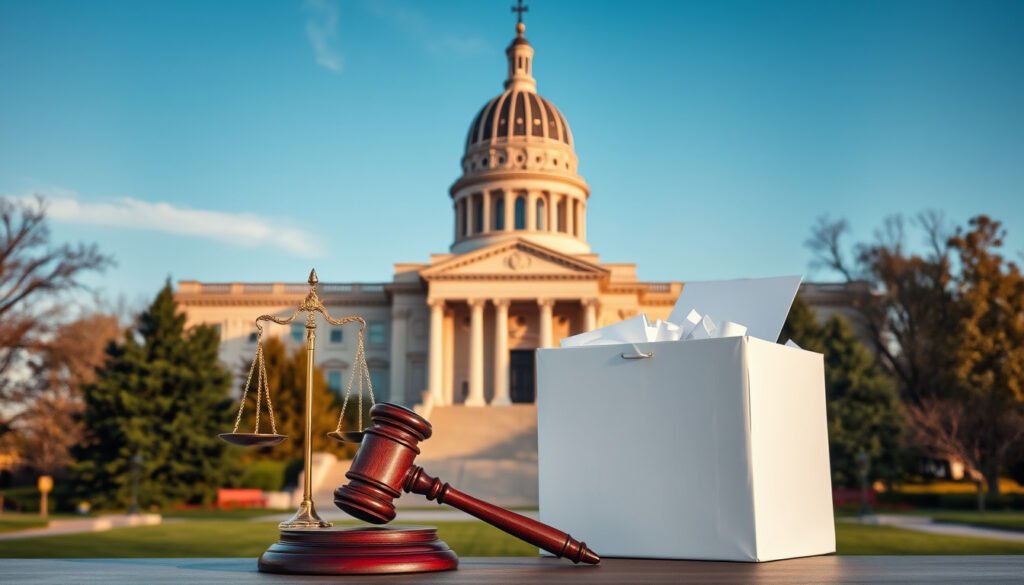
Wisconsin Supreme Court Election – Crawford Victory, Key Impacts
The 2025 Wisconsin Supreme Court election took place on April 1, 2025, determining the ideological balance of one of the most consequential state courts in the country. The race between Susan M. Crawford and Brad Schimel drew national attention and historic levels of campaign spending, with implications for voting rights, abortion access, and the future of Wisconsin’s democracy.
Election Overview and Background
The April 1, 2025 election filled an open seat on the Wisconsin Supreme Court created by the retirement of Justice Ann Walsh Bradley, who served 30 years on the court. The winning candidate would serve a ten-year term beginning in August 2025. Wisconsin holds its Supreme Court elections in the spring as part of the state Spring Election, a timing that typically results in lower voter turnout compared to November general elections.
Key Insights
- The court had been tied 4–4 following Justice Janet Protasiewicz’s 2023 election, which shifted the court from conservative to liberal majority
- Wisconsin Supreme Court races are officially nonpartisan but have become heavily politicized
- Campaign spending exceeded $50 million combined, making it among the most expensive judicial races in U.S. history
- Both major parties formally endorsed their preferred candidates despite the nonpartisan label
- Historical turnout for Wisconsin Supreme Court elections has been notably low—in 2019, only 25% of eligible voters participated
- Issues at stake included voting rights, abortion laws, workers’ protections, and redistricting
| Category | Details |
|---|---|
| Election Date | April 1, 2025 |
| Election Type | Wisconsin Spring Election |
| Position | Wisconsin Supreme Court Justice |
| Term Length | 10 years |
| Winner | Susan M. Crawford |
| Margin of Victory | Approximately 10 percentage points |
The Candidates
Susan M. Crawford, a Dane County Circuit Court judge, faced Brad Schimel, a Waukesha County Circuit Court judge and former Wisconsin Attorney General who served from 2015 to 2019. Although Wisconsin Supreme Court elections appear on the ballot as nonpartisan contests, Crawford was widely identified as the liberal, Democratic-aligned candidate, while Schimel represented the conservative, Republican-aligned perspective. Both candidates publicly emphasized judicial independence during their campaigns.
Crawford’s Positions
Crawford advocated for what she described as a pro-democracy court, explicitly opposing gerrymandering and warning against any effort to overturn legitimate election results. Her platform resonated with voters who backed Kamala Harris in Wisconsin by 7 points in the 2024 presidential election.
Schimel’s Background
Schimel brought executive experience as former Attorney General, having led the state’s legal affairs during a previous administration. His campaign emphasized constitutional conservatism and judicial restraint, themes that resonated with conservative voters and party organizations.
Despite the nonpartisan label on the ballot, the Democratic Party of Wisconsin and Republican Party of Wisconsin both formally endorsed their respective candidates, reflecting how these judicial races have become de facto party-line contests in Wisconsin politics.
Why the Election Mattered
Crawford’s victory proved consequential for Wisconsin’s judicial landscape. The result secured a liberal majority on the Wisconsin Supreme Court through at least August 2028, based on the schedule of upcoming judicial elections. The court’s ideological balance had already shifted in 2023 when Janet Protasiewicz was elected, moving the court from a 4–3 conservative majority to a 4–3 liberal majority.
Issues at Stake
The election addressed several critical issues affecting Wisconsin residents. Voting rights remained central, as did questions about abortion access following the U.S. Supreme Court’s 2022 decision overturning Roe v. Wade. Workers’ protections and redistricting—the latter being a perennial issue given Wisconsin’s history of contentious gerrymandered legislative maps—also featured prominently in discussions about the court’s future direction.
Campaign Spending and Voter Turnout
The 2025 Wisconsin Supreme Court race attracted unprecedented financial investment. Both campaigns were on pace to collectively exceed $50 million in fundraising, ranking among the most expensive state Supreme Court elections in American history. Outside groups poured significant resources into advertising and voter mobilization efforts, reflecting the high stakes surrounding the court’s future.
Despite the race’s significance, Wisconsin Supreme Court elections have historically suffered from low voter participation. In 2019, only one in four eligible voters cast ballots in the judicial race—a pattern that advocates have sought to address through voter education efforts.
Timeline of Key Events
- November 2024: Candidate filing period opened for the Spring Election
- January 2025: Campaign season intensified with increased advertising and fundraising
- February 2025: Primary election period (if applicable based on candidate field)
- April 1, 2025: General Election held as part of Wisconsin Spring Election
- August 1, 2025: Susan M. Crawford sworn in as new justice
Established Facts and Outstanding Questions
Confirmed Information
Several facts about the 2025 election are firmly established. The election occurred on April 1, 2025, as part of Wisconsin’s Spring Election. Susan M. Crawford won with approximately a 10-point margin. She was sworn in on August 1, 2025, for a 10-year term. The court composition shifted to maintain a liberal majority until at least August 2028. Total campaign spending exceeded $50 million combined.
Ongoing Considerations
Some aspects of the race remain subject to continued analysis. The specific impact on pending cases involving abortion, voting rights, and redistricting continues to unfold as the newly constituted court takes up these matters. Academic researchers continue studying voter behavior patterns in this and prior judicial elections. Long-term implications for Wisconsin’s political landscape remain under evaluation.
Political Context
Wisconsin has emerged as a pivotal battleground state in American politics, and its Supreme Court elections have drawn increasing national attention over the past decade. The 2023 race between Janet Protasiewicz and Daniel Kelly set fundraising records before the 2025 contest surpassed those figures. This escalation reflects broader trends in state judicial elections, where policy stakes once considered technical have become highly visible partisan battlegrounds.
The tension between the officially nonpartisan nature of these elections and their de facto partisan character has drawn scrutiny from good-government groups and legal scholars. Wisconsin’s experience illustrates how state Supreme Court races can transform into proxy contests over national policy debates, with implications for constitutional interpretation that extend well beyond state borders.
Significance for Wisconsin’s Future
The 2025 Wisconsin Supreme Court election underscored the growing importance of state-level judicial races in American democracy. With federal courts often constrained by precedent and political circumstances, state supreme courts have become critical venues for determining policies on voting access, reproductive rights, labor standards, and the rules governing democratic participation itself.
“Both candidates emphasized judicial independence, but Crawford called for a pro-democracy court opposed to gerrymandering and overturning election results.”
— Wisconsin Watch
Crawford’s victory ensured that Wisconsin’s highest court will approach these questions from a liberal judicial philosophy for the foreseeable future. The result has implications for hundreds of thousands of residents whose daily lives are shaped by state constitutional interpretation, from workplace safety regulations to ballot access rules governing future elections.
Summary
The 2025 Wisconsin Supreme Court election delivered a decisive victory for Susan M. Crawford, securing the court’s liberal majority through at least August 2028. The April 1 election drew historic campaign spending exceeding $50 million, highlighting the high stakes surrounding state judicial races. Crawford’s win over Brad Schimel by approximately 10 percentage points ensures continued liberal control of a court whose decisions shape voting rights, abortion access, and democratic governance in Wisconsin. She was sworn in on August 1, 2025, for a ten-year term following the retirement of Justice Ann Walsh Bradley.
Frequently Asked Questions
When was the 2025 Wisconsin Supreme Court election held?
The election took place on April 1, 2025, as part of the Wisconsin Spring Election.
Who won the 2025 Wisconsin Supreme Court election?
Susan M. Crawford won the election by approximately 10 percentage points over Brad Schimel.
How long is a Wisconsin Supreme Court justice’s term?
Wisconsin Supreme Court justices serve ten-year terms on the court.
Why was the 2025 election significant?
The election determined whether the court would maintain its liberal 4–3 majority or shift to conservative control, with major implications for voting rights, abortion laws, and redistricting.
When was Crawford sworn in?
She was sworn in on August 1, 2025, to begin her ten-year term on the court.
How much was spent on the campaign?
Both campaigns were on pace to collectively exceed $50 million, making it one of the most expensive state Supreme Court races in American history.
Are Wisconsin Supreme Court elections partisan?
Officially, Wisconsin Supreme Court elections are nonpartisan. In practice, both major parties formally endorsed candidates and invested significant resources in the race.
More related posts
 Carlos Alcaraz Net Worth 2026: Earnings, Endorsements & Cars
 Jumanji: Welcome to the Jungle: Streaming, Cast & Sequel News
 Moon Knight Season 2: Status, Cast, and Release Date
 Joe and the Juice: Danish Expansion to Ireland & Oil Scandal
 City West Hotel Dublin – 4-Star Stay with Pool, Golf and Free Parking
 Leicester City vs Ipswich Town: H2H, Results, Live & Prediction
 Men in Black 2 (2002): Plot, Cast, Box Office and More
 Credit Union New Ross Guide: Services, Rates, and Benefits