Pain in Lower Left Abdomen: Causes, Symptoms, and When to Worry
That familiar ache on your lower left side — it stops you mid-step and makes you wonder what’s going on inside. Around half of adults over 60 have diverticulosis, according to Cleveland Clinic, though only a small fraction develop the painful inflammation known as diverticulitis.
Adults over 60 with diverticulosis: ~50% (Cleveland Clinic) ·
Diverticulosis patients who develop diverticulitis: 4–15% (Mayo Clinic) ·
Constipation prevalence in U.S. adults: ~16% (NIDDK) ·
Lower abdominal pain as reason for ER visit: ~10% of abdominal pain visits (CDC)
Quick snapshot
- Diverticulitis: most common cause (Cleveland Clinic)
- Constipation and gas (~16% of adults affected by constipation, NIDDK)
- IBS: related to gas and sensitivity (Providence Health)
- Lactose intolerance can cause cramping (Cleveland Clinic)
- Ovarian cysts and rupture (Cleveland Clinic)
- Ectopic pregnancy: medical emergency (Cleveland Clinic)
- Pelvic inflammatory disease (PID) (Cleveland Clinic)
- Endometriosis (Cleveland Clinic)
- Kidney stones: excruciating wave-like pain (Syracuse Hernia Center)
- UTI (pyelonephritis) (Cleveland Clinic)
- Ureteral obstruction (Cleveland Clinic)
- Muscle strain (Cleveland Clinic)
- Hernia (Cleveland Clinic)
- Shingles (Cleveland Clinic)
- Pancreatitis (less common, radiates from epigastric area) (Providence Health)
The table below summarizes key facts about lower left abdominal pain.
| Most common cause | Diverticulitis (especially in adults >50) (Cleveland Clinic) |
| Prevalence of diverticulosis | ~50% of adults over 60 (Cleveland Clinic) |
| Gender difference | Females more likely to have gynecologic causes; males more likely to have diverticulitis |
| Emergency red flag | Fever + severe pain + inability to pass gas may indicate ruptured diverticulum or torsion (Ubie Health) |
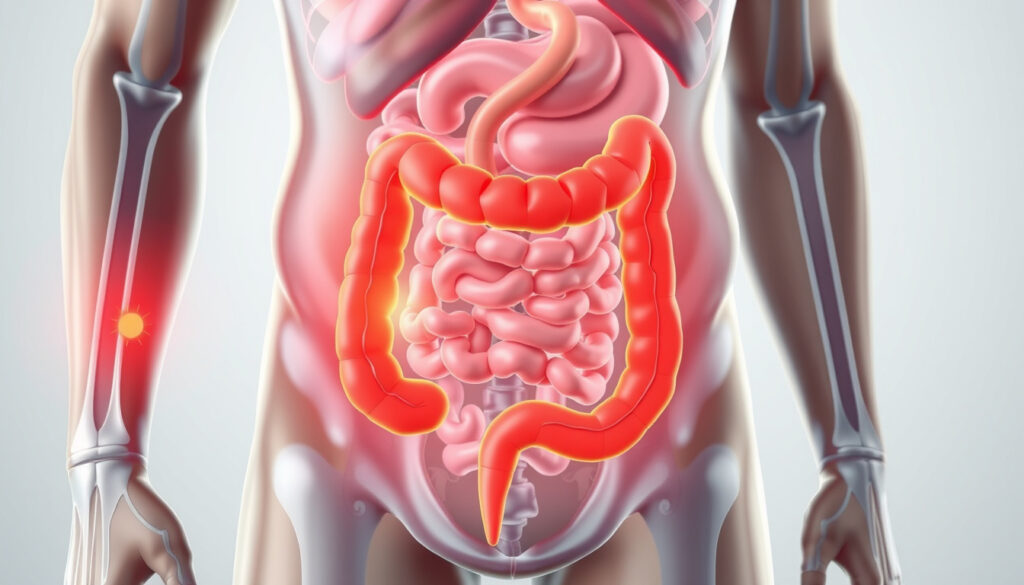
What organ sits in the lower left abdomen?
The lower left abdomen contains several important organs. Knowing which one is where can help you understand the source of your pain.
Descending colon and sigmoid colon
- The sigmoid colon, part of the large intestine, runs through the lower left quadrant. Tiny pouches called diverticula often form here — about half of adults over 60 have them (Cleveland Clinic).
Left ovary and fallopian tube (female)
- In females, the left ovary and fallopian tube sit in this area. Ovarian cysts, endometriosis, or an ectopic pregnancy can cause pain here (Cleveland Clinic).
Left ureter
- The left ureter carries urine from the kidney to the bladder. A kidney stone passing through can create sharp, wave-like pain that radiates to the lower left abdomen (Syracuse Hernia Center).
Part of the small intestine (ileum)
- The ileum, the final section of the small intestine, also sits partly in the lower left quadrant. Inflammation or obstruction here can contribute to pain.
Pain location often gives away the culprit. Lower left pain that worsens after eating or with gas is likely colonic; sharp, radiating pain may signal a kidney stone; and cyclical pain in women points to a gynecologic origin.
The implication: matching your pain location to the underlying organ can guide whether you need digestive, gynecologic, or urinary evaluation.
What causes pain in the lower left side of your belly?
A wide range of conditions can cause lower left abdominal pain. Here are the most common ones, grouped by system.
Diverticulitis
- The most frequent cause of left lower abdominal pain. When diverticula become inflamed, pain is progressive, lasts for hours, and is often accompanied by fever and appetite changes (Providence Health).
Constipation and gas
- Constipation affects roughly 16% of U.S. adults (NIDDK). Gas trapped in the sigmoid colon can cause sharp, crampy left-sided pain that resolves after passing gas or stool.
Irritable bowel syndrome (IBS)
- IBS is described as the “most common and fairly innocuous cause of left side pain,” related to gas production and abdominal sensitivity (Providence Health).
Inflammatory bowel disease (ulcerative colitis, Crohn’s)
- Chronic inflammation of the colon, particularly ulcerative colitis, can cause left-sided pain, diarrhea, and urgency.
Kidney stones
- Kidney stones produce “excruciating, wave-like pain” that starts in the back and side and moves to the lower abdomen (Syracuse Hernia Center).
Musculoskeletal strain
- Pulled muscles in the abdominal wall can cause localized pain that worsens with movement.
The pattern: digestive causes dominate, but urinary and musculoskeletal sources should not be overlooked.
When should I worry about lower left side pain?
Three red flags separate mild discomfort from a medical emergency.
Red flags: fever, vomiting, inability to pass gas
- A fever accompanying severe stomach pain “may indicate inflammation or infection such as peritonitis, diverticulitis, or appendicitis” (Nevada Gastroenterology).
- The inability to pass gas or stool suggests an obstruction or perforation.
Signs of peritonitis or obstruction
- Ubie Health lists three key red flags: sudden, severe, or rapidly worsening pain; pain with signs of infection or internal bleeding; and persistent pain in high-risk situations (Ubie Health).
When to seek emergency care
- Seek immediate care if you have any red flag, or if the pain is so severe you can’t stand still. Diverticulitis that ruptures can cause life-threatening peritonitis.
If your pain is sudden, you have a fever, or you can’t pass gas, don’t wait — head to the ER. These symptoms often mean an infection or perforation has advanced.
The catch: red flags are your body’s way of signaling that self-care is no longer sufficient.
What causes lower left abdominal pain in females?
In addition to digestive causes, several gynecologic conditions can produce left lower quadrant pain.
Ovarian cysts and rupture
- Ovarian cysts are common and often painless, but a large cyst or one that ruptures can cause sharp, sudden pain on the affected side (Cleveland Clinic).
Ectopic pregnancy
- An ectopic pregnancy occurs when a fertilized egg implants outside the uterus, often in a fallopian tube. It can present as lower left abdominal pain and is a life-threatening emergency.
Pelvic inflammatory disease (PID)
- PID is an infection of the female reproductive organs. It can cause chronic or acute pain in the lower abdomen, often with discharge and fever.
Endometriosis
- Endometriosis tissue can implant on the left ovary or fallopian tube, causing pain that is worse during menstruation (Cleveland Clinic).
Mittelschmerz (mid-cycle pain)
- Some women feel a sharp twinge on one side during ovulation — it’s brief and harmless, but can cause alarm if unexpected.
For women of childbearing age, left lower pain can be either a routine ovulation cramp or an ectopic pregnancy. The difference: timing, intensity, and whether a period was missed. Any doubt warrants a pregnancy test and a doctor’s visit.
What this means: women face a broader differential that requires ruling out pregnancy-related emergencies first.
What does pancreatitis feel like, left or right side?
Pancreatitis pain is often confused with other left-sided conditions, but its location and character are distinct.
Typical location of pancreatitis pain
- Pancreatitis typically causes pain “in the midline of the stomach” but can radiate to the left side. It’s described as “the most severe and unrelenting of abdominal pains” (Providence Health).
How to distinguish from diverticulitis
- Diverticulitis pain is localized to the lower left quadrant; pancreatitis pain is higher, in the epigastric area (upper middle abdomen), and often radiates to the back.
Other pancreatitis symptoms
- Pancreatitis is associated with nausea, vomiting, and a tender abdomen (Providence Health).
The pattern: If your pain is high in the midline and radiates to the left or back, especially after a fatty meal or heavy drinking, pancreatitis is more likely than diverticulitis. Seek emergency evaluation.
Confirmed facts
- Diverticulitis is a confirmed cause of left lower quadrant pain (Cleveland Clinic).
- Ectopic pregnancy is a confirmed emergency cause in females.
What’s unclear
- Exact link between stress and IBS pain is still under investigation.
- Role of microbiome in diverticulitis recurrence is not fully understood (Providence Health).
- The classic radiating pattern of kidney stone pain may not always present in the lower left abdomen and can mimic other conditions (Syracuse Hernia Center).
“Diverticulitis is the most common cause of lower left abdominal pain in older adults. The pain is progressive and lasts numerous hours, often accompanied by fever and changes in appetite.”
— Cleveland Clinic gastroenterologist
“When lower left abdominal pain is sudden and severe in a woman of childbearing age, ectopic pregnancy must be ruled out immediately. Any delay can be life-threatening.”
— Ubie Health medical review team
Knowing the source of lower left abdominal pain is more than a guessing game — it’s the difference between waiting it out and rushing to the ER. For anyone experiencing red flags (fever, vomiting, inability to pass gas, or pain that stops you in your tracks), the choice is clear: seek medical attention now, not later. Patients with milder, recurring pain should keep a symptom diary and consult their primary care doctor to determine whether diverticulitis, IBS, or a gynecologic condition is at play.
Frequently asked questions
Can lower left abdominal pain be caused by gas?
Yes. Gas trapped in the sigmoid colon can cause sharp, crampy left-sided pain that resolves after passing gas or having a bowel movement. IBS and constipation are common contributors.
What does sharp lower left abdominal pain that comes and goes mean?
Intermittent sharp pain may be due to gas, muscle spasms, or ovulation pain (mittelschmerz). If it’s severe or accompanied by other symptoms, consult a doctor.
How is lower left abdominal pain diagnosed?
Doctors typically start with a physical exam and medical history. They may order blood tests, urine tests, imaging (CT scan or ultrasound), or a colonoscopy depending on the suspected cause.
Is lower left abdominal pain a sign of pregnancy?
Not a sign of normal pregnancy. However, an ectopic pregnancy (implantation outside the uterus) can cause sharp lower left pain. If you’re pregnant and have such pain, seek emergency care.
What causes lower left abdominal pain in men?
In men, diverticulitis, constipation, IBS, kidney stones, and muscle strain are common. Gynecologic causes are not applicable; however, a hernia (inguinal) can also cause left lower pain.
Can a hernia cause lower left abdominal pain?
Yes. An inguinal hernia on the left side can cause a dull ache or sharp pain, especially when lifting or straining. A bulge may be visible.
What is the difference between diverticulitis and IBS pain?
Diverticulitis pain is acute, progressive, often with fever and appetite loss. IBS pain is chronic, alternating with diarrhea or constipation, and relieved by bowel movements. Both can be left-sided.
More related posts
 How Many Days Till Easter 2027? Countdown & Facts
 Duvet vs Comforter: What’s the Difference and Which Is Better
 How Many KG in a Stone? Converter + NHS Charts
 Muckross Park Hotel & Spa: 5-Star Luxury in Killarney
 Bonnie Blue Documentary Channel 4: Where to Watch & Stream
 Real Madrid vs Athletic Club: All-Time Record & El Viejo Clásico
 Everton vs Nottm Forest: Preview, Odds & Predictions
 Wisconsin Supreme Court Election – Crawford Victory, Key Impacts