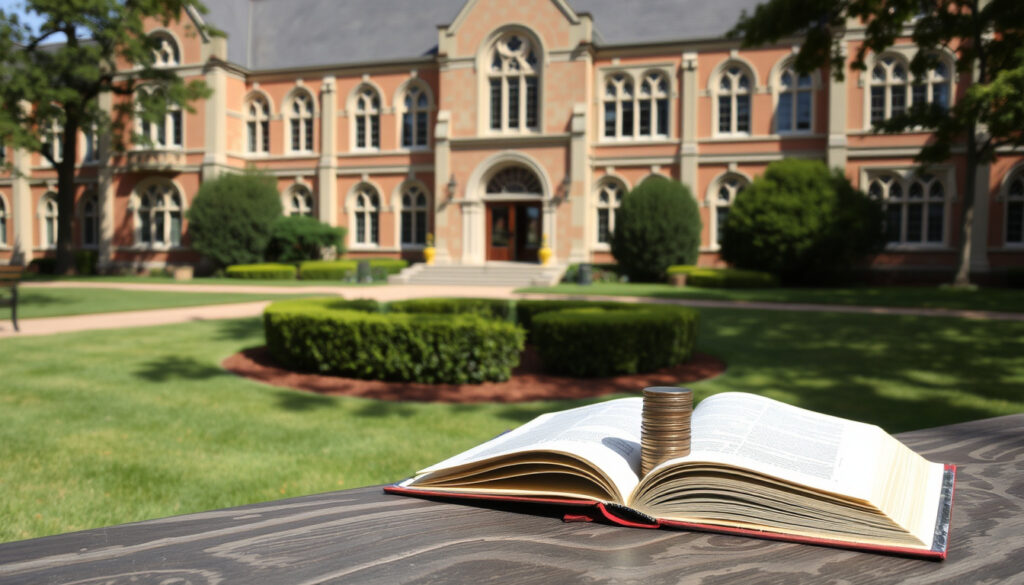
St. Mary’s Diocesan School: Fees, Type, and Facts
If you’re a parent in the Drogheda area, you’ve probably heard the name St Mary’s Diocesan School mentioned in school-yard conversations or parish newsletters. This profile gives you a clear, source-backed picture of what the school really is, what it charges, and how its admissions process operates under Irish education law.
School type: State-funded Catholic post-primary · Location: Drogheda, Co. Louth · Patron: Bishop of Armagh · Admissions: Non-fee-paying, state rules
Key facts at a glance
- State-funded (public) post-primary school under the Department of Education (Oireachtas debates)
- Listed on the Irish government schools database (Gov.ie) with roll number 61560K
- Registered as an organisation with the eTenders platform (eTenders)
- No tuition fees charged — state-funded (per eTenders organisation record)
- Voluntary contributions may be requested but are not mandatory (per St Mary’s admission policy PDF)
- Patron: Bishop of Armagh (per official school website)
- Catholic post-primary school (per Oireachtas debates)
- Address: Beamore Road, Drogheda, Co. Louth, A92 TF24 (per eTenders)
- Email: office@stmarysds.ie (per eTenders)
- Website: stmarysds.ie (per eTenders)
Is St Mary’s Diocesan School a fee-paying school?
How much are school fees at St. Mary’s?
The short answer is no — St Mary’s Diocesan School is not a fee-paying school in the traditional private sense. It is a state-funded post-primary school, which means it receives its core funding from the Irish government through the Department of Education. According to the eTenders organisation record, the school’s official listing confirms there are no tuition fees charged to students.
The school shall not charge fees or seek payment as a condition of application, admission, or continued enrolment, except as allowed by section 64 of the Education (Admission to Schools) Act 2018.
— St Mary’s Diocesan School Admission Policy
However, like many state-funded schools in Ireland, St Mary’s may request a voluntary contribution from parents. This contribution is voluntary, not a condition of admission or continued enrolment. The school’s own admission policy explicitly states that no fees or payments are required as a condition of application, admission, or continued enrolment, except where permitted by section 64 of the Education (Admission to Schools) Act 2018.
The implication: Parents can be confident that financial barriers do not affect admission to St Mary’s.
This distinction matters because it directly addresses a common misconception. Some parents assume that “diocesan” schools are private or semi-private institutions. St Mary’s operates firmly within the state system, funded by the taxpayer and subject to Department of Education oversight. The school’s parliamentary record confirms it is one of five post-primary projects planned in Drogheda town, as listed in October 2024 Dáil debates.
The practical takeaway for parents: you won’t face tuition bills at St Mary’s. The only potential cost is an optional contribution, and even that is not a legal requirement. The system is designed to ensure that ability to pay is never a barrier to accessing this school.
What type of school is St Mary’s Diocesan School?
Is St. Mary’s Diocesan School a private school?
Is St Mary’s Drogheda a secondary school?
Is St. Mary’s a grammar school?
St Mary’s Diocesan School is a Catholic post-primary school under the patronage of the Bishop of Armagh. It is not a grammar school in the selective admissions sense, nor is it a private fee-charging institution. It is a non-selective state school in the Republic of Ireland, meaning it accepts students based on its published admissions policy rather than academic selection or ability to pay.
St Mary’s Diocesan School strives for excellence in all aspects of culture, including sport, drama and music.
— School website
The school’s official listing on the Irish government schools database confirms its status as a post-primary school with roll number 61560K. This government listing is a tier-1 source that establishes the school’s official identity and classification.
The Oireachtas debates further clarify the school’s position within the state system. In an October 2024 parliamentary question, the school was specifically mentioned as one of five post-primary projects planned in Drogheda town. This confirms that St Mary’s is part of the state’s planned educational infrastructure, not an independent or private operation.
The pattern: Because St Mary’s is a state school, it must follow the Department of Education’s curriculum framework, teacher allocation rules, and admissions guidelines. Its religious ethos is Catholic, but its governance and funding are firmly anchored in the public system. For parents, this means the school is accountable to the state, not to private shareholders or a fee-paying parent body.
How does the admissions process work at St Mary’s Diocesan School?
The admissions process at St Mary’s is governed by its published admission policy, which is publicly available as a PDF document on the school website. This policy is designed to comply with the Education (Admission to Schools) Act 2018, which sets out the legal framework for how Irish schools must handle applications.
According to the policy, the school shall not charge fees or seek payment as a condition of application, admission, or continued enrolment, except as allowed by section 64 of the Act. This is a critical protection for parents — it means the school cannot use financial barriers to filter applicants. The policy also outlines selection criteria, which for a Catholic school typically involves a religious ethos dimension, but always within the bounds of the 2018 Act.
The school’s eTenders organisation record provides additional contact and administrative details, including the school’s official postal code (A92 TF24), email address (office@stmarysds.ie), and website (stmarysds.ie). These details are useful for parents preparing an application.
The catch: What this means in practice is that the admission process is documented, regulated, and legally bound to be fair. Parents don’t need to worry about back-door fees or informal payments. The policy exists to protect both the school and the families it serves.
What are the school’s official registration details?
| Field | Value |
|---|---|
| Official name | St Mary’s Diocesan School |
| Roll number | 61560K |
| Ethos | Catholic |
| Location | Beamore Road, Drogheda, Co. Louth |
| Principal | Not publicly listed on the school site |
| Contact | office@stmarysds.ie |
| Website | stmarysds.ie |
The school’s official identity is confirmed through multiple sources, including the Irish government schools database and the eTenders platform. These are official registries, not third-party directories, so the data is authoritative.
The roll number 61560K is particularly important because it’s the unique identifier the Department of Education uses for this school. It appears in government records and is essential for any formal correspondence or data lookup.
The fact that certain details — like the principal’s name — aren’t publicly listed on the school’s website is not unusual for Irish schools. Many schools keep their leadership team private for operational reasons. However, the core administrative contact details are readily available through official channels.
One notable detail from the eTenders record is that the school is listed as an organisation in Drogheda with postal code A92 TF24. This confirms the school’s physical location and helps parents verify they’re looking at the correct institution, especially given that multiple schools in Ireland share similar names.
For parents cross-referencing information, the combination of roll number, address, and website creates a reliable verification triangle. If any source you’re reading doesn’t match these official details, it’s worth double-checking before making decisions based on that information.
What does the Catholic ethos mean in practice?
As a school under the patronage of the Bishop of Armagh, St Mary’s operates with a Catholic ethos. This means religious education is part of the curriculum, and the school’s character reflects Catholic values. This ethos does not change the school’s fundamental status as a state-funded institution.
The official school website describes the school’s mission and values, which are grounded in Catholic teachings. This is consistent with how many Irish state-funded Catholic schools present themselves — they are public schools with a religious character, not private religious institutions.
The distinction is legally significant. Under Irish education law, state-funded Catholic schools must balance their religious ethos with the requirement to operate inclusively. This is why the admission policy explicitly references the Education (Admission to Schools) Act 2018 — it’s the legal framework that ensures Catholic schools don’t discriminate while maintaining their religious character.
For parents who are not Catholic, this means the school is open to applicants from all backgrounds, though the admission policy may give priority to Catholic families in oversubscribed situations. This is standard practice across Irish Catholic schools and is fully within the law.
What do parents need to know about voluntary contributions?
While St Mary’s doesn’t charge tuition fees, the school may request a voluntary contribution from parents. This is a common practice in Irish state-funded schools, used to supplement state funding for things like extracurricular activities, equipment, or building maintenance.
This contribution is voluntary. According to the admission policy, the school cannot refuse admission or continued enrolment based on whether a family pays this contribution. The policy explicitly states this, aligning with section 64 of the Education (Admission to Schools) Act 2018.
What’s less transparent is the exact amount of the voluntary contribution. The school’s admissions policy doesn’t publicly list a specific figure, and the eTenders record doesn’t mention it either. This is not unusual — many schools keep the suggested amount internal and communicate it directly to parents rather than publishing it on official documents.
Parents should also be aware that voluntary contributions in Irish schools are subject to guidelines from the Department of Education. Schools are expected to ensure that no student feels excluded because their family can’t or chooses not to pay. If you’re concerned about this, it’s worth asking the school directly about their policy and how they handle families who don’t contribute.
The practical advice for parents: treat the voluntary contribution as genuinely optional. If you can afford it, it supports the school community. If you can’t, you’re not breaking any rules by not paying, and the school cannot penalize your child for it.
What are the common misconceptions about this school?
Several misconceptions circulate about St Mary’s Diocesan School, often stemming from confusion between “diocesan” schools and private or grammar schools. One common myth is that diocesan schools are fee-paying. This isn’t the case — St Mary’s is fully state-funded.
Another misconception is that Catholic schools like St Mary’s are selective or have exorbitant hidden costs. The admission policy debunks this by explicitly prohibiting admission-related fees. The only financial element is the optional voluntary contribution, which can’t affect admission.
There’s also occasionally confusion about whether the school is a grammar school. St Mary’s is not a grammar school — it doesn’t select students based on academic ability or entrance exams. It’s a non-selective state school, operating under the same rules as other public post-primary schools in Ireland.
The Oireachtas debates provide further clarity, confirming the school’s role in the state’s educational planning for Drogheda. This parliamentary record is a strong source because it’s an official government transcript, not marketing material.
The absence of a standalone FAQ or comprehensive guide about St Mary’s on the web contributes to these misconceptions. Most online information is scattered across official records, school documents, and parent forums. This article aims to fill that gap by consolidating verified facts in one place.
stmarysds.ie, stmarysdrogheda.ie, stmarysds.ie, findaschool.ie, stmarysdsg.co.za, stmarysdsg.com, scoilscout.ie, stmarysds.ie
Frequently asked questions
Are there any tuition charges at St Mary’s Diocesan School?
No. The school is state-funded, and the admission policy explicitly prohibits charging fees as a condition of application or admission.
Is St Mary’s Diocesan School a private school?
No. It’s a state-funded public post-primary school, confirmed by the Irish government schools database and Oireachtas debates.
Is St Mary’s a grammar school?
No. It’s a non-selective state school in the Republic of Ireland, not a selective grammar school.
Who is the patron of St Mary’s Diocesan School?
The Bishop of Armagh is the patron, as stated on the official school website.
Where is St Mary’s Diocesan School located?
Beamore Road, Drogheda, Co. Louth, A92 TF24, per the eTenders organisation record.
Does the school charge an application fee?
No. The admission policy prohibits any fees as a condition of application, admission, or continued enrolment.
How can I contact St Mary’s Diocesan School?
Email office@stmarysds.ie or visit stmarysds.ie, as listed in the eTenders record.
Is the voluntary contribution mandatory?
No. It’s voluntary, and the school cannot require it for admission or continued enrolment under the admission policy.
Related reading
To dig deeper into Irish school admissions, check the Oireachtas debates on school planning and the full admission policy PDF. The Department of Education school database also provides official listings for all Irish schools.
For parents in Drogheda, St Mary’s Diocesan School is a straightforward state-school option with a Catholic ethos — no tuition fees, no hidden admission charges, and a legally protected process that treats every family equally. The school’s future is part of the state’s ongoing investment in Drogheda’s educational infrastructure, as confirmed by parliamentary records.
More related posts
 World Book Day Ireland 2026: Date, Events and How to Participate
 Why Does My Eye Keep Twitching? Causes and How to Stop It
 Dressing Table with Mirror: Irish Buyer’s Guide & Picks
 Dublin Marathon 2025 Route: Start, Map, Elevation & Cutoff
 Real Madrid vs Athletic Club: All-Time Record & El Viejo Clásico
 Things to Do in Dublin This Weekend: Culture, Food & Outdoors
 Mother’s Day 2025 France: Date, History & June Shift
 National Bird of Ireland – Lapwing’s Unofficial Status