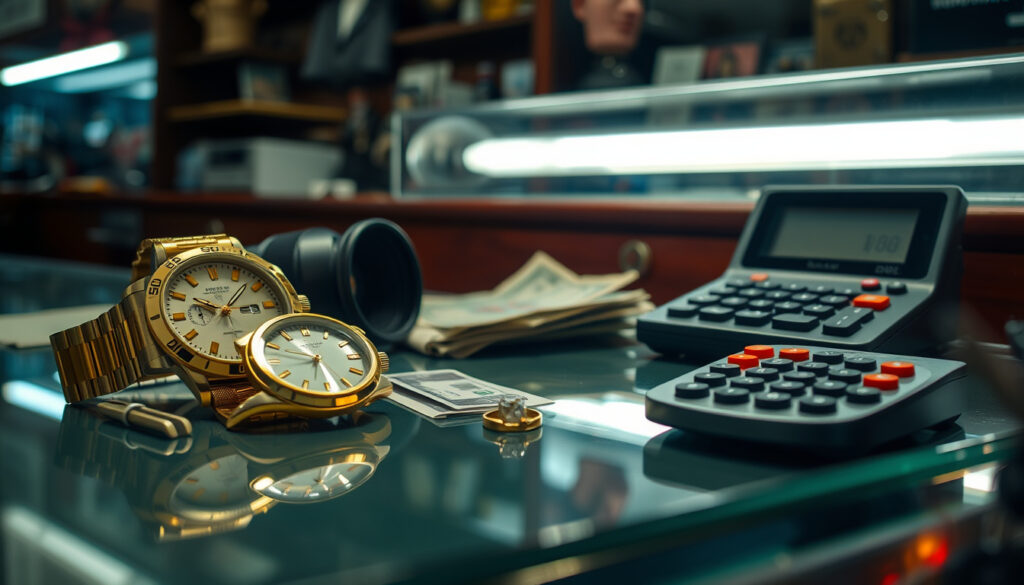
Pawn Shop Near Me: How Much Will They Give for Your Items
Every day, someone searches “pawn shop near me” with a gold chain, an old watch, or a wedding band in their pocket. They usually want fast cash without a credit check, and they want to know whether the offer is fair.
Per PawnShopMap: Average pawn loan: $150 · Monthly interest: 5%–20% · Loan-to-value: 25%–60% of resale value · U.S. pawn users: 30 million+ each year
Confirmed Facts
Loan size
- Average advance: about $150 per PawnShopMap
- Typical loan-to-value: 25%–60% of resale value per PawnShopMap
Loan cost
- Monthly interest usually runs 5%–20% — PawnShopMap
- Terms commonly run 30–90 days, varying by state — PawnShopMap
ID and credit
- Government-issued photo ID is the normal check-in requirement — industry standard
- No credit check; the collateral does the underwriting — industry standard
Value drivers
- Luxury watch names that often anchor value: Rolex, Patek Philippe, Omega, Audemars Piguet — PawnShopMap
- Complete sets with box and papers generally do better — PawnShopMap
How Do Pawn Shop Loans Work?
A pawn loan is a short-term collateral loan. The shop holds an item you own, gives you a percentage of what it can resell for, and earns money by charging monthly interest on the cash advance. There is no credit check, and if you decide not to redeem the item, you do not owe a repayment — the shop keeps the collateral.
The typical terms vary by state and by shop, but this is the range most customers should recognize:
| Typical loan percentage | 25%–60% of item resale value |
| Average pawn loan amount | $150 |
| Monthly interest rate | 5%–20% |
| Loan duration | 30–90 days, varies by state |
| Identification required | Government-issued photo ID |
| Annual U.S. pawn users | 30 million+ |
The implication: The loan amount depends entirely on resale potential, not your personal attachment.
How much will a pawn shop give you for a $1000 item?
If you bring in an item worth $1,000 on the open market, a pawn shop typically offers between $250 and $600. That 25%–60% loan‑to‑value ratio is standard across most shops. The exact percentage depends on the item’s condition, resale demand, and the shop’s overhead. Luxury watches and gold jewelry tend to land at the higher end of that range because they are easy to resell.
What is the most a pawn shop can give you?
The ceiling is roughly 60% of what the shop believes it can sell the item for. Some shops may go slightly higher on rare, high‑demand pieces, but the average remains around 40% of resale value.
What to pawn to get $500?
To reach a $500 loan, you need an item with a resale value of roughly $1,200–$2,000 (applying the 25%–60% LTV). The most reliable categories are gold jewelry (especially 14k or higher), luxury watches, high‑end electronics (recent laptops, gaming consoles), musical instruments (Fender, Gibson), and power tools from known brands.
What sells for $100 at a pawn shop?
Smaller items like a gold chain, a decent smartphone, or a brand‑name tool set can fetch $100. Pawn shops prefer items they can turn over quickly, so clean, working, and well‑known brands command better offers.
What Will Pawn Shops Not Buy?
Pawn shops buy almost anything they can sell quickly, but “almost” carries real exceptions. The most common refusals are practical: counterfeit luxury goods and outdated electronics. Appliance Perfected’s retail guide says counterfeit goods are refused because authenticity cannot be verified, and broken or obsolete electronics may not be worth repairing.
“Pawn shops may reject obsolete electronics and broken devices, especially when repair costs reduce resale value.”
“Records are typically not bought or sold at most pawn shops.”
Practical store refusals:
- Counterfeit luxury goods, because authenticity cannot be verified
- Broken electronics and devices that need expensive repairs
- Records and some physical media that resell poorly
Legal restrictions vary by state. Delaware Code Online’s state pawnbroker law bars artificial limbs and wheelchairs from being used as pawn collateral. Florida’s pawnbroker statute also includes a list of prohibited acts. And in Texas, state pawn regulations require shops to tag certain items priced above $25 when the item can be tagged.
The pattern: Refusals fall into three buckets – unverifiable, unrestorable, or unlawful.
How much can I pawn my Rolex for?
Pawn valuation is resale-value math, not sentimental math. The shop pictures the item in a display case, not where it came from. That is why the same ring can get two very different offers at two different pawn shops.
- The shop starts with what the item will realistically bring in its own display case
- Condition matters: working watches, clean gold, and visible hallmarks do better
- Brand recognition matters: established luxury names are easier to resell
- Original box and papers help because they reduce authentication risk
Rolex, Patek Philippe, Omega, and Audemars Piguet are the names most often associated with strong resale value. A pawn shop may still offer only a percentage of the retail price, but these brands usually keep a higher percentage of that value than fashion watches.
Is a 40 year old Rolex worth anything?
Yes, vintage Rolex models often appreciate, especially if they are in original condition with box and papers. Pawn shops will still apply the 25%–60% LTV, but the underlying resale value can be substantial – sometimes far above the original retail price.
What watch brands hold their value the most?
Rolex, Patek Philippe, Omega, and Audemars Piguet consistently top resale charts. Limited editions and certain steel sports models (e.g., Rolex Submariner, Daytona) hold value particularly well.
Is it worth selling to a pawn shop?
A pawn loan is fast, private, and not tied to your credit history. But it is more expensive than a credit card cash advance in most cases, and the real cost is not the interest rate alone — it is the risk of losing an item that may be worth much more than your loan.
Upsides
- Immediate cash, no credit check, no repayment obligation if you surrender the item
Downsides
- Monthly interest can run 5%–20%, and your item becomes the lender’s profit if you do not repay
What’s the most valuable thing to pawn?
Gold jewelry, luxury watches, high-end electronics, and musical instruments tend to command the highest loan amounts because they have strong secondary markets.
The implication: If you want the best return, sell the item privately; if you need speed and privacy, pawning is the trade‑off.
How to Get the Best Deal at a Pawn Shop Near You
The best collateral is an item you are comfortable walking away from. The best negotiation approach is comparison shopping before you say yes.
- Bring a government-issued photo ID.
- Clean the item, but do not over-polish it.
- Bring the original box, papers, or authenticity paperwork if you have them.
- Ask the interest rate, payoff period, and final payoff amount out loud.
- Get a second quote from another nearby pawn shop.
- Ask whether the shop sells the item back to the public or only to wholesale buyers.
One legal detail helps in Texas: Texas state pawn rules require certain items above $25 to be tagged when they can be tagged. Ask the shop how that affects the item you are pawning.
The pattern: Preparedness and knowledge are your best negotiating tools.
What’s Unclear
While the general 25%–60% LTV range is well-established, the exact percentage a specific shop will offer for a given item is not predictable without a quote. Similarly, whether a 40‑year‑old Rolex has appreciated enough to offset inflation depends on the model and market conditions. These uncertainties mean you should always get multiple offers before committing.
commerce.utah.gov, commerce.utah.gov, commerce.utah.gov, beltramicountymn.gov, bosssinglemama.com, consumer.ftc.gov, financepolice.com, applianceperfected.com
Frequently Asked Questions
Do pawn shops buy items or only lend money on them?
Both. You can sell the item outright or take a pawn loan with the right to redeem it later. The transaction structure changes the paperwork, so ask which one is being offered.
Can I pawn a car or other vehicle?
Yes, many pawn shops take vehicles or make vehicle-title loans, but the rules vary by state. Ask whether the shop holds the title only or the physical vehicle as collateral.
What happens if I cannot repay a pawn loan?
The shop keeps the collateral, and in most cases the loan is satisfied. Texas law has specific rules about redemption periods, so ask the shop about the exact payoff date before signing.
Why did a pawn shop refuse my item?
The item may be too hard to verify, too expensive to repair, or prohibited by state law. Counterfeit goods and broken electronics are common refusals.
What is a fair monthly pawn interest rate?
PawnShopMap’s industry blog reports typical monthly rates between 5% and 20%. The right rate depends on state law and the item’s resale liquidity.
How can I check a pawn shop’s reputation?
Ask for the shop’s state-issued license, search for complaints with the state regulator, and read recent reviews from people who have actually pawned items.
More related posts
 RTÉ 2 Schedule Today: What’s on TV Tonight & Live Streaming Guide
 Top 100 Movies of All Time: The Ultimate List (2025)
 Restaurants to Eat in Iceland: Must-Try Foods, Costs & Tips
 Everton vs West Ham: Rivalry, Head-to-Head, and Fans
 Property for Sale in Donegal: 700+ Houses & Cottages
 Triple Negative Brea t Cancer: Symptom , Treatment & Survival
 St. Mary’s Diocesan School: Fees, Type, and Facts
 GAA Today on TV: Full Schedule & Where to Watch