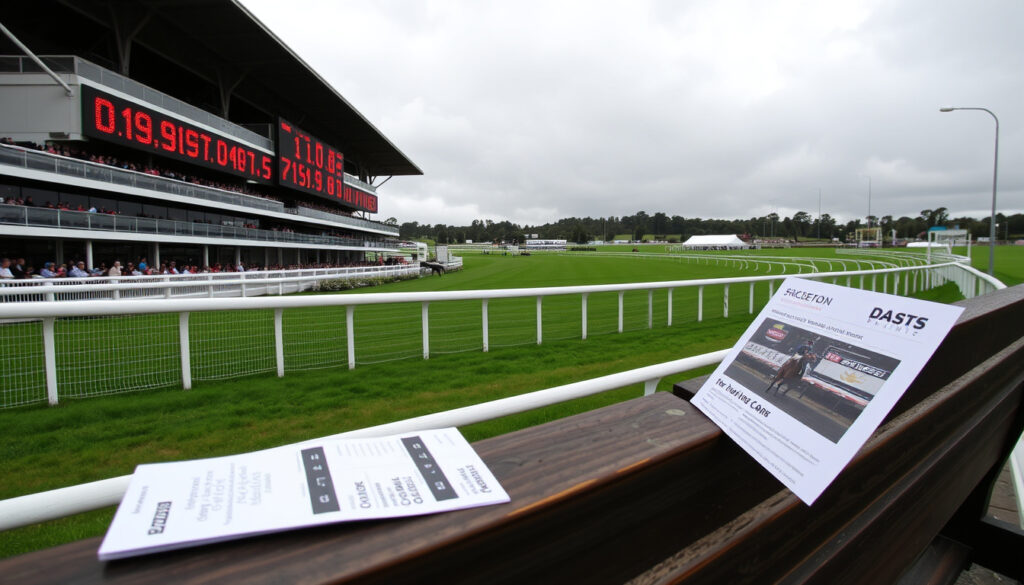
Irish Racing Cards Today – Live Results & Full Guide
If you’re scanning your phone for today’s Irish racing cards, you’ve probably noticed there isn’t one place that puts race times, live results, tomorrow’s preview and the details that actually matter all together. This guide pulls the official Horse Racing Ireland racecards, live results from trusted sources, and a close look at a typical Dundalk evening meeting into a single, readable view.
Licensed racecourses: 26 ·
Race meetings per day: 2–3 ·
Races per meeting: 7 (average)
Quick snapshot
- Today’s racecards are published by Horse Racing Ireland (governing body) and include horse names, jockey, trainer, weight, odds and going conditions.
- Irish racing results are updated live race-by-race on IrishRacing.com (specialist racing portal).
- Dundalk is Ireland’s only all-weather course; its polytrack surface produces standard going (HRI RÁS official records).
- Exact race timings can shift due to TV scheduling or delays — the published time is a target, not a guarantee. ((IrishRacing.com latest declarations))
- Runners and jockeys are subject to late changes; non‑runners often appear only after declarations close (IrishRacing.com latest declarations).
- Going descriptions may be amended after pre‑race inspections, especially on turf tracks. ((IrishRacing.com latest declarations))
- Today’s first race typically starts around 13:45; the last race finishes by 17:25 (example: Dundalk’s 8‑race card on 19 November 2025) (Racing TV Dundalk schedule).
- Evening meetings such as Dundalk run from late afternoon into the evening, often under floodlights. ((Racing TV Dundalk schedule))
- Most Irish meetings hold 7–8 races, with occasional 9‑race cards. ((Racing TV Dundalk schedule))
- Tomorrow’s cards are published in the evening or early morning by HRI and appear on IrishRacing.com (future cards section).
- Early declarations for tomorrow’s meetings are visible before final confirmation, but runners may be withdrawn. (IrishRacing.com (future cards section))
- Weather forecasts and track inspections can alter going descriptions overnight. (IrishRacing.com (future cards section))
The table below summarises the key official data sources for Irish racing cards and results.
| Label | Value | Source |
|---|---|---|
| Governing body | Horse Racing Ireland (HRI) | HRI official racecards portal |
| Typical meeting size | 7–8 races | Example: Dundalk 8‑race card on Racing TV |
| Most common surface | Turf; all‑weather at Dundalk (polytrack) | Dundalk going Standard on HRI RÁS |
What are today’s Irish racing cards?
Overview of today’s race meetings
Today’s Irish racing cards cover every scheduled meeting at Irish racecourses — typically two to three fixtures per day. The official source is Horse Racing Ireland’s racecards page, which lists the course, race times, distance, going, and the full field for each race. Commercial sites such as IrishRacing.com and Racing TV repackage that data with added context — Timeform ratings, expert tips, and video previews.
If you want a single page that shows today’s meetings at a glance, start with the HRI racecards hub. For deeper form analysis, switch to IrishRacing.com or Racing TV.
What this means: the racecard is your primary tool for pre‑race analysis, but the depth of insight depends on which platform you choose.
Key elements of a racecard: horses, jockeys, weights, going
A standard racecard lists each horse by number, name, age, weight assigned, jockey, trainer, and recent form. The “going” — officially measured by a going stick and reported as Standard, Good, Yielding, Soft, or Heavy on turf — tells you how the track is playing. HRI RÁS (Irish Form Book) publishes the official going after each inspection. Betting odds are added later by bookmakers and are not part of the official HRI card.
The pattern is straightforward: one card per meeting, one row per runner. The number beside each horse is its saddlecloth number, not a ranking. The column labelled “Days Since Last Run” (or “Days”) is a key form indicator — a horse returning after a long break may need the run.
A casual reader who ignores the going column might misinterpret a horse’s previous performance. A horse that won on Good may struggle on Heavy — that single letter changes everything.
The pattern is clear: form figures and weight carry the most predictive weight when combined with the going.
Where can I find Irish racing results today?
Official HRI results page
Live Irish racing results are published race-by-race on the Horse Racing Ireland results portal. Each result shows the finishing order, distances between horses, race time, and prize money awarded. You can filter by date, course, or meeting. For the most authoritative record, HRI is the single source of truth.
The catch: HRI’s results page is updated shortly after each race, but third‑party sites often beat it by a few seconds.
Third‑party aggregators
IrishRacing.com and Racing TV both offer live results alongside racecards. Sporting Life (established racing media) also includes non‑runner notifications and race replays. The advantage of aggregators is speed — they update within seconds of the finish and often include additional data such as official distances from the timekeeper.
For greyhound racing enthusiasts, Greyhound Racing Ireland (governing body for greyhounds) runs a parallel race‑cards service that also covers Dundalk’s greyhound meetings.
The implication: if you need the fastest result, aggregators win; for an official audit trail, HRI is the reference.
What are the Irish racing cards for tomorrow?
How to preview future racecards
Tomorrow’s racecards are typically uploaded in the evening or early morning of the day before racing. The IrishRacing.com “tomorrow” page lists all declared meetings, with full fields, weights, and jockeys as soon as declarations are processed. HRI’s own future cards section also publishes declarations at least 48 hours in advance, giving punters a head start on form study.
Difference between today’s and tomorrow’s cards
The key distinction: today’s card is final — the runners are confirmed, non‑runners have been removed, and the going has been published. Tomorrow’s card is provisional until the final declaration stage (usually 10:00 AM the day before). “Early” cards may list 20 horses for a race that will have only 12 runners; the final card is always the definitive version. At The Races (racing media and betting partner) provides tips and ante‑post analysis for tomorrow’s meetings, often with commentary on likely non‑runners.
A horse listed on tomorrow’s card may be withdrawn overnight due to ground conditions or a veterinary issue. Always check the official result screen on the day for late non‑runners.
The pattern: treat tomorrow’s card as a working draft, not a final lineup.
How can I watch Irish racing live?
Official live streaming options
Live streaming of Irish horse racing is available through several channels. Racing TV (licensed broadcaster) holds the rights to most Irish racecourses and streams every race live. A monthly subscription is required (around £20–£30 depending on region). Some racecourses, including Dundalk, offer their own live stream via the Racecourse Media Group. HRI’s official site redirects viewers to licensed partners for live video.
Free vs. paid services
Free‑to‑air coverage is limited. RTE (Ireland’s national broadcaster) shows selected Saturday meetings and major festivals. For everyday racing, the cheapest way to watch is through a funded betting account with a bookmaker that streams Irish racing — for example, IrishRacing.com (in partnership with betting operators) offers live streams to logged‑in users who have placed a bet in the last 24 hours. At The Races (racing media) also provides streaming via its platform, again requiring a funded account.
What this means: reliable live access almost always requires either a subscription or a funded betting account.
What is the Dundalk race card today?
Dundalk’s unique all‑weather surface
Dundalk is Ireland’s only all‑weather racecourse. Its polytrack surface provides consistent “Standard” going throughout the year, unlike turf tracks that change with the weather. The HRI RÁS Dundalk page for the meeting on 29 October 2025 shows the going as Standard, confirming the surface’s reliability.
Reading the Dundalk card: track bias and form factors
Because the surface stays the same, form on Dundalk’s polytrack is highly portable. Horses that run well at Dundalk often repeat that form on other all‑weather tracks such as Newcastle or Chelmsford. Racing TV’s Dundalk card page provides jockey colours, Timeform ratings, and video previews — all useful for spotting pattern. A typical evening meeting has 7 or 8 flat races, with the first off around 16:00 and the last at 19:00 or later under floodlights.
The trade‑off: bias on the polytrack is minimal, but horses drawn high (stalls 10+) on the round course have a slight disadvantage over 5‑furlong sprints. Punters who note the draw on the Dundalk card gain an edge.
Dundalk evening meetings are a great place to practise reading a racecard because the going doesn’t change. Focus on the horse’s recent form on polytrack and the draw position.
The implication across all five questions: whether you’re scanning today’s cards, chasing live results, planning tomorrow’s bets, watching the action, or mastering a specific track like Dundalk, the sources are consistent. Bookmark HRI for authority, IrishRacing.com for speed, Racing TV for depth, and remember that the card is only a snapshot — always check for late changes on the day.
Related reading: IrishRacing.com racecards · Horse Racing Ireland racecards
racingpost.com, sportinglife.com, offtrackbetting.com, grireland.ie
För att se fullständiga startlistor och resultat rekommenderas att konsultera dagens irländska hästkapplöpningskort som uppdateras i realtid.
Frequently asked questions
How many races are in a typical Irish race meeting?
Most Irish meetings have 7–8 races. Some cards, especially during festivals, may go up to 9 or 10. Racing TV’s Dundalk schedule shows an 8‑race programme as standard.
What does the “going” on a racecard mean?
Going describes the condition of the track surface. On turf it ranges from Good to Heavy; on Dundalk’s polytrack it is almost always Standard. The official going is published by HRI and updated after inspections. HRI RÁS (Irish Form Book) provides the official going for every meeting.
Can I bet on Irish races using a racecard?
Yes. Racecards include betting odds from bookmakers. Most betting sites link directly to the card so you can place a bet with one click. IrishRacing.com (racing portal with betting partners) offers live odds alongside each race.
Are Irish racing cards free to view?
Yes. The official HRI racecards and results are free. Third‑party sites such as IrishRacing.com and Racing TV offer free access to the basic card; advanced features (video, Timeform ratings) may require a login or subscription.
What is the difference between a racecard and a result?
A racecard shows the scheduled runners before a race; a result shows the finishing order after the race, including distances, times, and prize money. Both are available on HRI’s site and on aggregators like Sporting Life (racing results and replays).
How do I read the weight and form on a card?
Weight is shown in stones and pounds (e.g., 9‑12). Form figures are a string of numbers or letters (e.g., 213) from the horse’s most recent runs, read left‑to‑right from oldest to latest. The official HRI card explains the symbols; see the HRI racecards guide.
Do Irish racecards include UK meetings?
Some Irish specialist sites such as IrishRacing.com (racing portal) also feature UK meetings that have strong Irish interest — for example, the Grand National or the Cheltenham Festival. However, the official HRI cards cover only Irish racecourses.
Where can I find official HRI declarations?
Official declarations are published on the Horse Racing Ireland racecards page at least 48 hours before each meeting. They include every horse declared to run, plus the jockey and weight. Late withdrawals appear on the results page on race day.
For any punter or casual follower of Irish racing, the choice is straightforward: use HRI for the definitive card and results, IrishRacing.com for speed and betting integration, and Racing TV if you want video analysis and Timeform data. The Dundalk evening meeting remains the best classroom — stable going, clear form patterns, and a manageable 7‑race schedule. Bookmark those three sources, check for late non‑runners on the day, and the Irish racing cards will tell you everything you need to know.
More related posts
 The Day of the Jackal (TV Series) Episodes: List & Season 2
 How Many Bones Are in Human Body? Adult, Baby & Gender
 Family Restaurants Near Me: Top Sligo & Ireland Spots
 Evaluating T Kenny Car Sales and Similar Dealerships
 PS5 Black Friday Deals 2025: Best Prices & Where to Buy
 SEO Blueprint Strategy: PAA-Driven Content Optimization
 Long Sleeve Midi Dress: How to Style for Every Occasion
 Assistant Attorney General Rhode Island: Devon Flanagan